One Million More Midwives: Plenary 1 sets the tone for health systems change
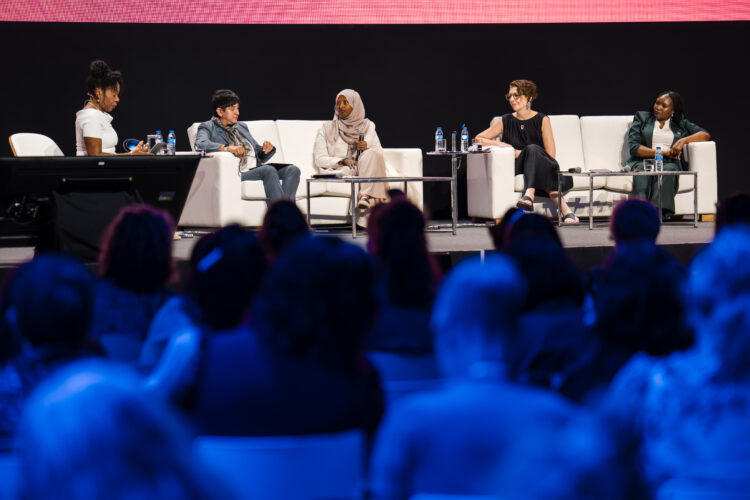
The first plenary of the ICM Triennial Congress 2026 opened with the same energy that filled the streets of Lisbon the day before: singing, dancing, joy and a shared call for One Million More Midwives.
But from the start, the session made clear that this call is about more than increasing numbers. One Million More Midwives is also about leadership: midwives who are educated to global standards, able to work across their full scope of practice, protected by regulation, supported by strong associations and recognised as essential voices in health system decision-making.
Across the keynote and panel discussion, speakers connected this vision to real country experiences. From India to Somaliland, Scotland and Namibia, they shared how midwives are driving change in education, governance, crisis response, regulation, sexual and reproductive health and rights, and models of care. Through their stories, the session showed the challenges midwives are overcoming, the systems that still need to change, and the impact midwifery leadership can have on women, newborns, families and communities.
Before turning to the formal programme, ICM also honoured the midwives who could not be in the room: those whose visas were rejected, those who could not leave their families, those who could not secure funding, and those living and working in crisis and humanitarian settings.
“The midwives who are at home doing all the work,” the room was reminded, “are very much with us during this Congress.”
That spirit shaped the plenary. This was a session about the future of the profession, but also about the leadership already happening every day, in clinics, classrooms, communities, associations, ministries and health systems around the world.
Midwives must be recognised as leaders
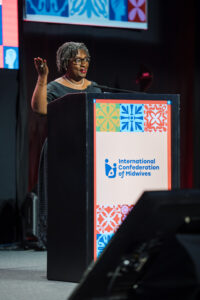 Magda Robalo opened the plenary with a keynote that placed midwifery within the wider struggle for gender equity in health leadership.
“Investing in midwives is among the most powerful investments we can make in health equity, gender equity and sustainable development,” she said.
Magda reminded the audience that women make up nearly 70% of the global health and care workforce, yet remain underrepresented in leadership. In midwifery, this gap is even more visible. Midwives provide essential care across the life course, but their expertise is still too often missing from policy, governance and funding decisions.
Her message was direct: “The future of midwifery depends not only on having one million more midwives. It depends on having one million more midwife leaders.”
She called for midwives to be present in clinics and communities, but also on hospital boards, in ministries of health, in research institutions, in professional associations and in global health governing bodies.
“Do not wait for permission to lead,” she told midwives. “Your expertise matters. Your voice matters. Your lived experience matters.”
Education that changes care
The panel, moderated by Jacqueline Dunkley-Bent, brought together perspectives from India, Somaliland, Scotland and Namibia. Jacqueline invited each speaker to reflect on what One Million More Midwives means in their own country context, and how midwives are already driving health systems forward.
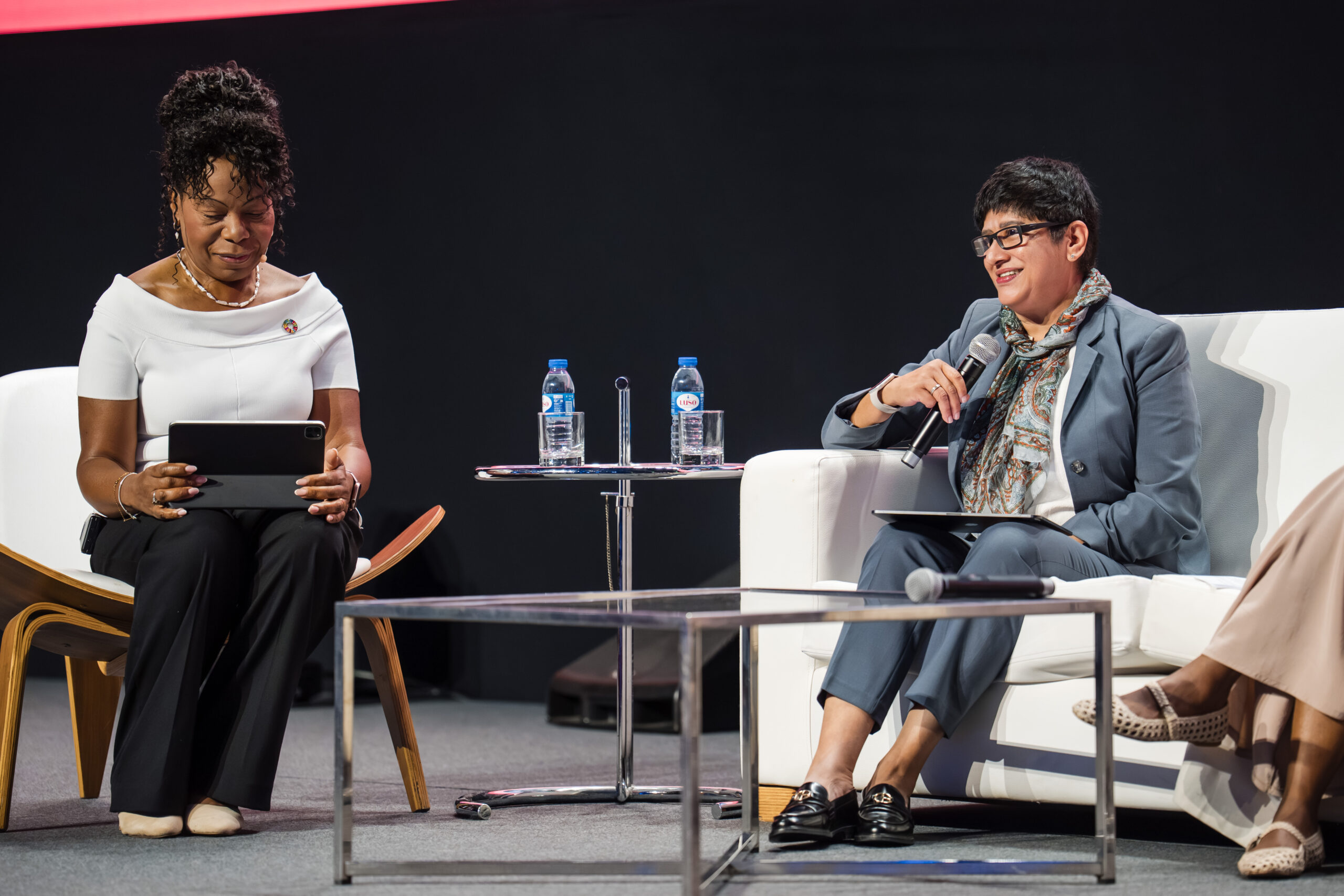
Inderjeet Kaur spoke about the scale of birth in India, where 25 million babies are born each year. She acknowledged the country’s progress in increasing institutional births, but warned that access alone is not enough.
“Access is not the same as quality,” she said.
In parts of southern India, Inderjeet explained, caesarean section rates in private facilities can reach 80 to 90%. This is not because women always need surgical birth, she said, but because many systems are not built around the physiology of normal birth.
Her message was that midwifery education must be scaled up in both public and private settings, and that it must meet ICM global standards. She pointed to Fernandez Hospital, where midwives have supported thousands of births and helped reduce unnecessary interventions.
“It’s not how many midwives do we need,” she said. “It’s the type of midwives that are enabled and are able to change practices back in their environments.”
 Systems must be ready before crisis
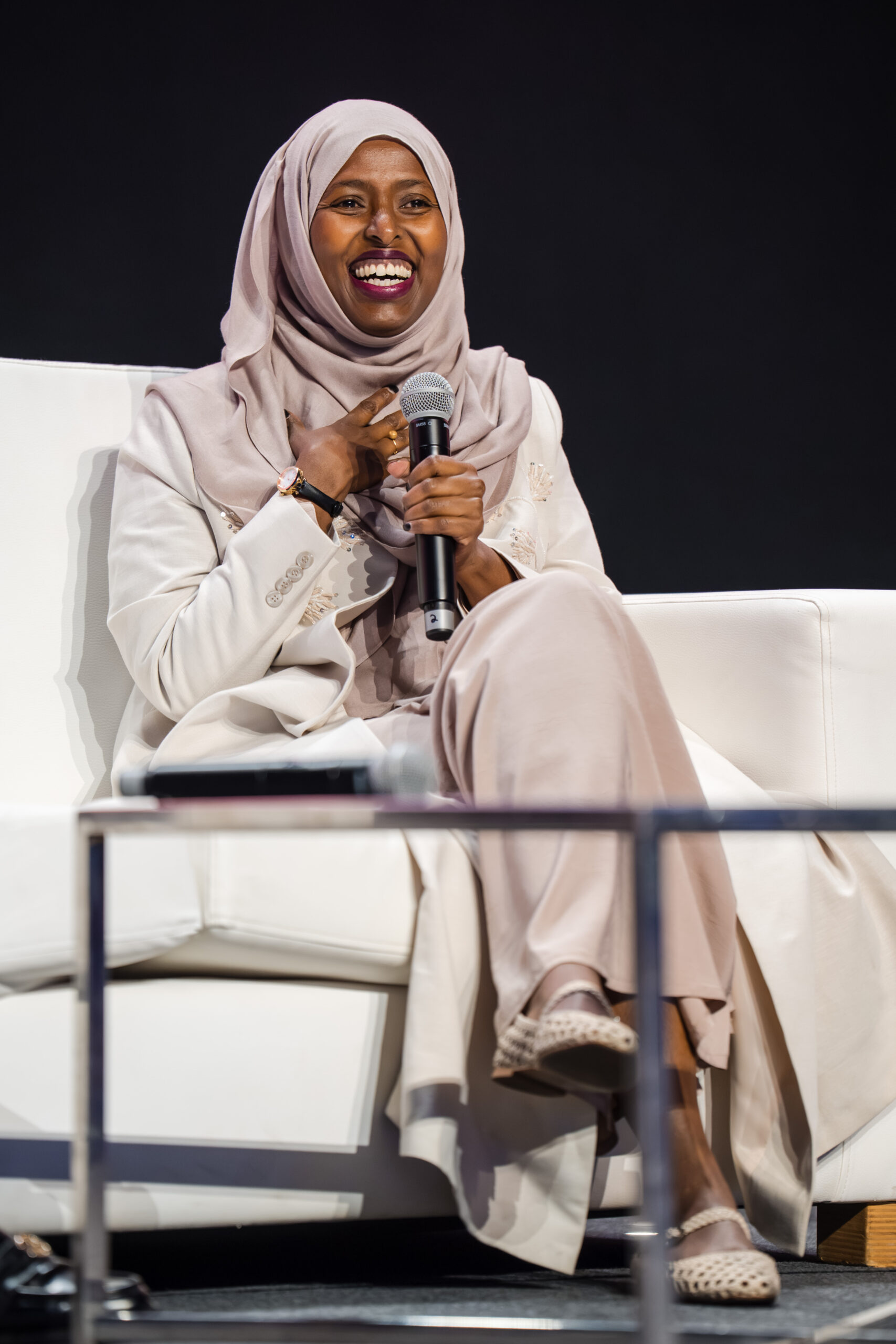
Jama Egal brought the discussion to humanitarian and climate-related settings.
“Pregnancy doesn’t stop during floods,” she said. “Babies are still being born during these crises.”
Her contribution showed why investing in midwives before crisis is essential. In Somaliland, midwives have helped rebuild health systems, strengthen education and support regulation after years of disruption. Jama described how the Midwifery Association has played a central role, including helping establish the country’s regulatory system and, recently, securing its own building.
For Jama, this was a sign of sustainability and leadership. “One Million More Midwives is not only about the individual,” she said. “It’s about putting the system in place, and the system doesn’t work without the midwives being in place.”
Tackling inequality through midwifery models of care
Jaki Lambert spoke about inequality, safe staffing and the strength of midwifery communities.
“Inequalities are not accidental,” she said. “They’re a political choice.”
She described midwives as working where inequality is most visible, and argued that evidence and toolkits only make a difference when midwives are there to turn them into care. The most effective intervention, she said, is a strong, trusting relationship with a midwife.
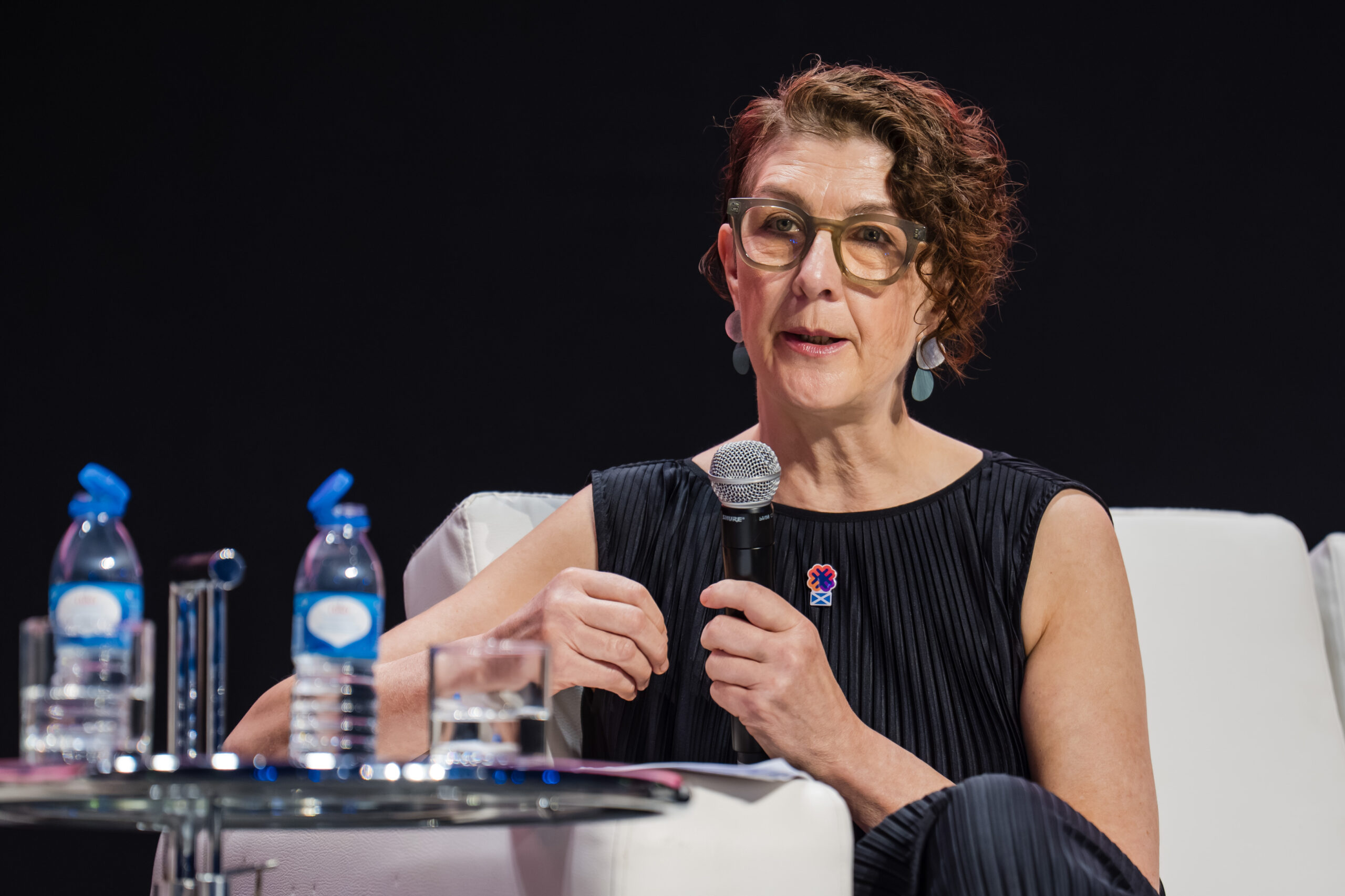
Jaki’s examples from Scotland showed how students, early-career midwives, professional associations and government engagement have led to concrete change, including job guarantees, preceptorship programmes and national reviews of maternity care.
“Women will thrive when midwives thrive,” she said.
Legal protection and professional confidence
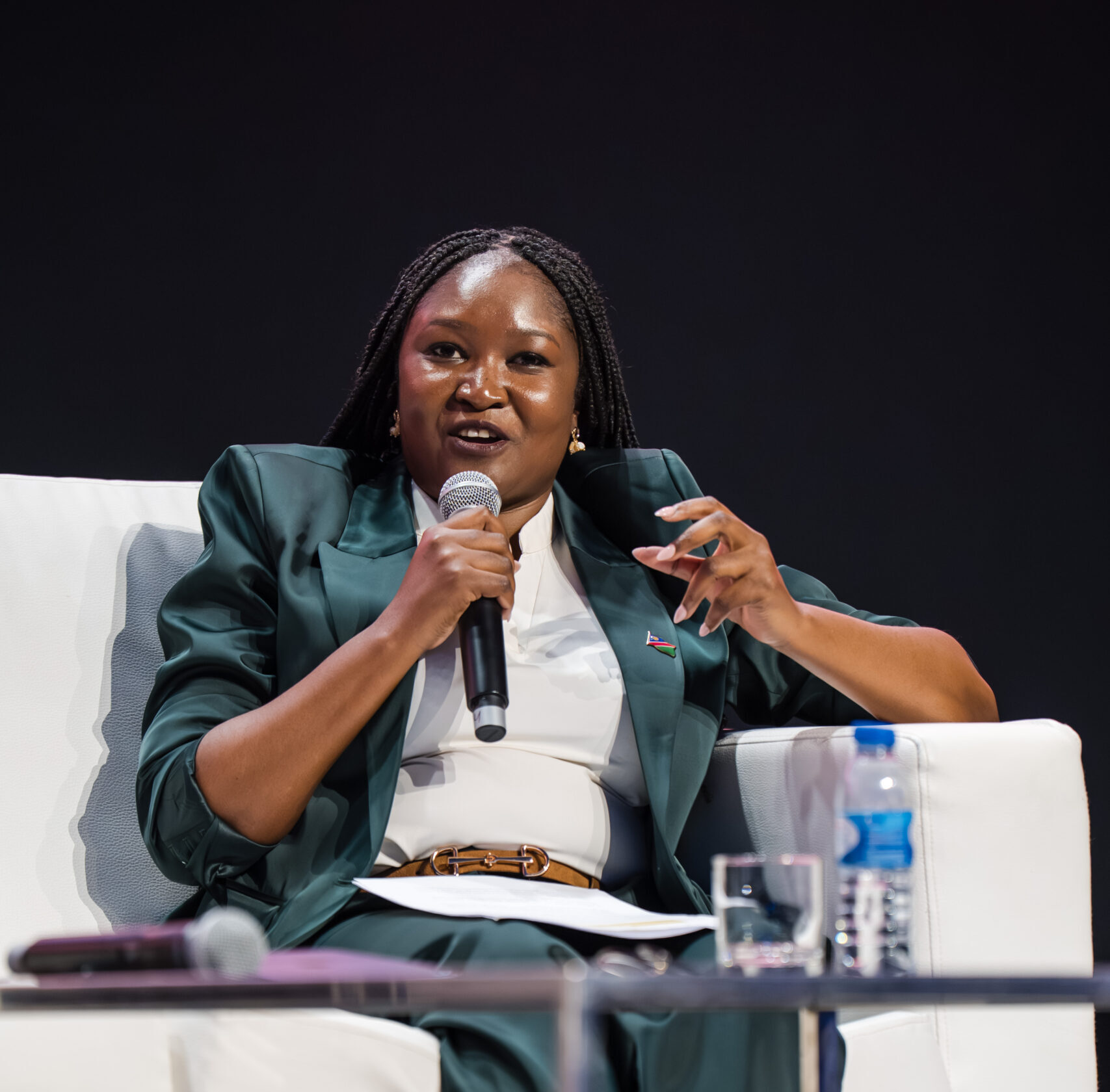 Sylvia Hamata brought a different but essential perspective: the legal and regulatory conditions midwives need to provide care confidently.
She described how midwifery in Namibia has often been hidden within nursing, making midwives less visible in regulation, leadership and career progression. For Namibia, One Million More Midwives means more than increasing the workforce. It means enabling midwives “legally, institutionally and professionally to practise to their full scope.”
Sylvia spoke about fear of litigation, disciplinary processes and uncertainty around sexual and reproductive health services, including abortion-related care. When midwives are unclear about the law or feel unprotected, services can be delayed or denied.
“When midwives are empowered this way, women benefit directly,” she said.
A plenary that moved from celebration to action
The session carried the joy of Congress, but it also asked difficult questions. What kind of midwives are being educated? Who gets to lead? Are midwives protected by law and regulation? Are they placed where women need them most? Are health systems ready before crisis arrives?
The answer from the stage was clear: One Million More Midwives is a workforce goal, but it is also a leadership agenda. It calls for midwives who are educated, protected, respected, fairly paid, well placed and able to work across their full scope of practice.
As Magda said, “When midwives lead, health systems become stronger.”
That was the message of the first plenary, and the tone it set for the days ahead.