Building on C4W: Strengthening Midwifery Education for Family Planning and Comprehensive Abortion Care
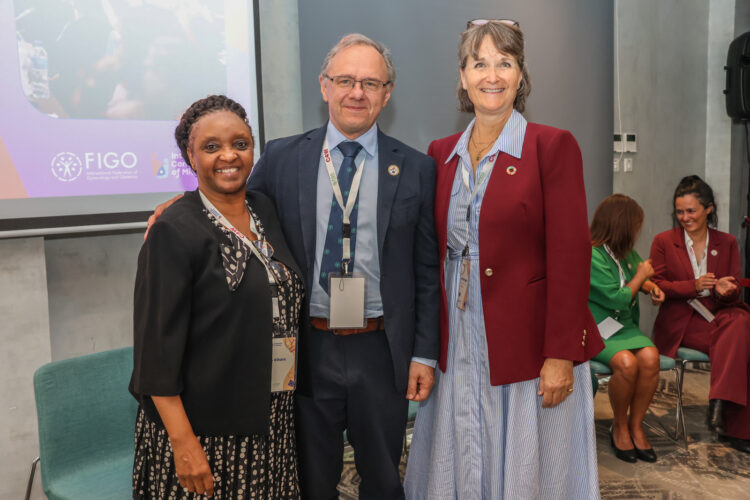
The Collaborate for Women: Abortion and Contraception Care Together (C4W) initiative is continuing its work to expand access to high-quality Family Planning (FP) and Comprehensive Abortion Care (CAC) for women and girls through stronger collaboration between midwives and obstetrician-gynaecologists (OB/GYNs).
In this second phase, which is continuing throughout 2026, ICM is collaborating with the World Health Organization’s Special Programme of Research, Development and Research Training in Human Reproduction (HRP/WHO) and the International Federation of Gynecology and Obstetrics (FIGO) to provide technical assistance through ICM’s national member associations in Nepal, Bangladesh, Sierra Leone, Mozambique and the Democratic Republic of the Congo (DRC).
This phase focuses on reviewing national curricula, assessing faculty needs and providing faculty development activities, particularly in family planning (FP) and comprehensive abortion care (CAC). It also aims to align midwifery education with ICM’s Essential Competencies for Midwifery Practice, Global Standards for Midwifery Education and Global Standards for Midwife Faculty Development, as well as WHO’s global guidance on FP and CAC.
The initiative brings together several partners and interconnected areas of work, from strengthening what and how future midwives learn to supporting educators and fostering stronger collaboration with OB/GYN associations. Crucially, national midwives’ associations are being supported to lead these efforts, helping to turn collaboration into sustainable, country-led change.
Strengthening Midwifery Curricula
Across the five countries, pre-service midwifery curricula have undergone comprehensive reviews and gap analyses to identify opportunities to strengthen education on Family Planning (FP) and Comprehensive Abortion Care (CAC). Each review assessed alignment with the ICM Essential Competencies for Midwifery Practice and the WHO Family Planning and Comprehensive Abortion Care Toolkit, resulting in tailored recommendations for curriculum improvement.
Where countries offer both direct-entry and post-nursing midwifery programmes, both pathways were reviewed. In settings without a national curriculum, up to two representative curricula were selected by the Midwives Association (MA). The findings from these reviews can now serve as national benchmarks, supporting other institutions and jurisdictions to adapt and strengthen their own curricula in ways that reflect local needs.
The reviews also highlighted opportunities for greater interprofessional learning. In particular, some FP and CAC content could be shared with or delivered alongside OB/GYN students, helping to build stronger collaboration between future health professionals and ultimately improve women’s access to these essential services.
Following ICM’s review and the development of recommendations, each MA undertook a consultation and validation process to ensure that the findings were accurate, relevant and feasible within its national context. MAs are now working with key partners to develop country-specific action plans, translating the recommendations into practical steps and advocating for their implementation. This work will also support the integration of contextualised modules from the forthcoming UNFPA/ICM Global Sample Curriculum for Pre-Service Midwifery Education.
Strengthening Midwife Faculty Development
Strengthening curricula is only one part of improving midwifery education. Faculty also need the knowledge, skills and resources to confidently deliver competency-based, evidence-informed education on FP and CAC.
To better understand these needs, ICM developed a structured Faculty Needs Assessment (FNA), which was conducted by the MAs in each of the five countries. The assessment explored faculty members’ knowledge, skills and capacity to provide competency-based FP and CAC education, as well as the resources and support they need to do so effectively.
ICM analysed the findings and developed country-specific recommendations to strengthen faculty development. As with the curriculum reviews, these findings were then reviewed and validated with the MAs to ensure they were accurate, feasible and appropriate to each context.
The assessments also identified promising opportunities for greater collaboration between midwife and OB/GYN faculty, including joint approaches to FP and CAC education and the development of a shared understanding of competency-based learning. The recommendations are now helping to shape action plans for faculty development activities in the coming year, while also informing longer-term efforts to strengthen continuous professional development and the delivery of rights-based FP and CAC services.
Across both the curriculum reviews and faculty needs assessments, several common themes have emerged: limited integration of competency-based education, insufficient opportunities for simulation-based learning, and inadequate coverage of CAC in both curricula and faculty development programmes. ICM will further synthesise these findings to help guide future efforts to strengthen midwifery education across the participating countries.
Building Collaboration with National Obstetrics and Gynecology Associations
A critical aspect of the C4W programme is supporting midwives and OB/GYNs to work collaboratively to develop high-quality, competency-based education for FP and CAC. Across all five countries, MAs are engaging directly with national OB/GYN societies to build a united professional voice. Together, they are aligning the advocacy messages presented to Ministries of Health, regulators and other partners. This ensures that the need for curriculum reform, regulatory change and investment in the workforce is heard as a shared professional priority.
Where curricula and faculty development needs overlap, associations and societies are exploring shared modules and co-delivered training. This strengthens interprofessional understanding of their distinct but complementary scopes of practice. It also makes better use of limited resources and expertise, maximises the reach of available investment, and gives countries a coherent, jointly owned plan for strengthening FP and CAC education and services.
Supporting Midwives’ Associations to Lead
National midwives’ associations are at the centre of this work. ICM is supporting MAs to build the skills, networks and relationships needed to take a leadership role in curriculum review and strengthening.
This includes participation in national taskforces, engagement with Ministries of Health and UN agencies country offices, advocacy and communications, and involvement in monitoring and evaluation.
Through this approach, the initiative not only supports improvements to midwifery education but also strengthens the position of midwives’ associations as national experts on midwives and midwifery, including pre-service education, professional development, regulation and Midwifery Models of Care.
Turning Collaboration into Sustainable Change
The C4W project takes a comprehensive approach to strengthening midwifery education, addressing both what is taught and the wider education ecosystem. This includes advocacy for legal reforms, faculty development and the regulatory changes needed to enable midwives to be lead providers of FP and CAC. By strengthening curricula, investing in educators and supporting national midwifery associations to lead change, C4W is helping build stronger foundations for competency-based midwifery education and, ultimately, quality family planning and comprehensive abortion care for women and girls.
This work builds on the wider interprofessional collaboration between ICM and FIGO to promote stronger professional cooperation and ensure that women and communities can access high-quality sexual and reproductive health services.