Midwifery Models of Care: Plenary 3 explores trust, evidence and better outcomes
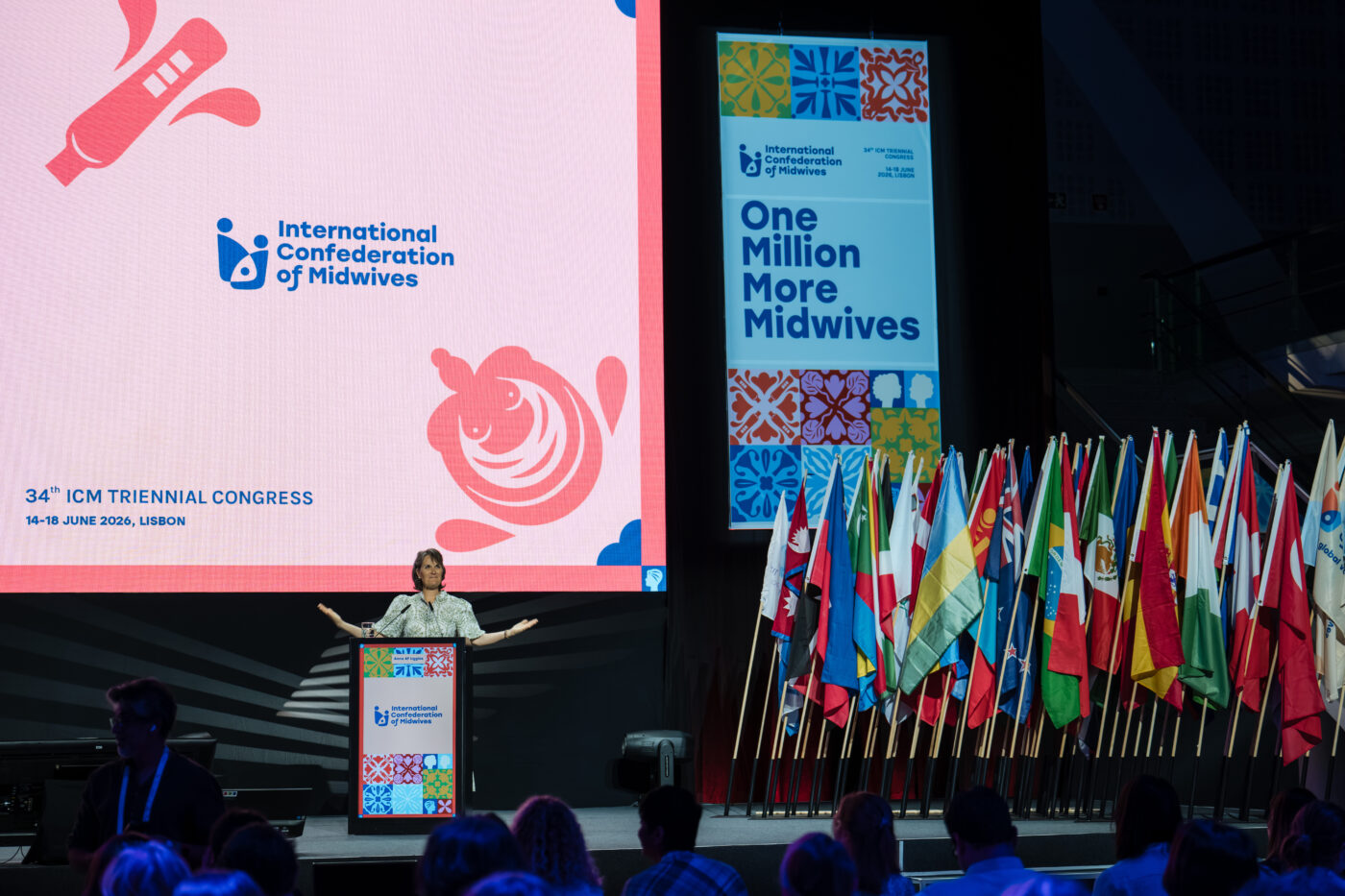
After an evening where, as ICM Chief Executive Anna af Ugglas noted, “about 1000 of us danced all night,” the room turned its attention to one of the most important questions facing the profession: how can midwifery models of care improve outcomes, strengthen health systems and shape the future of maternity care?
Anna set the tone with a simple image many people could recognise: the trust we place in someone who knows us, listens to us and understands what we need. That, she said, is also at the heart of midwifery models of care. The session then moved from this human idea of trust into a rich conversation about evidence, continuity, autonomy, community and the right of every woman, newborn and family to receive respectful, high-quality care.
Midwifery as the benchmark for quality care
Janhavi Nilekani, founder of Aastrika Midwifery Centre in India, opened the session with a powerful keynote rooted in her own birth experience.
When she became pregnant in Bengaluru in 2016, she expected that private hospitals would offer the best available maternity care. Instead, she found high rates of unnecessary intervention, limited informed consent and practices that were not aligned with evidence.
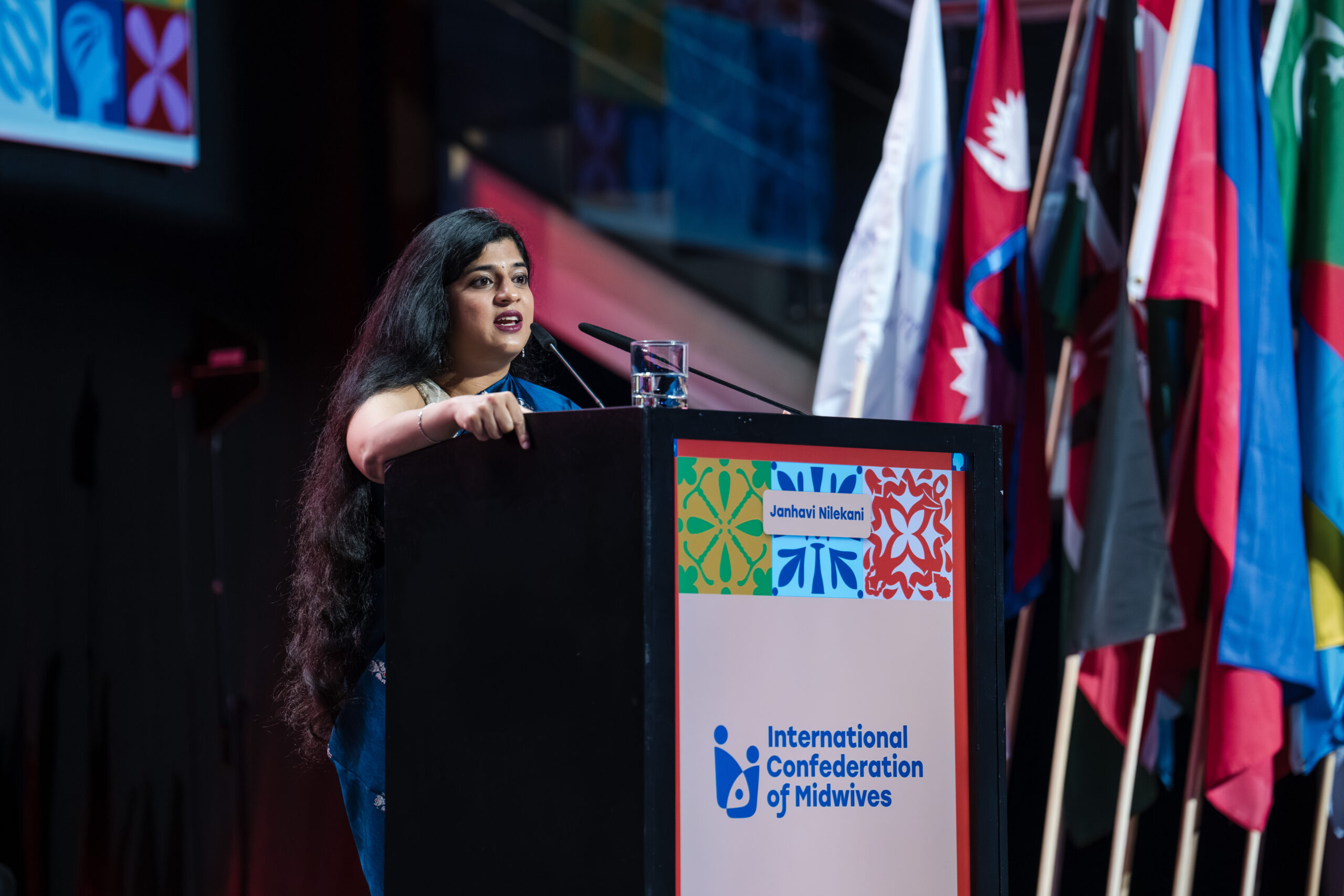
Her experience captured one of the central tensions in maternity care: poor outcomes are caused by lack of access, but they can also be caused by over-medicalised care, where interventions are used without clear clinical need, without meaningful discussion and without respect for women’s choices.
For Janhavi, finding a midwife meant finding the care she had been looking for all along. “I was seeking evidence-based care and informed consent. I found it only with midwives,” she said.
Her keynote was also a call to raise expectations. She reminded the room that “survival of the mother and child has to be the floor of our expectations, not the ceiling.” Women and newborns deserve more than survival. They deserve care that is safe, respectful, evidence-based and centred on their experience.
Different contexts, shared principles
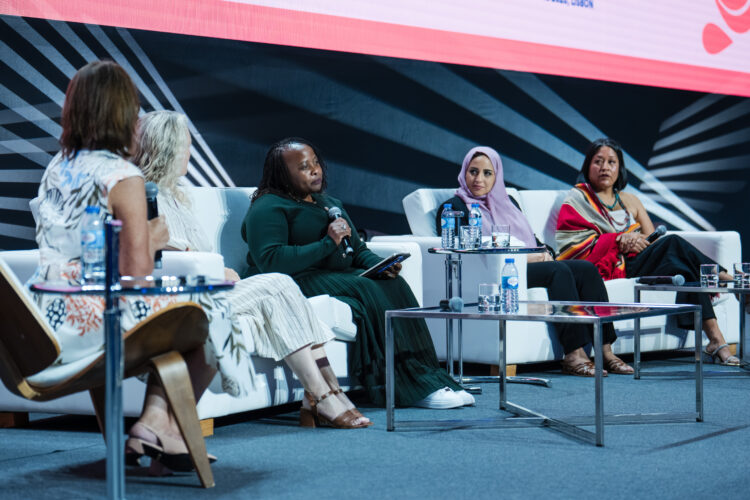
Following Janhavi’s keynote, Ulrika Rehnstrom Loi from WHO led a panel discussion with Emma Swift, Doreen Kaura, Roa Altaweli and Nicolle L. Arthun. The examples came from very different settings, but the same themes kept returning: trust, relationships, continuity and models designed around women, newborns and families.
Emma Swift, from the University of Iceland and the Reykjavik Birth Center, described how birth centres in Iceland helped create more choice in a setting where midwives are already well established and respected. She explained that opening a birth centre was not only about changing where women give birth. It was about changing how women are cared for and how they experience birth.
Her reflections were practical and honest. Change, she said, can start small. It can work within existing guidelines. It can build trust through data, transparency and strong relationships with women, communities and decision-makers. “Innovation doesn’t always have to require working outside of the system,” she said. “It can also mean that we are working to move the system forward together.”
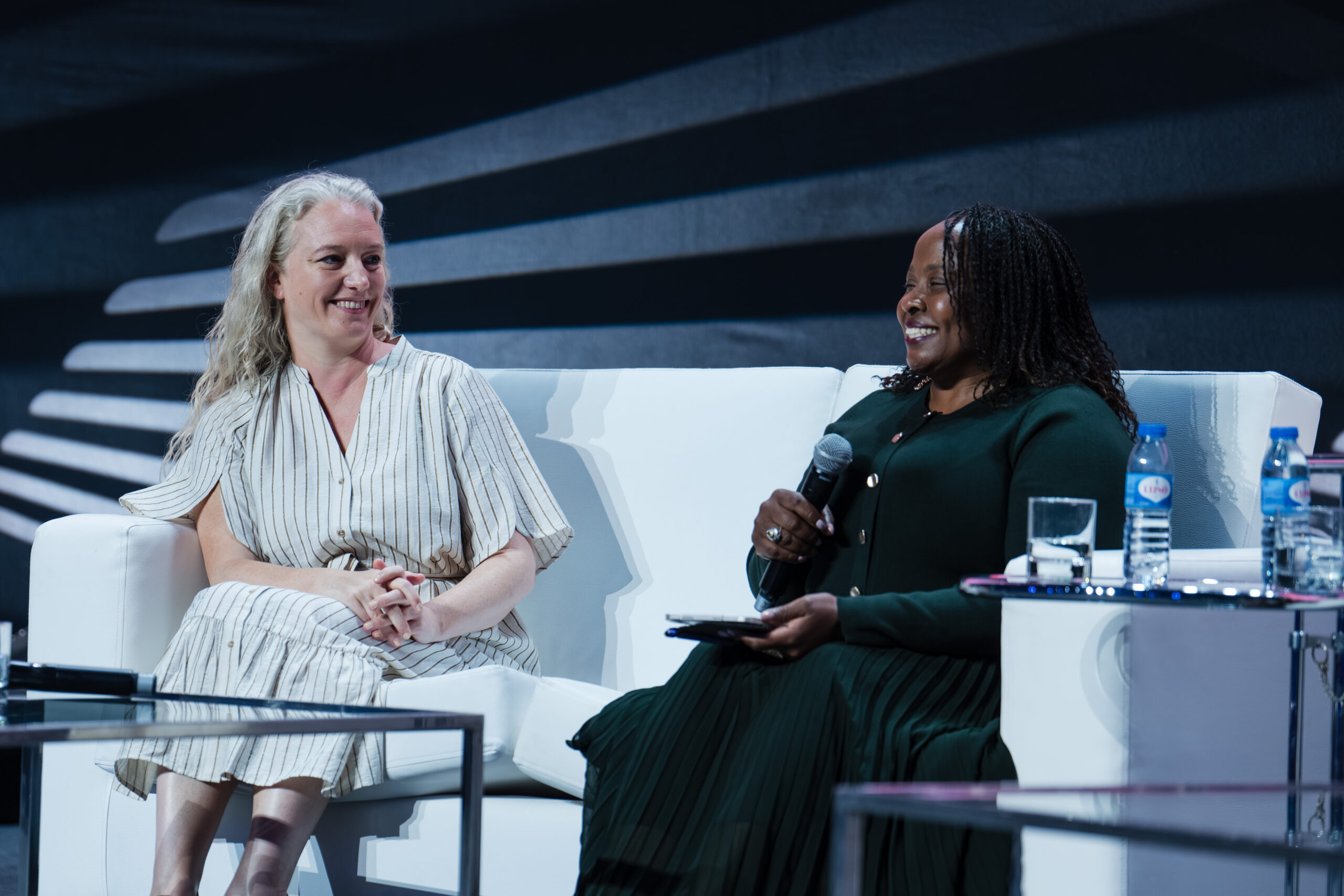
Doreen Kaura, from the University of the Western Cape, widened the conversation by asking whether continuity of care should begin before pregnancy. In South Africa, she explained, midwifery obstetric units bring care closer to communities and provide antenatal, birth, postnatal, sexual and reproductive health services, breastfeeding support and referral when complications arise. Her example showed that midwifery models can act as community hubs, supporting adolescents, women and families across the life course.
Roa Altaweli, from Saudi Arabia, shared her experience establishing a continuity of care model in a private hospital. She described the gap between what many women and families need and what fragmented systems often provide. Since 2021, she has followed women through pregnancy, birth and the postnatal period, while also providing pre-pregnancy care, sexual and reproductive health services and family planning.
For Roa, continuity of care is more than a service model. It is a philosophy. “When women know their midwife and midwives know their women, everyone benefits,” she said.
 A public call for accountability
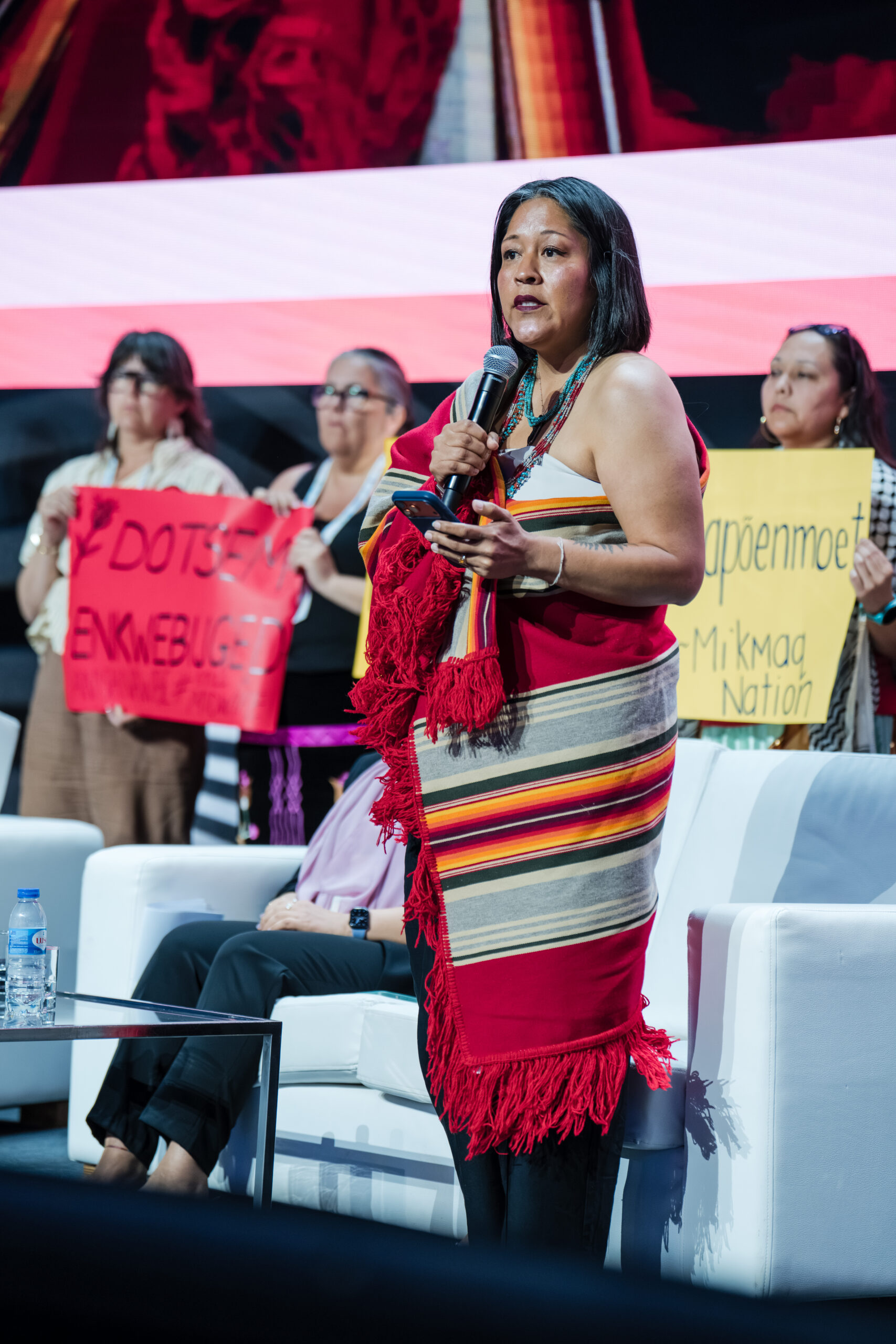
The plenary also included an intervention from Nicolle L. Arthun, founder of Changing Women Initiative and a midwife from the Navajo Nation.
Concerns were raised regarding the temporary suspension of the ICM Position Statement on Partnership between Indigenous and Non-Indigenous Midwives. Midwives from Indigenous communities and their allies came onto the stage during the plenary to voice their concerns and call for recognition, accountability and further engagement.
ICM has responded with a statement recognising the concerns raised by Indigenous midwives and their supporters. ICM has also reaffirmed its commitment to continued engagement and to developing an updated Position Statement that is clear, respectful, accountable and aligned with its responsibility to protect women, newborns and gender diverse people through high-quality midwifery care.
Why this session mattered
This plenary made one thing clear: midwifery models of care are shaped by context, communities, health systems and the people who use them. There is no single model that can be copied from one country to another. What matters is that care is organised around the needs, rights and experiences of women, newborns and families.
Across every model, the foundations were the same. Women and families need care from professionals they trust. They need continuity, information, respect and support. Midwives need enabling policies, strong education systems, sustainable financing, clear regulation and leadership opportunities. Health systems need to recognise that better outcomes depend on how care is organised, as well as whether care is available.
The speakers showed that midwifery models of care can reduce unnecessary interventions, improve experiences, bring services closer to communities and strengthen health systems. They also showed that implementation takes persistence, evidence, partnership and the courage to have difficult conversations.