Statement on the Temporary Suspension of the Position Statement on Partnership Between Indigenous and Non-Indigenous Midwives
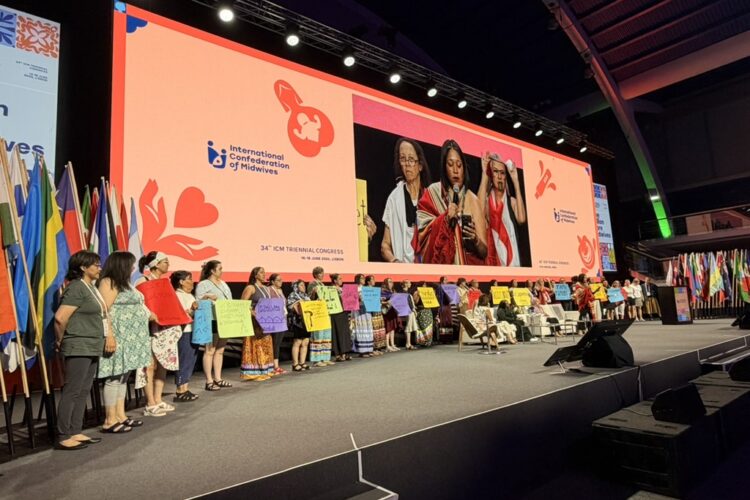
Today, during the ICM Triennial Congress plenary on Midwifery Models of Care, concerns were raised publicly on stage regarding the temporary suspension of the ICM Position Statement on Partnership between Indigenous and Non-Indigenous Midwives.
ICM recognises the concern and frustration expressed by midwives from Indigenous communities and their supporters. We take these concerns seriously and understand that trust must be built through clear action, respectful dialogue, and transparent processes.
Indigenous communities, who have too often been marginalised from health systems, deserve the same standard of respectful, evidence-based, high-quality care as those who receive the best care anywhere in the world. ICM recognises the value of Indigenous knowledge, traditional practices, community leadership, and ancestral ways of caring that have supported women, newborns, families, and communities for generations. These are reflected in many of our core documents, including the ICM Essential Competencies for Midwifery Practice.
The temporary suspension of the Position Statement was voted on by ICM Council on 08 June 2026, with 83% of member association delegates voting in favour of temporarily suspending the statement for the period of one Council cycle, while it is reviewed and updated. The Statement has not been retired. It has been suspended to allow for a careful review through a participative process, and vote at the ICM Council, following the same governance process of all ICM Position Statements.
The Position Statement was first written in 2021 and was due to be updated in 2023. In its current form, the statement discusses Indigenous and non-Indigenous midwives, but does not clearly define these terms or align them with the ICM Definition of the Midwife. This has created confusion among partners and stakeholders, particularly in global policy spaces where clear, specific language is needed.
As a confederation of midwives’ associations, ICM’s Council, Board and Leadership have the responsibility to protect and promote midwifery as a regulated, accountable profession. The terms “midwife” and “midwifery” carry specific, globally recognised meanings within ICM’s Standards. Clear definitions are essential to protect the quality of care that women and gender diverse people receive, and to maintain public trust in midwives as educated, regulated and accountable health professionals.
ICM recognises that meeting the ICM Definition of the Midwife and global standards for midwifery requires both accessible education pathways and supportive learning environments that enable students to enter, complete, and succeed in midwifery education. At the same time, ICM acknowledges that colonialism, racism, marginalisation and exclusion from formal education systems have created significant barriers for many Indigenous communities. Addressing these barriers is essential. Indigenous people who wish to become midwives should have access to educational pathways that are flexible, adequately resourced, culturally responsive and grounded in the realities of their communities.
ICM’s responsibility is to hold both of these commitments together: to protect global standards for midwifery, and to recognise the knowledge, leadership and lived realities of Indigenous communities. This includes learning from countries and communities that have created models where Indigenous students can remain connected to their culture, communities and knowledge systems while undertaking their midwifery education.
As part of the review process, ICM will continue to engage with midwives from Indigenous communities, Member Associations and partners as the statement is updated. ICM commits to presenting an updated Position Statement for Council vote in 2027.
We acknowledge and are listening to the concerns raised. Part of ICM’s role is to convene midwives and stakeholders, and engage in difficult conversations about complex issues. ICM remains committed to developing a Position Statement that is clear, respectful, accountable, and aligned with our responsibility to protect women, newborns, and gender diverse people through high-quality midwifery care.
In Lisbon, Portugal, 17 June 2026
ICM Board