When Care is Out of Reach: What Maternity Deserts in the United States Reveal for the World
For many women and gender diverse people, access to care during pregnancy and birth is shaped by where they live. Living far away from maternal health services can delay care, increase complications, and affect outcomes for both women and newborns. In some parts of the United States, this phenomenon has been given a name: maternity care deserts.
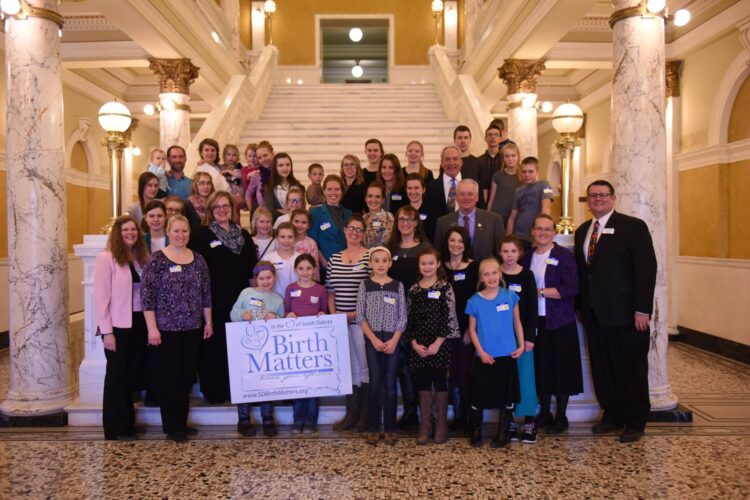
To better understand what this looks like in practice, we spoke with Mandy Steen, Board Chair, and Grace Fox, midwife and board member of South Dakota Birth Matters, an organisation working to expand access to midwifery and birth options across the state.
While the term maternity desert is widely used in the United States, the issue it describes is not unique. Across countries, many communities face the same challenge: essential maternity services are too far away, too limited, or not available at all.
A System Defined by Absence
In the United States, maternity care deserts are defined by the absence of services. Entire counties (a local government area within a US state) are classified based on whether care exists at all. A county is considered a maternity care desert when there are no midwifery birth centres, no maternity care providers and no hospitals offering maternity care.
This definition is useful for showing where care is missing, but it does not fully reflect how access is experienced. Distance shapes care. In South Dakota, a state in the northern United States with a relatively small, dispersed population, women travel an average of 32 kilometres to reach the nearest hospital with maternity services;in some areas that journey can be more than160 kilometres.
More than half of counties in South Dakota are classified as maternity care deserts. Nearly one in four women (23.7%) does not have a hospital with maternity services available within a 30-minute drive from her home; some women must drive over 60 minutes just to reach care.
As Mandy explained, distance in South Dakota shapes every part of maternity care. For many families, reaching care means long journeys, missed appointments, extra costs, and difficult decisions about when to leave home during labour. South Dakota is the 17th largest state geographically in the U.S., but it is the fifth least populated. It is also home to nine federally recognised tribal reservations, many of which are located in areas classified as maternity care deserts.
“It’s really scary that there are all of these women who can’t access care near them,” she said. “A lot of these women…don’t even attend a single prenatal appointment because they simply cannot access one logistically.”
To help contextualise the scale of the issue, Mandy explains that across the entire state there are only 18 out-of-hospital midwives, both Certified Professional Midwives and Certified Nurse Midwives, serving what is considered the second largest maternity desert in the country.
“They travel 90 minutes… just to reach care”
For Grace, a certified professional midwife practising in South Dakota, these challenges are part of everyday work.
“I recently had a client that travelled 90 minutes in labour to the hospital… and she just barely made it in time to give birth,” she said. In many cases, this kind of journey is not straightforward. Women often cannot drive themselves while in labour, which means they need a car, someone available to drive them, and support for any other children at home. These practical realities add another layer of complexity to accessing care.
She described women travelling two to three hours for appointments. Some temporarily relocate in the final weeks of pregnancy just to be closer to services. Others drive hundreds of kilometres throughout their pregnancy.
“I delivered a baby for a family that lives just under 300 kilometres away,” Grace explained. “They would drive three hours to every prenatal appointment, and three hours back.”
These journeys are not just inconvenient. They come with financial costs, stress, and risk. Grace shared the story of a family who had a road accident while travelling in winter conditions during labour.
For women living in rural areas, and in Indigenous communities, the barriers are even greater. Some are unable to attend regular antenatal care due to distance, transport, and cost.
“There’s pretty much women from half of South Dakota that can’t access care,” Mandy added.
These realities shape outcomes. They also reflect wider inequalities linked to poverty, geography, and access to services.
Why Maternity Deserts are Growing
In South Dakota, as in many parts of the United States, maternity care deserts are shaped by broader health system challenges.
Hospital closures, workforce shortages, and the concentration of services in urban areas have reduced access in rural communities. The complicated health insurance system in the United States also adds a layer of complexity to the situation.
Mandy described how services have steadily disappeared:
“They’ve been continuously closing maternity units… and it just makes it really difficult for women living in rural South Dakota to access care.”
Midwives are also affected. Training opportunities are limited, and recruitment is difficult in remote areas.
“We just don’t have enough midwives working in the state,” Grace said.
For certified professional midwives, the challenges are even greater. They often work independently, managing both clinical care and the business aspects of running a practice.
Cost is another barrier. Many families pay out of pocket for care because insurance systems are difficult to navigate.
“People are saying we can’t afford the insurance premiums… or it’s not worth it,” Grace explained.
Together, these factors create a system where access to care is not guaranteed, even in a high-income country.
A Long History of Advocacy
In this context, a civil society organisation that brings together women and midwives, South Dakota Birth Matters, has played a key role in expanding access to care.
Founded in 1992, the organisation emerged in response to efforts to restrict midwifery practice in the state. Over more than three decades, it has worked to protect and expand birth options through legislation, education, and advocacy.
This work led to important milestones, including the legalisation and licensure of certified professional midwives in 2017, allowing them to practise in the South Dakota.
Their experience highlights an important lesson: improving access to care often requires sustained, long-term advocacy.
Policy Barriers – and Opportunities
Despite progress, key barriers remain.
Current regulations limit the expansion of midwifery services. Certified professional midwives are not permitted to own or operate freestanding birth centres, restricting the development of community-based care options.
Geographic restrictions add another layer. Freestanding birth centres must be located within 30 miles (50 km) of a hospital that offers obstetric services. In a state where large areas already lack care, this requirement prevents services from being established where they are most needed.
To address these barriers, advocates from South Dakota Birth Matters have proposed a new state law aimed at changing how maternity services are regulated and expanding access to care.
In practical terms, the bill focuses on removing specific regulatory barriers that currently prevent services from being established where they are most needed.
It would:
- Update outdated birth centre regulations, including requirements that limit where centres can be located, so that services can be set up in rural and underserved areas
- Align legislation governing midwives and birth centres, removing contradictions that currently prevent certified professional midwives from fully participating in birth centre care
- Enable the establishment of new services closer to communities, reducing long travel times and making it easier for women to access antenatal, birth, and postnatal care
By doing this, the bill does not replace hospital care. Instead, it expands the range of safe options available for low-risk pregnancies, while maintaining clear protocols for referral and emergency transfer when needed.
For families, this could mean receiving care closer to home. For midwives, it could mean being able to practise more effectively within their communities. For the health system, it offers a way to address gaps in access without relying exclusively on hospital-based services.
A Global Issue with Different Names
While the term maternity desert is specific to the United States, the issue is global.
Different countries measure access in different ways. Some use administrative definitions based on service availability, while others focus on travel time or distance – in good weather, with a reliable vehicle and navigable roads. In global maternal health, a common benchmark is whether emergency obstetric care can be reached within two hours. This threshold is most often used in rural and hard-to-reach settings, particularly in low- and middle-income countries, where access to facilities can be severely limited. It reflects the critical window of time between the onset of untreated severe postpartum haemorrhage, a leading cause of maternal death and is used as a practical way to assess whether health systems can respond in time to life-threatening complications.
Each approach highlights different aspects of access:
- Service availability shows whether care exists
- Travel time reflects real-life accessibility
- Workforce measures highlight provider shortages
Together, they point to the same conclusion: access to maternity care remains uneven worldwide.
What Midwives Can Learn
The experience of South Dakota offers clear lessons for midwives and advocates in other settings:
- Access is not only about whether services exist. Distance, cost, and system barriers shape whether people can actually use care.
- Policy decisions matter. Regulations can either expand access or limit it.
- Midwives are part of the solution. Community-based care and continuity of midwife care can help reach communities that are currently underserved.
- Advocacy takes time. As Mandy put it: “It’s a long game… you have to continuously learn, grow and adjust.”
- Persistence is essential. As Grace said: “Don’t be discouraged… it’s a long process, but you keep moving forward.”
Their experience shows that change depends on persistence, collaboration, and bringing together different voices to push for better care.
Looking Ahead
There are signs of progress in South Dakota. Awareness is growing, and conversations with policymakers are starting to shift.
But the need remains clear.
Maternity deserts highlight where health systems are not reaching people. Addressing them requires investment, policy change, and stronger integration of midwives into health systems.
As South Dakota Birth Matters continues its work, their experience shows what is possible when midwives, communities, and advocates work together to expand access to care.