Trust in a time of crisis: Kanata Akter on the power of midwives
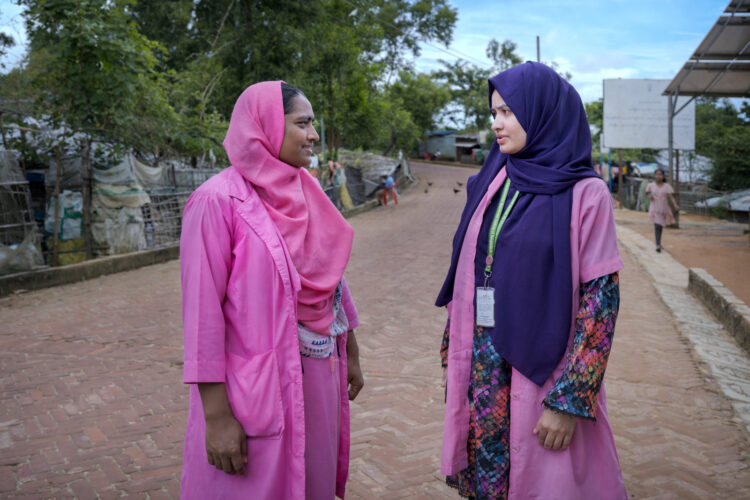
In the Rohingya refugee camps in Bangladesh, midwife Kanata Akter saw what becomes possible when women trust the care they will receive. For World Humanitarian Day, she speaks to ICM about providing respectful care during crisis and how those experiences now inform her work to strengthen midwifery across Bangladesh.
When Kanata Akter began working at a health facility in the Rohingya refugee camps, only four to six women gave birth there each month. By the time she moved into a wider supervisory role, that number had risen to between 80 and 100.
For Kanata, the figures tell a story that goes far beyond the walls of the facility.
“This achievement is not simply about the increase in delivery numbers,” she told ICM. “It represents the trust we built within the community, our success in overcoming cultural barriers, and the collective efforts of midwives, Community Health Workers, and the wider health team.”
Kanata is now the Midwifery Technical Officer at the Bangladesh Midwifery Society (BMS), ICM’s Member Association in Bangladesh. Before taking on this national role, she worked for several years with HOPE Foundation in Cox’s Bazar, first as a midwife and later as a supervisor and coordinator.
During this time, she provided clinical care while mentoring midwives and nurses. Her work included antenatal and postnatal care, family planning, supporting births, managing obstetric emergencies and caring for survivors of sexual violence.
She gained this experience in a setting where displacement shapes every part of a woman’s experience of pregnancy, birth and sexual and reproductive health. Today, she brings the lessons she learned in Cox’s Bazar to her work strengthening midwifery at the national level.
Building trust before care begins
In the Rohingya humanitarian context, access to care is affected by much more than whether a health facility is nearby. Long-held cultural beliefs may lead women to give birth at home or seek support from traditional birth attendants. Some women do not feel comfortable receiving care from male health professionals. Family members may decide whether and when a woman seeks care, sometimes delaying urgent treatment.
Kanata and her colleagues understood that improving access meant working with the community, not simply waiting for women to arrive. They partnered with community health workers, traditional birth attendants, community leaders and religious leaders. Together, they shared culturally sensitive information, listened to women’s concerns and involved families in conversations about care.
“Building trust within the community is often one of the most demanding but also the most important aspects of the work,” Kanata said. “Overcoming fear, misconceptions and cultural sensitivities takes time and consistent engagement.”
The team also worked to ensure the care women received was respectful and culturally sensitive. This helped women and their families feel safer choosing midwife-led care.
Protecting dignity when resources are limited
Humanitarian crises place enormous pressure on health services. Supplies may be scarce, facilities disrupted and patient numbers high. Referral routes and other essential services can become unreliable.
Kanata described how she and her colleagues prioritised women according to the urgency of their needs and used the resources available as carefully as possible. When services were interrupted, they coordinated with other facilities and humanitarian organisations to arrange referrals and maintain continuity of care.
Even under pressure, dignity could not be treated as optional. “I remained focused on ensuring that women received safe, respectful, and quality care,” she said. Through teamwork, adaptation and evidence-based practice, the team continued to protect women and newborns.
Through bedside teaching, simulation training, mentorship and supportive supervision, Kanata helped midwives and nurses strengthen their skills in obstetric emergencies and other areas of sexual and reproductive healthcare.
The team also improved systems for recording, reporting and monitoring care. They strengthened maternal and perinatal mortality reviews, examined avoidable factors and used what they learned to change practice. For Kanata, this helped create “a culture of continuous learning, accountability, teamwork and respectful maternity care”.
Midwives must be able to practise fully
One challenge Kanata encountered was limited understanding of what midwives are qualified to do. Early in the humanitarian response, they were not always recognised as autonomous health professionals. This sometimes prevented them from practising to their full scope and affected collaboration and referrals.
Kanata saw that perception change as midwives consistently demonstrated their knowledge, professionalism and the quality of their care.
But recognition alone is not enough. Kanata believes governments and humanitarian organisations must invest in midwives as an essential part of resilient health systems. Midwives need adequate staffing, medicines and equipment, as well as safe working conditions, supportive supervision and continuing professional development.
The Midwifery Model of Care must remain at the centre of services, including during emergencies. Women need respectful, compassionate and evidence-based care throughout pregnancy, birth and the postnatal period. Strong community engagement and reliable referral systems are also essential.
“I believe that investing in midwives is not only an investment in the health workforce,” Kanata told ICM. “It is an investment in women, newborns, families, and the resilience of communities.”
Her experience in Cox’s Bazar shows what that investment can achieve. When midwives are trusted, supported and able to provide high-quality care, more women can make informed choices and receive the care they need — even in the most difficult circumstances.