Hand in Hand: How Midwives in the DRC Are Shaping Interprofessional Collaboration
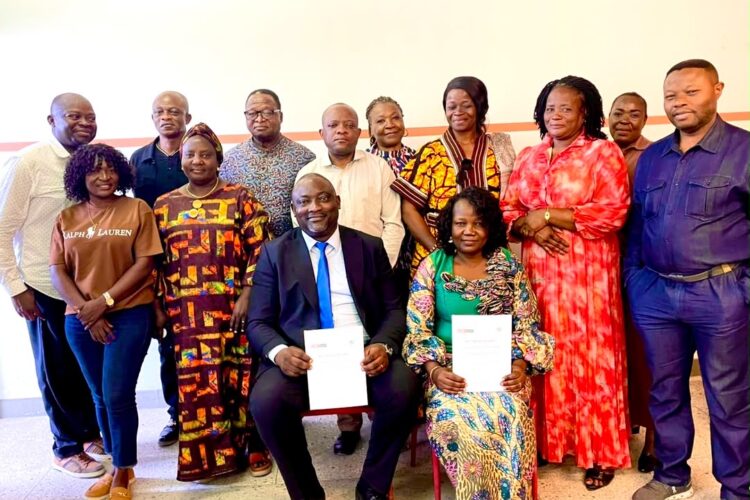
Working hand in hand begins with recognising what each profession brings to women’s care. In the Democratic Republic of the Congo (DRC), midwives are helping turn that principle into a shared commitment, through a new partnership that places respect for their expertise at the heart of interprofessional collaboration.
For Annie Tshiamala Kabambi, National President of the Congolese Society of Midwifery Practice (SCOSAF), this is a deeply meaningful step.
“For me personally, this moment brings to life a vision in which obstetrician-gynaecologists and midwives no longer work in parallel, but hand in hand, as natural allies.”
On 17 September 2026, SCOSAF signed a Memorandum of Understanding with the Congolese Society of Gynaecology and Obstetrics (SCOGO), in Kinshasa. For SCOSAF, ICM’s member association in the DRC, the agreement marks an important achievement: a formal commitment that recognises midwives’ expertise and gives their association a shared role in shaping the work ahead.
The ambition took shape almost a year earlier, during an international meeting of the Collaborate for Women: Abortion and Contraception Care Together (C4W) project in Nairobi in October 2025. Representatives of ICM, FIGO and WHO met with delegations from participating countries. During those discussions, the DRC delegation expressed a clear wish to formalise collaboration between the country’s midwives and obstetrician-gynaecologists.

The working relationship already existed. The opportunity was to give it a national framework, with agreed priorities, responsibilities and ways to put shared intentions into practice.
SCOSAF describes ICM’s role in that process as a catalyst and trusted intermediary. Through opportunities for dialogue at C4W’s international meetings, alongside technical and institutional support, ICM helped bring the two associations closer together. In SCOSAF’s account, those exchanges gave them the confidence to turn a shared aspiration into a formal commitment.
That experience reflects an important part of C4W’s approach: supporting national midwives’ associations to lead efforts to strengthen education and collaboration. The initiative focuses on family planning and comprehensive abortion care. In the DRC, the resulting agreement reaches across maternal, newborn, sexual and reproductive healthcare.
For midwives, SCOSAF hopes the partnership will bring greater professional recognition, stronger mentorship and a safer framework for practice. The agreement explicitly includes respect for each profession’s competencies and professional frameworks among its guiding principles. Its shared governance provides a structure through which both associations can shape priorities and oversee implementation.
These commitments matter because collaboration takes more than bringing people into the same room. It requires an understanding of what each profession contributes, alongside practical arrangements that support people to work together. SCOSAF and SCOGO have agreed to develop joint work plans setting out responsibilities, timelines and indicators, with a Joint Steering Committee to monitor progress.
Their first priorities connect this structure to everyday care. Planned joint workshops will address obstetric and newborn emergencies, including postpartum haemorrhage, pre-eclampsia and sepsis. The associations also intend to develop clinical protocols together, establish alert and rapid transfer pathways between primary health facilities and referral maternity units, and undertake joint advocacy with the Ministry of Health and partners.
For women and newborns, the hope is that these arrangements will support more integrated care and faster responses when complications arise. Over the agreement’s initial two years, the task will be to translate these commitments into changes in practice, with both associations sharing responsibility for moving the work forward.
What can Midwives Learn from this Partnership?
For midwife associations, SCOSAF’s experience offers a useful starting point for reflection. What existing professional relationships could be strengthened through a formal commitment? Where could shared priorities become a joint work plan? And what support would help midwives’ associations take an active role in shaping those partnerships?
The DRC’s experience illustrates how international exchanges can support national ambitions, and how a midwives’ association can help carry an idea from discussion into an agreement with concrete responsibilities. Respect for professional expertise, shared governance and practical first steps are all features other associations can draw on in their own contexts.
For Annie, the purpose remains the care women and newborns receive.
“By forming one team in the service of life, we can ensure that every mother and child receives safer, more compassionate and dignified care.”
SCOSAF has helped create a framework for that vision. The next chapter will be written through the work the two associations undertake together.
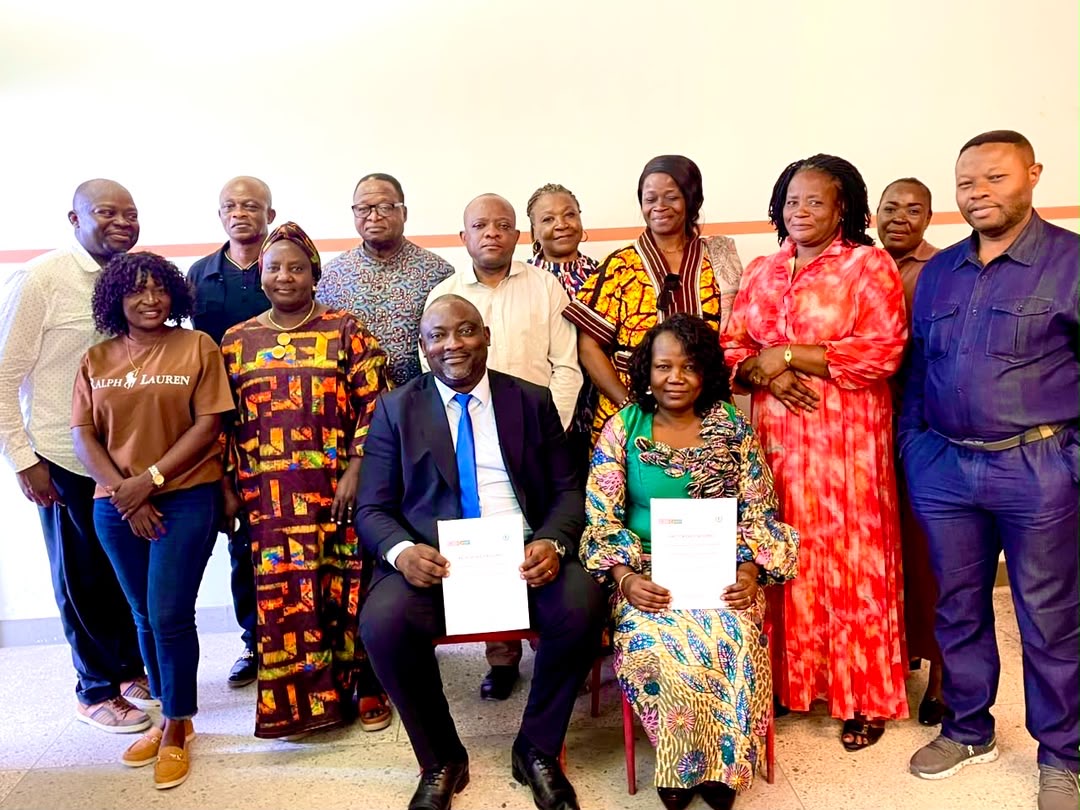
Photo credit: SCOSAF / C4W DRC Communications Team