From commitments to action: ICM at the United Nations General Assembly
Every September, world leaders, policymakers and advocates gather in New York for the United Nations General Assembly (UNGA) High-Level Week. They discuss the challenges facing people around the world and the commitments needed to address them. When those conversations turn to health, the voices of midwives need to be in the room.
At this year’s 81st General Assembly, ICM brought a practical question to discussions on financing, primary health care, climate change and women’s rights: what will it take to turn global commitments into better care? Across the week, ICM made the case for investing in midwives, listening to women’s experiences of care and building health systems that enable midwives to practise to their full scope.
Here are the events where we made that case, and the actions we called for.
Accountability and health financing
At PMNCH’s 14th Annual Accountability Breakfast, speakers explored how to track health financing commitments and hold decision-makers accountable in a difficult funding environment.
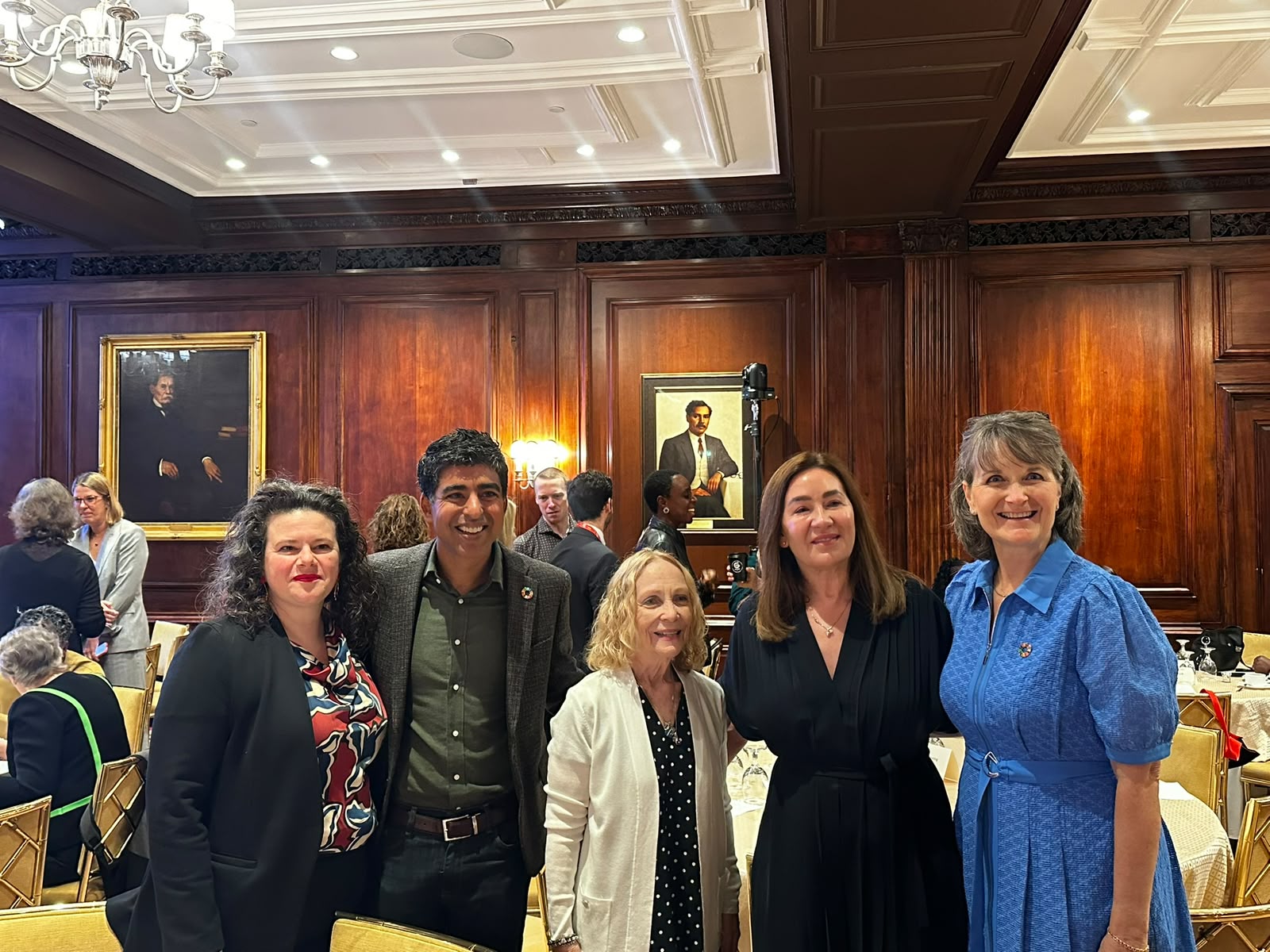
Anna af Ugglas, ICM Chief Executive, brought the discussion directly to the health workforce. Promised funding does not guarantee that resources reach where they are needed most. Without clear mechanisms to track how funds are allocated and spent, money can get lost in the system before it reaches frontline care, leaving midwives without funded positions, appropriate working conditions, medicines or equipment.
She also highlighted a less visible form of accountability: women’s experience of care. Whether care is safe, respectful and responsive is part of understanding whether investment is making a difference.
Sierra Leone’s use of pregnancy tracking and maternal and child mortality reviews, and Kenya’s commitment to employ 5,000 midwives, offered examples of how countries are working to turn commitments into action.
At a second event on locally led health systems, hosted by GE HealthCare Foundation and The Business Council of International Understanding, participants discussed the government leadership, frontline workers and partnerships needed to make health programmes sustainable.
Across both discussions, ICM’s message was clear: financing must be measured by what it makes possible for the people providing and receiving care.
Midwifery in primary health care
At an event hosted by Bangladesh and Sweden with UNFPA, participants discussed how to integrate midwifery into primary health care to prevent maternal and newborn deaths.
Bangladesh highlighted its commitment to creating 25,000 midwifery posts. ICM emphasised that training midwives is only part of the investment needed: they also need funded positions, appropriate deployment, supportive policies and effective referral systems.
At the Global Leaders Network meeting at UN Headquarters, Sanele Lukhele, a midwife from the Society of Midwives of South Africa, an ICM Member Association, brought the perspective of a midwife working alongside women and newborns into the global discussion. Her contribution was a reminder that the policies and commitments discussed at events like UNGA ultimately need to reflect the realities of those providing care every day.
“As midwives, we stand alongside women and their babies during some of the most important moments of their lives, with hope, courage and, sometimes, uncertainty,” said Sanele Lukhele.
Climate change and health
At a climate adaptation event hosted by the United Nations Foundation and partners, Anna af Ugglas highlighted extreme heat as an emerging maternal and newborn health emergency.
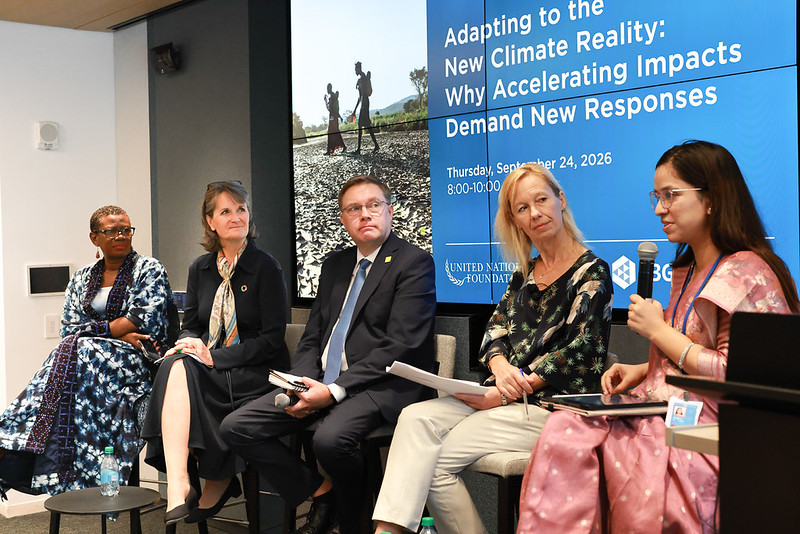
Pregnancy increases the body’s vulnerability to heat, with extreme temperatures associated with risks including dehydration, hypertensive disorders, preterm birth, low birth weight and stillbirth. Heat also affects newborns, midwives and the health facilities where care is provided.
Anna outlined ICM’s work to equip midwives to respond, including the recently published Extreme Heat: A Guide for Midwives and the development of a Climate-Wise Care module for the Safe Delivery App with Maternity Foundation and Direct Relief.
ICM also called for climate-related risks to be integrated into midwifery education and continuing professional development, and for midwives to be included in national adaptation and emergency response plans. “Midwives are already on the frontline of climate-related health emergencies. They need to be recognised, prepared and resourced accordingly”, higlighted Anna af Uglass.
Working across professions
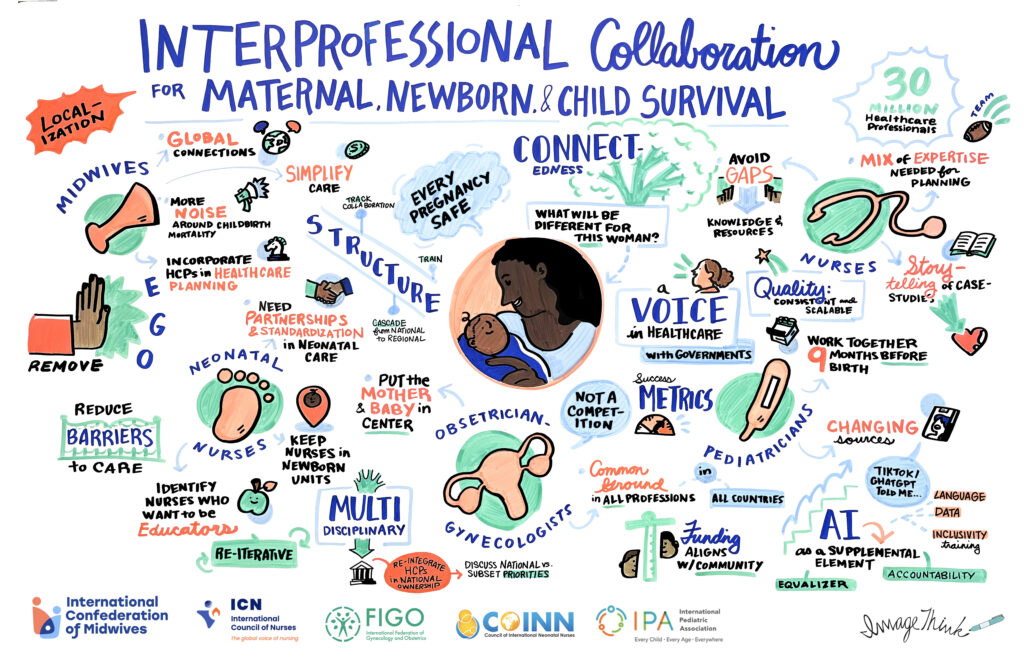
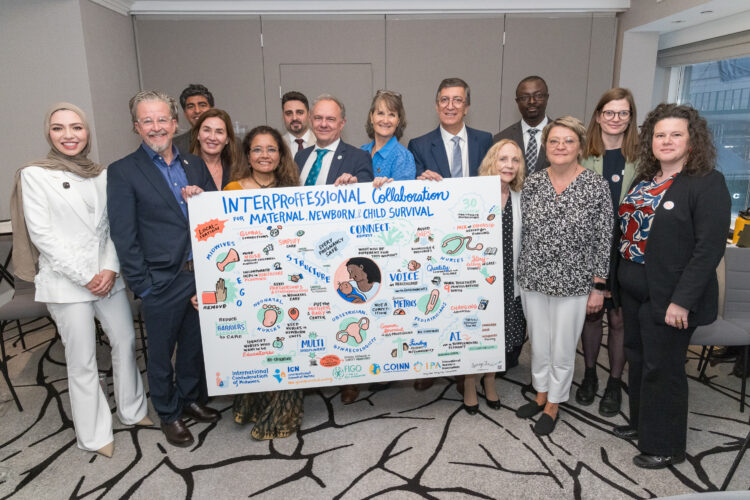
ICM co-hosted an event on Interprofessional Collaboration for Maternal, Newborn and Child Survival with Gates Foundation, FIGO, IPA, ICN and COINN, bringing a partnership launched at the ICM Congress in Lisbon into the UNGA conversation.
The event brought together professional associations, governments, funders and other partners to examine how health professionals can work together more effectively. Participants identified barriers including professional silos, fragmented information, power dynamics and separate funding streams. They also discussed solutions such as interprofessional education, multidisciplinary teams and coordinated workforce planning.
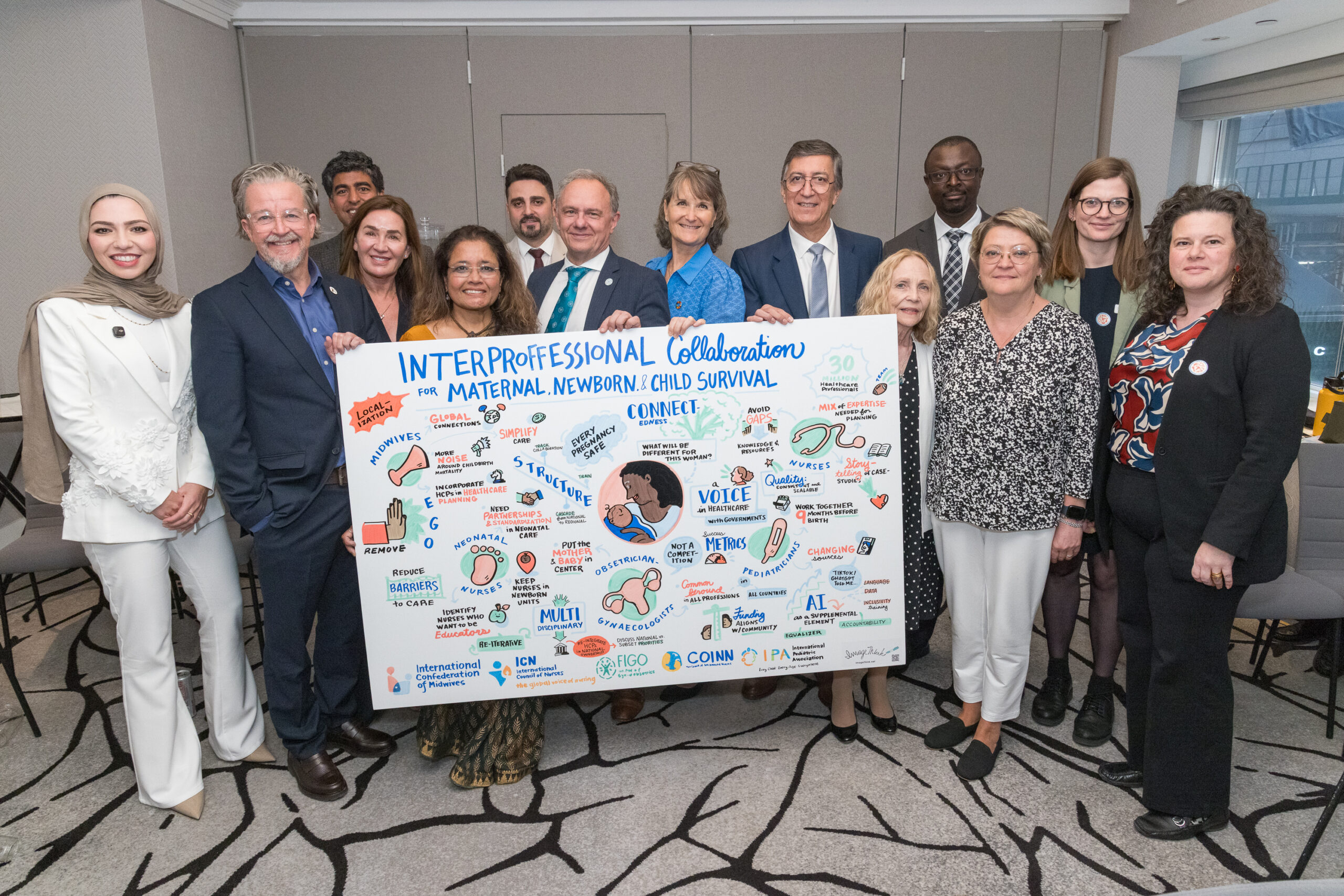
Examples from Nigeria, Kenya and Syria showed how collaboration can take different forms according to local needs. The shared message was that improving outcomes for mothers, newborns and children requires health systems designed to work together.
We also had graphic recorders from ImageThink capturing the key discussions, ideas and messages from the event visually.
Midwives championing women’s rights
ICM also met with the Center for Reproductive Rights to discuss how rights-based approaches can strengthen women’s experiences of maternal and reproductive health care. Both organisations emphasised the importance of placing women at the centre of decisions about their health and care.
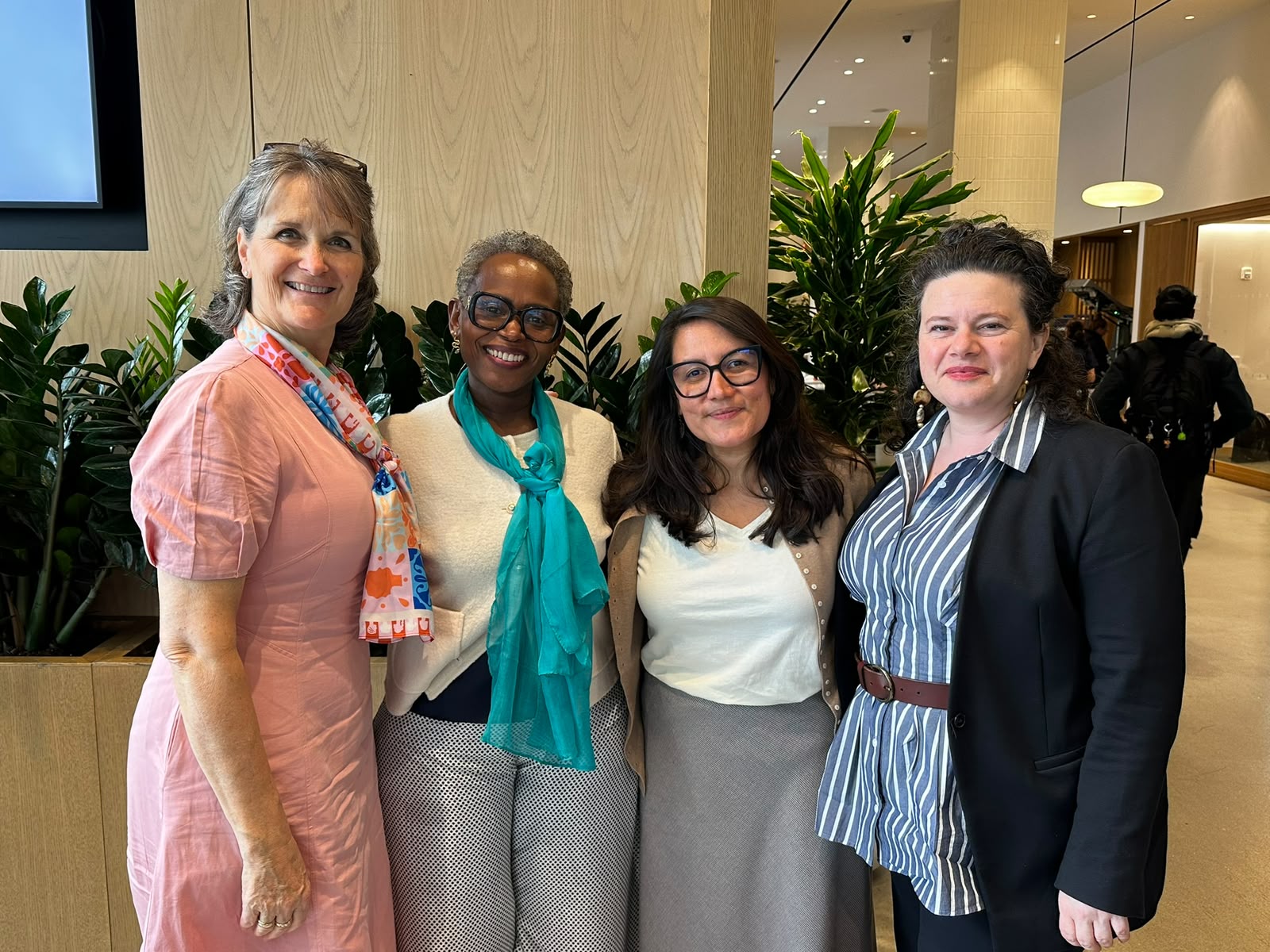
For ICM, this reflects the midwifery model of care across the full continuum of sexual and reproductive, maternal and newborn health. Midwives practising to their full scope, in line with the ICM Essential Competencies for Midwifery Practice, are central to delivering this approach.
What comes next
The challenge now is to turn these conversations into action. Governments and partners need to fund midwifery positions, enable midwives to practise to their full scope, include them in climate and health planning, and listen to women’s experiences of care. ICM will continue working with partners to advance these priorities and improve access to quality, respectful and equitable care.