A Day in the Life of Dawit Tamiru, the Midwife Training Ethiopia’s Next Generation
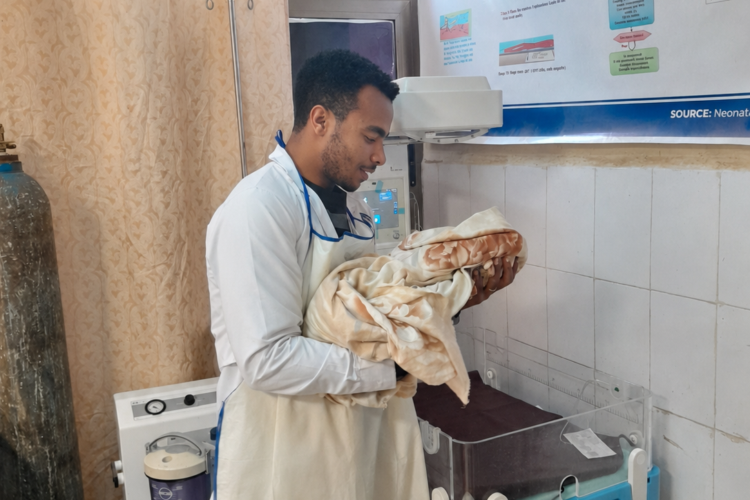
Dawit Tamiru is an Assistant Professor of Midwifery and Head of the School of Midwifery at Haramaya University in Ethiopia. He teaches the next generation of midwives, mentors students in clinical settings, conducts research on maternal and child health, and continues to work as a midwife at Hiwot Fana Comprehensive Specialized Hospital, a referral hospital serving more than 5 million people.
For Dawit, midwifery is personal. When he was around 10 years old, his mother gave birth at home. After the baby was born, the placenta did not come, and her condition worsened. Dawit was too young to know what to do. He remembers praying while the adults around him searched for help. His mother was eventually taken to a health facility, where midwives saved her life.
The next day, Dawit visited her in hospital. She was safe. He asked who had saved her. The answer stayed with him: midwives.
Today, Dawit’s work brings together education, clinical care, research and community health. His days are full, and they rarely follow one simple routine. Some days begin in the classroom and end in the labour and birth unit. Others take him to skills labs, clinical practice sites or hard-to-reach communities near Dire Dawa. Across all of it, his focus remains the same: preparing skilled midwives, supporting women and newborns, and generating evidence to improve care.
This is a day in his life.
————————-
I wake up early in the morning and start my day knowing there are many things to do.
As Head of the School of Midwifery, I first have to make sure that teaching activities are running as planned. I check that instructors are on schedule, that classes are taking place, and that each session is being delivered according to its objectives. We have syllabuses, session plans and checklists, and I use these to make sure the routine educational activities are in the right place.
Our undergraduate midwifery programme is a four-year curriculum, with more than 250 students across the programme, as well as master’s students.
So my morning often begins with coordination. I look at the classes, the instructors and the students. I answer questions. I help solve problems. Then, depending on the schedule, I also teach my own class.
Teaching midwifery is not only about giving lectures. Midwifery is both an art and a science. It requires knowledge, skill and attitude. When I teach, I try to help students understand the core values of midwifery, including respectful care, clinical competence and the way we communicate with women and families.
We adapted our curriculum based on the International Confederation of Midwives framework. Still, like many settings, we face challenges with resources, infrastructure and implementation. This means we have to work hard to make sure students are not only learning the theory, but also developing the practical skills and professional attitude they need.
The future of our country depends on the future generation. Producing competent midwives is one of the most important parts of my work.
After teaching, I often go to the skills laboratory. Before students go to clinical practice sites, they need time to practise. In the skills lab, we use models and simulations to demonstrate essential midwifery competencies. I show students how to follow protocols, how to provide care safely, and how to prepare for the realities they will face in hospitals and health facilities.
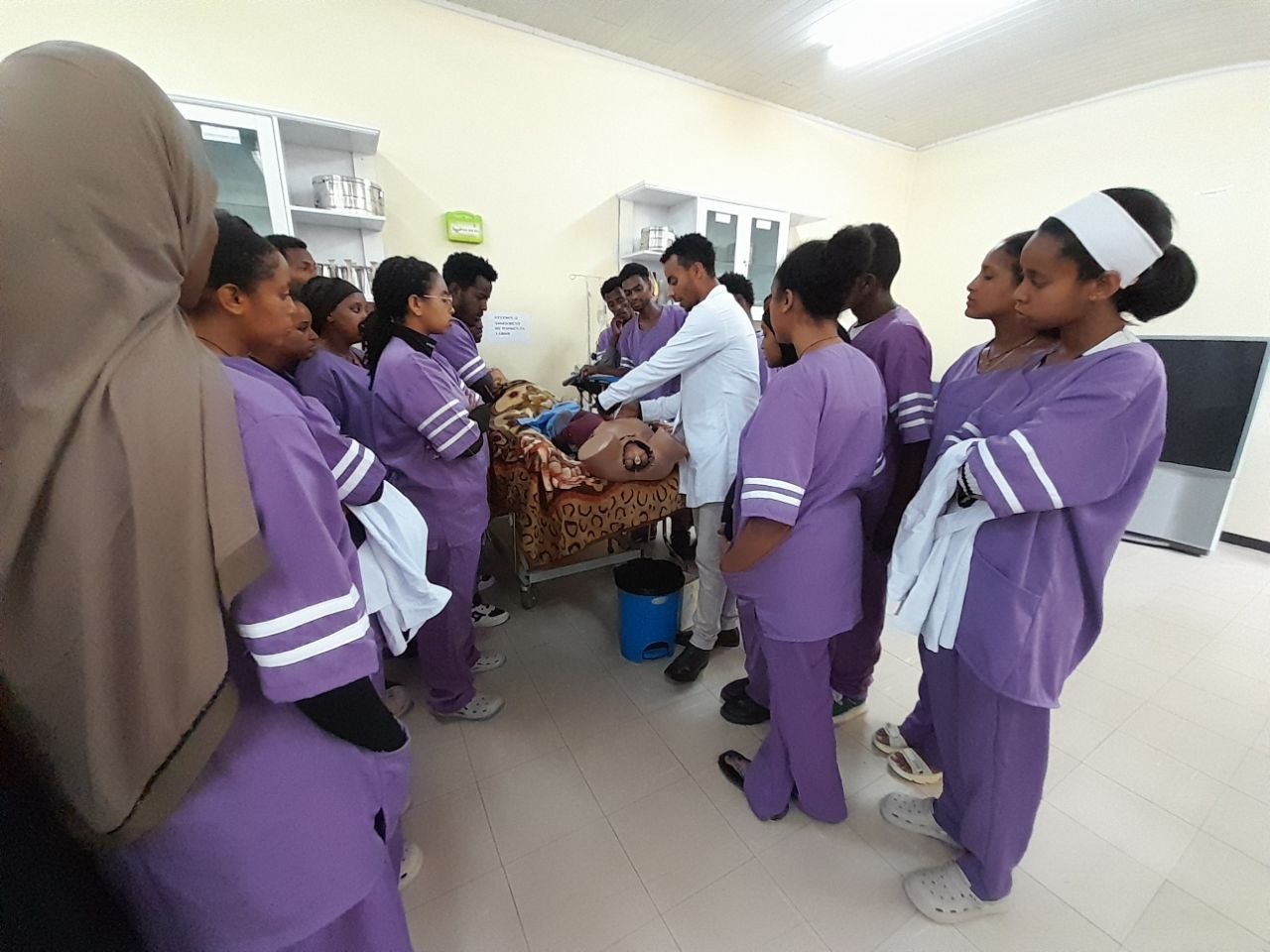
This part of the day is very important. Students need to make mistakes and ask questions in a safe learning environment before they are with women and newborns. They need to know what to do, why they are doing it, and how to do it with respect.
As a teacher, I want students to leave the skills lab better prepared. I want them to become knowledgeable, skilful and respectful midwives.
Later in the day, I may go to the hospital. Haramaya University works with Hiwot Fana Comprehensive Specialized Hospital, a large referral hospital serving more than 5 million people. I work there part-time in the labour and birth unit, and I also mentor students during their clinical practice.
Some days, my clinical time is in the morning. Some days, it is in the afternoon. On many days, I spend the morning at the university and the afternoon in the hospital.
In the labour and birth unit, I attend births and support women through labour. The hospital is busy. Some days, there are more than 10 or 15 births. There are also complications, emergencies and moments when there is very little time to rest.
There are times when I spend the whole night in the hospital. These are not every day, but they are part of the work. When I am on duty, I may be in the hospital overnight, supporting care and responding to what is needed.
The hospital is the part of my work that gives me the greatest satisfaction. When I receive a baby in my hands and see relief on the woman’s face, it is very fulfilling. It is very satisfying and rewarding.
Not every day is spent on campus or in the hospital. Some days, I go into communities near Dire Dawa, including rural and hard-to-reach areas.
Dire Dawa is a city known for its history, trade and culture. But only a short distance from the city, families may face major barriers to health services. Some communities are difficult to reach. Some women continue to give birth at home. Some children miss vaccines or do not receive them on time.
In this part of my work, I investigate why people are not receiving the care they need.
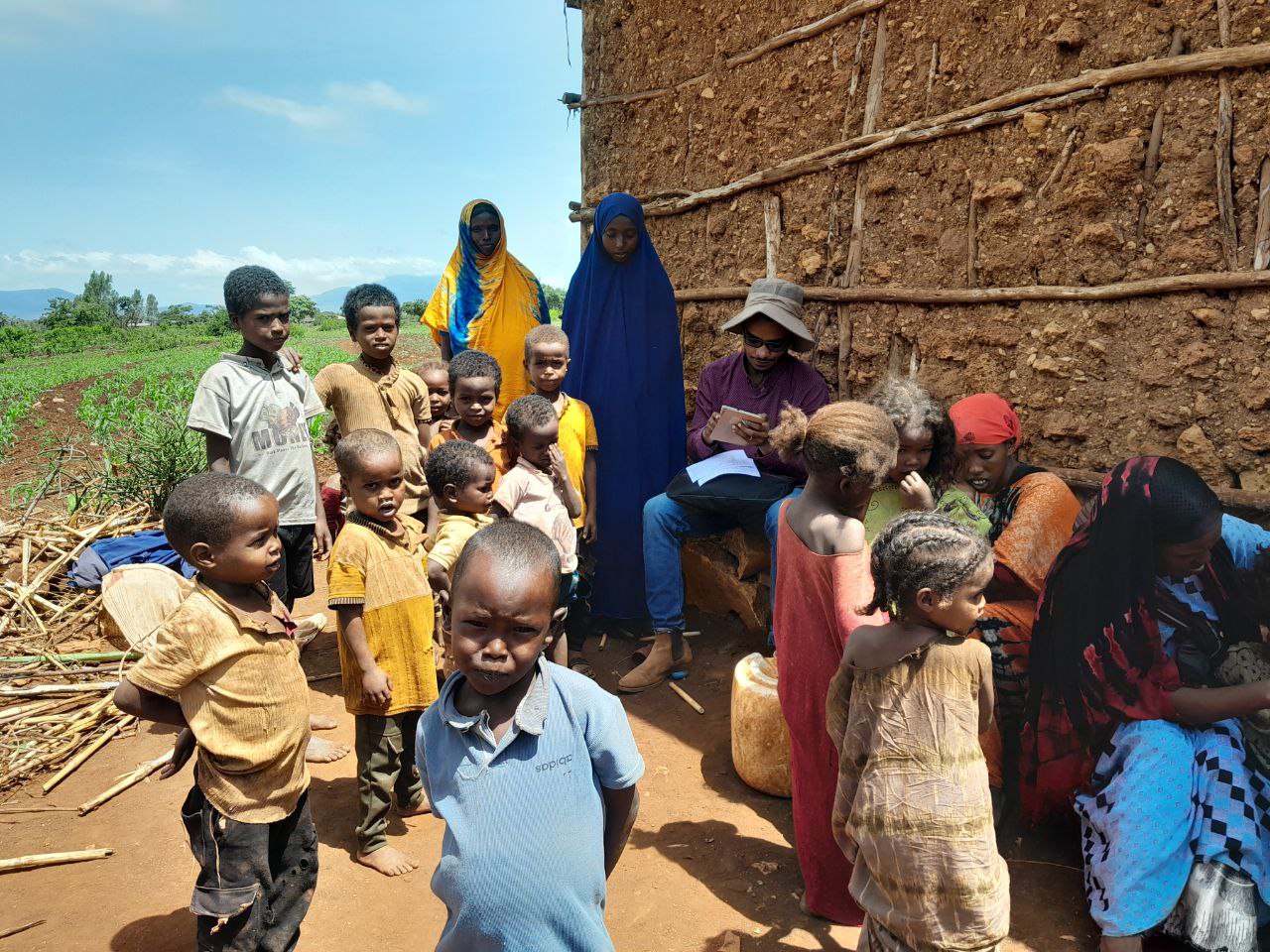
I may visit communities to look at vaccination gaps, identify children who have missed doses, check referral needs, and understand why some women are not using health services. If a child is eligible for a vaccine but has missed it, I help connect the family to the health facility. I do not provide the vaccine myself during these visits, but I help identify the gap and support referral.
I also ask questions about home births and delays in care. Why are women not seeking health services? Is the problem distance? Is it the availability of services? Is it the quality of care when they arrive? Is it the way the community understands pregnancy, birth and health services?
These are not abstract research questions. They are part of the same work as teaching and clinical care. To improve maternal and newborn health, we need to understand where the barriers are and why they exist.
My research focuses mainly on maternal and child health, with a strong interest in reducing maternal and newborn morbidity and mortality. I have published more than 26 papers, and my work looks at issues such as the number of midwives, quality of care, community perceptions and service access.
Ethiopia has made progress in reducing maternal mortality over the last two decades, but there is still much more to do. The country, like many others, is still working towards the Sustainable Development Goal target of reducing maternal mortality to fewer than 70 deaths per 100,000 live births.
When I am not on duty overnight, I may arrive home around 7 p.m.
My work often continues after I get home. I may open my computer to clean data collected from community visits, analyse findings, review what was done during the day, or prepare a plan for tomorrow.
Research, teaching and clinical work all require preparation. There are classes to organise, students to support, data to review and activities to coordinate.
But when I have free time, I spend it with my family. My family is the most important thing in my life. I try my best to give them my time.
I wish I had more time with them. On Sundays, when I am not on duty, I try to make family my priority.
I used to enjoy physical exercise, going to the gym and swimming. Now, with teaching, clinical work, research and management responsibilities, there is little time left. I still listen to music sometimes, but I also believe midwives need time for rest, mental wellbeing and leisure.
This is something I want to emphasise. Midwives give so much of themselves, but they also need time to recover and care for their own wellbeing.
Looking ahead
Dawit believes he was born to be a midwife.
“I want to contribute more to midwifery,” he says. “I believe I am born to be a midwife. This is something I dedicate my life to wholeheartedly.”
In the future, he hopes to pursue a PhD and continue building his knowledge in an environment where he can learn from experienced midwives and researchers. In 10 years, he hopes to be more educated, more advanced and able to contribute even more to the profession.
For now, his work continues across classrooms, skills labs, hospitals and communities. He teaches students the foundations of midwifery. He supports women through labour and birth. He studies the barriers that keep families from accessing care. He mentors future midwives who will go on to serve communities across Ethiopia and beyond.
His first understanding of midwifery came from seeing his mother survive because midwives were there. Today, he is part of making sure more women and newborns have that same chance.