Ending postpartum haemorrhage: New Lancet Series provides blueprint for action
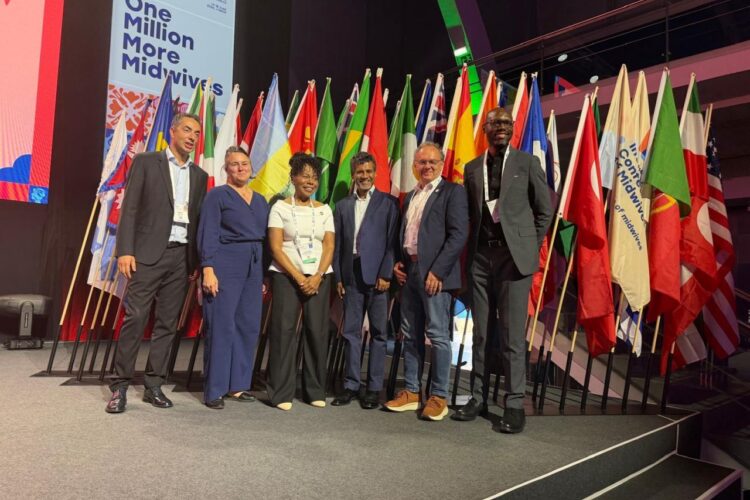
A new Lancet Series on postpartum haemorrhage (PPH) has been launched at the 34th ICM Triennial Congress in Lisbon, Portugal, setting out a clear roadmap to prevent, detect and treat one of the leading causes of maternal death worldwide.
The Series was launched during the WHO/HRP session, Ending PPH together: Implementing the new global guidelines, which brought together global experts to discuss how the latest evidence, guidelines and implementation tools can be translated into practice, policy and investment.
Postpartum haemorrhage, or excessive bleeding after birth, remains one of childbirth’s deadliest complications. The new Lancet Series estimates that it affects 27 million women every year, kills nearly 43,000 women annually, and costs countries, health systems and families more than US$10 billion each year.
Led by researchers from HRP, the World Health Organization (WHO), and the University of Oxford, the Series calls for a shift in how PPH is prevented, diagnosed and treated. Its message is simple and urgent: no woman should die from postpartum haemorrhage because help came too late.
“Postpartum haemorrhage is a race against time,” said Jacqueline Dunkley-Bent, ICM Chief Midwife. “This Series gives countries, health systems and health professionals a clear path forward: recognise bleeding earlier, act faster, and make sure every birth facility has the tools, medicines and trained staff needed to save lives.”
The Series highlights the importance of implementing the latest consolidated WHO, FIGO and ICM guidelines on the prevention, diagnosis and treatment of PPH. These include a new global definition of postpartum haemorrhage, with action recommended when 300 mL of blood is lost and accompanied by abnormal vital signs.
A major recommendation is the routine use of calibrated blood collection drapes to measure blood loss after birth. This would replace visual estimation, a long-standing practice that the Series finds is highly inaccurate and can miss half of PPH cases.
The Series also points to missed opportunities to prevent PPH before it begins. Reducing anaemia during pregnancy, addressing unmet need for contraception, avoiding medically unnecessary caesarean sections, and ensuring all women receive effective uterotonic medicines after birth could substantially reduce the global burden of postpartum haemorrhage.
“Too often, postpartum haemorrhage is recognised only after a woman’s condition has already become critical,” said Dunkley-Bent. “By identifying risk factors earlier, strengthening prevention throughout pregnancy and childbirth, and ensuring timely access to effective interventions, we can stop many cases before they become life-threatening.”
Another central recommendation is the rapid use of a five-part first-response treatment bundle known as MOTIVE. The bundle includes uterine massage, an oxytocic drug, tranexamic acid, intravenous fluids, and examination for the source of bleeding. According to the Series, this approach can reduce progression to life-threatening haemorrhage by up to 60%.
The MOTIVE bundle is designed so that midwives and nurses can act immediately, rather than waiting for specialist review. This is especially important in settings where referral systems are delayed, health facilities are under-resourced, or access to blood products is limited.
“When a woman is bleeding, the first response cannot wait,” said Dunkley-Bent. “The MOTIVE bundle recognises the role of midwives and nurses as immediate responders and gives teams a clear, evidence-based sequence of actions.”
Alongside the Series, WHO and partners have launched a new implementation guide and training toolkit. These resources include checklists, algorithms, simulation scenarios and job aids tailored for different resource settings. They are designed to help countries and health facilities put the evidence into practice and strengthen access to life-saving care.
The launch session was chaired by Frank Louwen and Jacqueline Dunkley-Bent, with presentations from Arri Coomarasamy, Ioannis Gallos, Olufemi Oladapo and Mikaela Hildebrand. Discussions focused on how the evidence can inform policy, financing and access to essential commodities, ensuring that proven clinical interventions are supported across the wider health system.
Effective medicines, simple diagnostic tools and evidence-based treatment bundles already exist. The challenge now is implementation.
Ending preventable deaths from postpartum haemorrhage will require governments, health systems, donors, professional associations and the wider global health community to make PPH an urgent priority. Every birth facility must be equipped. Every maternity team must be trained. Every woman must receive timely, respectful and effective care when bleeding occurs.
“The solutions are clear,” said Dunkley-Bent. “Now we need the political will, financing and system-wide commitment to make sure they reach every woman, everywhere.”