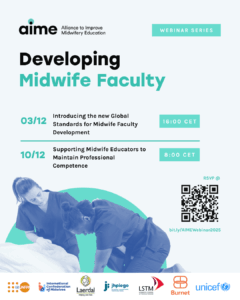
 High-quality midwifery education depends on educators who are confident, current, and professionally competent. Around the world, there is growing recognition of the urgent need to invest in midwifery education — including developing and supporting midwife faculty to design, deliver, and evaluate effective programmes of study. To address this critical need, the International Confederation of Midwives (ICM) has developed the ICM Global Standards for Midwife Faculty Development and the accompanying Companion Guide — the first global standards created specifically for midwife faculty. These standards represent a significant step toward ensuring midwifery educators and education systems are grounded in quality, innovation, opportunity, and evidence-based practice.
Session 1 (03/12): Introducing the new Global Standards for Midwife Faculty Development
This session will showcase the new ICM Global Standards for Midwife Faculty Development, explain the need and background behind their creation, and share country examples of how they can be implemented, evaluated and used to develop effective midwife faculty development programmes.
Session 2 (10/12): Supporting Midwife Educators to Maintain Professional Competences
This session will explore how the new ICM Global Standards for Midwife Faculty Development are being put into practice particularly Standard 6 on maintaining midwifery practice competence. Presentations will highlight emerging evidence from the Global Educators of Midwives Study (GEMS). Country experiences from Philippines, Samoa, and Kenya will showcase practical approaches to ensuring educators remain clinically connected and confident in their teaching.
Join us to discuss how global standards and national strategies can work together to strengthen midwifery education and improve outcomes for women and newborns worldwide.
High-quality midwifery education depends on educators who are confident, current, and professionally competent. Around the world, there is growing recognition of the urgent need to invest in midwifery education — including developing and supporting midwife faculty to design, deliver, and evaluate effective programmes of study. To address this critical need, the International Confederation of Midwives (ICM) has developed the ICM Global Standards for Midwife Faculty Development and the accompanying Companion Guide — the first global standards created specifically for midwife faculty. These standards represent a significant step toward ensuring midwifery educators and education systems are grounded in quality, innovation, opportunity, and evidence-based practice.
Session 1 (03/12): Introducing the new Global Standards for Midwife Faculty Development
This session will showcase the new ICM Global Standards for Midwife Faculty Development, explain the need and background behind their creation, and share country examples of how they can be implemented, evaluated and used to develop effective midwife faculty development programmes.
Session 2 (10/12): Supporting Midwife Educators to Maintain Professional Competences
This session will explore how the new ICM Global Standards for Midwife Faculty Development are being put into practice particularly Standard 6 on maintaining midwifery practice competence. Presentations will highlight emerging evidence from the Global Educators of Midwives Study (GEMS). Country experiences from Philippines, Samoa, and Kenya will showcase practical approaches to ensuring educators remain clinically connected and confident in their teaching.
Join us to discuss how global standards and national strategies can work together to strengthen midwifery education and improve outcomes for women and newborns worldwide.