Open Letter from European Midwifery Leaders and Stakeholders Calling for a Stronger EU Directive on Midwifery
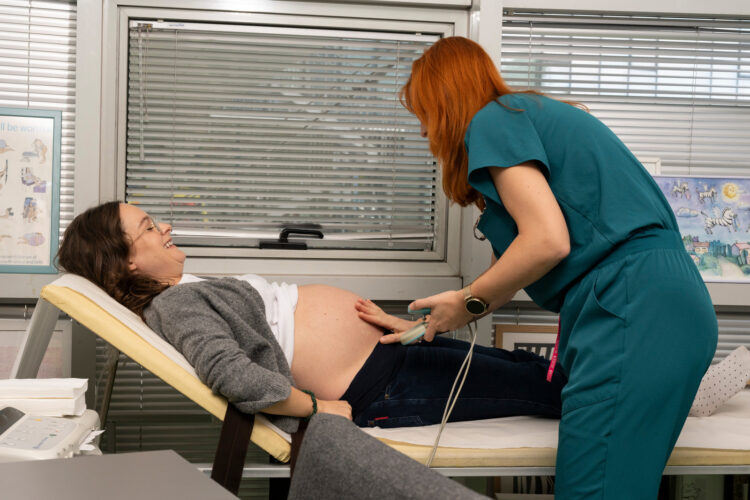
On 7 May 2026, more than 200 European midwifery leaders, senior educators, clinical leads and civil society organisations from across the European Union and European Economic Area submitted an Open Letter to the European Commission.
Coordinated by the International Confederation of Midwives (ICM), the letter calls for a stronger and more ambitious revision of Directive 2005/36/EC, which sets the minimum professional qualifications for midwives across Europe.
The letter was addressed to European Commission President Ursula von der Leyen, Executive Vice-President Roxana Mînzatu, who is responsible for social rights, skills, quality jobs and preparedness, and all European Commissioners.
Together, the signatories send a clear message from across the midwifery profession: Europe’s midwifery standards must reflect current evidence, international standards and the care midwives provide today.
You can read the full letter and find the list of signatories below.
Dear President von der Leyen,
Dear Vice-President Mînzatu,
Dear Commissioners,
We write to you today as leaders of the midwifery profession and representatives of civil society organisations and institutions across Europe. We are united in our concern about the current update process for Directive 2005/36/EC on the Minimum Professional Qualifications for Midwives.
To be direct: this update, the first in more than 20 years, risks leading to decades of stagnation. The draft proposals put forward by the Commission so far lack the ambition, the evidence-base, and the alignment with international standards that this moment requires. If they are adopted in their current form, they will weaken the EU’s position in as a global leader in this field.
We are writing because we believe this outcome is avoidable, but only if the Commission acts with urgency and rigour.
Europe’s Midwifery Advantage is Worth Protecting
The European Union has a well-documented position of global leadership in midwifery. The State of the World’s Midwifery 2021 report, produced by UNFPA, WHO, and the International Confederation of Midwives (ICM) across 194 countries, identifies Europe as having the strongest educational and regulatory environment for midwives of any region in the world (1). This means that when emerging economies, development partners, and neighbouring countries seek to build or reform their midwifery systems, they look to Europe.
Our standards shape global policy and practice. This is not simply a matter of clinical quality; it is a strategic asset. When EU technical assistance supports SRMNAH workforce development in Sub-Saharan Africa, in the Western Balkans, in EU neighbourhood countries, it carries European midwifery standards with it (2). This asset is now at risk, and the risk is internal.
A 1980 Standard in a 2026 World
Directive 2005/36/EC is the legal instrument that establishes the minimum education and training standards that enable the automatic recognition of midwives’ qualifications across EU and EEA countries. However, the Directive’s midwifery provisions have seen almost no substantive change since 1980 (3). Forty-six years later, that text no longer reflects what midwives do, what services the scientific evidence has proven they provide best, or what the international community has recognised as the standard for high-quality sexual, reproductive, maternal, newborn and adolescent health (SRMNAH) care.
Most importantly, the current Directive does not reflect the ICM Essential Competencies for Midwifery Practice, the globally recognised benchmark against which the EU Directive should be aligned (4).
The Current Update is Not Fit for Purpose
The 2024 announcement that the Directive would be revised has been described as a historic, generational opportunity (3). The midwifery and SRMNAH community engaged with it seriously, with more than 96 midwifery stakeholders from 24 EU and EEA countries participating (3). However, the draft proposals for the update shared by the Commission do not adequately reflect these inputs.
The peer-reviewed academic literature has reached the same conclusion: the update process exhibits ‘key limitations’ and falls short of the ‘once-in-a-generational opportunity’ it represents (5). These are not procedural concerns; they go to the credibility, legitimacy, and effectiveness of the resulting Directive.
When the Minimum becomes a Maximum
One of the most damaging practical consequences of the current Directive is a dynamic where many EU and EEA countries treat the Directive as a maximum standard rather than a minimum, limiting midwives’ professional mobility and development (6). This is not an accident. Regulators in some conservative jurisdictions treat the Directive as the ceiling of sufficiency rather than the floor of ambition. A midwife trained to ICM Essential Competencies in the Netherlands or Denmark — including a full range of SRMNAH services — may find that her competencies are not recognised in a Member State where the 1980 Directive still defines adequacy, like Slovenia or Spain. Likewise, a midwife educated in a country like Croatia or Greece may find that her competencies are inadequate to work as a midwife in Germany or Sweden.
This is a failure of the single market that prevents the EU from realising the full value of its most qualified professionals. s. It creates healthcare quality inequalities between women in different Member States that are not scientifically or clinically justified. And it signals to the global community something that undermines Europe’s normative leadership: that the EU is willing to set standards for itself that fall below those it promotes internationally.
This update is the moment to change that — but only if the update is substantive.
European Competitiveness and Resilience at Risk
Europe has been a leader in midwifery and SRMNAH, a position that is at stake if this update produces only minor technical updates, as the current proposals suggest.
Workforce quality and mobility risk. The automatic recognition system under Directive 2005/36/EC handled almost 78,000 professional recognition decisions between 2020 and 2024 (7). At that scale, the quality of the Directive’s underlying standard is a population health concern, not a technicality. A recognition system that certifies midwives against a 1980 standard is not providing what automatic recognition promises: assurance that a practitioner can deliver safe, comprehensive, contemporary care.
Normative leadership and global credibility risk. The EU’s ability to shape global SRMNAH standards depends on its own framework being credible, current, and aligned with international best practice. The ICM Essential Competencies were updated in 2024. WHO’s Midwifery Models of Care Guidance advanced in 2025. If the EU Directive remains rooted in 1980 provisions, the EU’s legal framework ceases to be the reference standard that the world looks to. This has implications beyond the EU: when the EU technical assistance supports SRMNAH workforce development in low- and middle-income countries, they carry visibly outdated EU standards with them. This weakens the EU’s credibility as a technical authority, and countries and development partners will look elsewhere.
Health system resilience risk. Midwives educated to a 1980 standard are a workforce whose utility narrows precisely when systems are under greatest stress. A Directive that keeps European midwives below their capable scope degrades the EU’s emergency health architecture.
Anticompetition risk. By encoding an outdated scope of practice, the Directive itself becomes a source of anticompetitive harm within the single market. A midwife educated to the Directive’s 1980 provisions is an educated professional whose labour market participation has been artificially restricted, preventing a competent, predominantly female workforce from contributing its full economic and clinical value, and it is doing so through a legal instrument that the Commission itself is responsible for maintaining.
Internal health equality risk. Women in Member States where the Directive is used as a ceiling, rather than a floor, receive less comprehensive midwifery care than women in Member States that exceed the minimum. This is a failure of rights and internal market and competition that the Directive update has the power to address — but only if it sets a standard high enough to drive convergence upward.
We are Calling for the EU Commission to:
- Adopt an updated Directive text that fully aligns to the ICM Global Standards and WHO Guidance. These standards are regularly updated benchmark that reflects the latest scientific evidence.
- Ensure a strategic Directive update that delivers on health system resilience and gender equality. Strong midwifery makes health systems more resilient, even in crises. It delivers on gender equality, women’s health and demography.
- Connect this Directive update explicitly to the EU’s global health strategy. The Directive’s content has implications far beyond the EU’s internal market. It shapes the standards that European midwives carry into development programmes, humanitarian settings, and bilateral partnerships.
The EU is a global leader in midwifery as a result of decades of investment in the profession – a position that is in danger because of the legal standards that are supposed to underpin it. If this Directive update does not close that gap, it will widen further, and other jurisdictions will advance. The EU’s normative leadership in midwifery and SRMNAH will erode — not dramatically or visibly, but steadily and consequentially.
Fully resourced, midwifery care that meets ICM Global Standards could avert an estimated 4.3 million deaths per year by 2035 globally (1). Europe has both the opportunity and the obligation to be the region that shows the world how to get there. A strengthened, internationally aligned Directive would be among the most powerful and cost-effective steps the EU could take toward that goal.
The window for the Directive update is narrow. The opportunity is real. We respectfully and urgently call on the Commission to seize it.
Signed by over 200 senior European midwifery leaders, educators, and civil society organisations from 27 countries across the EU and EEA.
List of Open Letter Signatories
Midwifery Association Leaders
- Agnieszka Bień, President, Polish Midwives Association; Vice-Dean, Faculty of Health Sciences, Medical University of Lublin – Poland
- Alieke de Roon-Immerzeel, Board Member, KNOV | Royal Dutch Organisation of Midwives – The Netherlands
- Alina Liepinaitiene, Vice President, Lithuanian Midwives Union – Lithuania
- Andrea Weber-Käser, Executive Director, Swiss Federation of Midwives – Switzerland
- Anita Prelec, President, Nurses and Midwives Association of Slovenia – Slovenia
- Anna Maria Rath, Board Member, Austrian Midwives Association – Austria
- Anna-Cristina Alborino-Rings, President, Association Luxembourgeoise des Sages-femmes – Luxembourg
- Anna-Katharina Kocian, Head of the Regional Office Oberösterreich, Austrian Midwives Association – Austria
- Anne Friedrich, Board Member of the Regional Office Tirol, Austrian Midwives Association – Austria
- Annika Wanierke, President, German Midwives Association – Germany
- Bernadette Trimmel, Board Member of the Regional Office Salzburg, Austrian Midwives Association – Austria
- Bettina Steger, Board Member, Austrian Midwives Association – Austria
- Birgit Krenauer, Board Member, Austrian Midwives Association – Austria
- Câmpean Narcisa Florentina, Vice President, Independent Midwives Association of Romania – Romania
- Carla Sofia Rodrigues Vilaça, Board Member, Austrian Midwives Association – Austria
- Chantal de Vitry, President, Association Nationale des Sages-Femmes Territoriales – France
- Christina Kulle, Board Member, Austrian Midwives Association – Austria
- Eleonore Bleuzen-Her, President, Collège National des Sages-Femmes de France – France
- Emine Babac, Board Member, German Midwifery Association – Deutscher Hebammenverband DHV – Germany
- Eva Nordlund, President, The Swedish Association of Midwives – Sweden
- Eva Schindler-Lausecker, Board Member, Austrian Midwives Association – Austria
- Florian Tomaschko, Board Member, Austrian Midwives Association – Austria
- Häli Viilukas, President, Estonian Midwives Association – Estonia
- Irina Alexandra Mateescu, President, Romanian Midwives Association / Asociația Moașelor din România (AMșR) – Romania
- Isabelle Trinkl, Head of the Regional Office Tirol, Austrian Midwives Association – Austria
- Iva Podhorsky Štorek, President, Croatian Chamber of Midwives – Croatia
- Iveta Beihmane, Board Member, Latvian Midwives Association – Latvia
- Jacqueline Klingler-Schneider, Board Member, Austrian Midwives Association – Austria
- Karoline Ziegler, Board Member, Austrian Midwives Association – Austria
- Kathrin Kroneis, Board Member , Austrian Midwives Association – Austria
- Kyra Caruso, General Manager, Hebammenzentrum – Austrian Association of Independent Midwives – Austria
- Laura Amico, Board Member, Austrian Midwives Association – Austria
- Linda Veidemane, President, Latvian midwives Association – Latvia
- Lis Munk, President, Danish Midwives Association – Denmark
- Lisa Rakos, President, Austrian Midwives Association – Austria
- Lúcia Maria Colaço Oliveira Leite, President, Associação Sindical Portuguesa dos Enfermeiros (ASPE) – Portugal
- M Smith, Board Member, KNOV | Royal Dutch Organisation of Midwives – The Netherlands
- Mª Isabel Castelló López, Vice President, Asociación Española de Matronas (AEM) – Spain
- Maaike van Rijn, Board Member, KNOV | Royal Dutch Organisation of Midwives – The Netherlands
- Magdalena Ezrová, President, Czech Union of Midwives – Czech Republic
- Magdalena Kurbanović, Vice President, Croatian Chamber of Midwives – Croatia
- María José Caravaca Berenguer, President, Federación de Asociaciones de Matronas de España (FAME) – Spain
- Maria Panagiotou, Vice President, Cyprus Nurses and Midwives Association – Cyprus
- Marieke Smith, Board Member, KNOV | Royal Dutch Organisation of Midwives – The Netherlands
- Marlies Gaiswinkler, Head of the Regional Office Wien, Austrian Midwives Association – Austria
- Martina Koll-Braun, Board Member, Austrian Midwives Association – Austria
- Melania Elena Tudose, President, Independent Midwives Association – Romania
- Mojdeh Redjaian-Kaltenbach, Board Member, Austrian Midwives Association – Austria
- Monserrat Angulo Perea, Member of the National Commission for the Obstetric-Gynaecological Specialty (Midwifery), Ministry of Health – Spain
- Nina Olsén Nathan, Chair, Danish Society of Midwifery – Denmark
- Päivi Oinonen, President, Federation of Finnish Midwives – Finland
- Petra Graf Heule, President, Swiss Federation of Midwives – Switzerland
- Rosa Maria Plata Quintanilla, President, Spanish Association of Midwives (AEM); Member of the National Commission for Midwifery, Ministry of Health – Spain
- Sabine Mortelmans, Voorzitter VBOV, Belgian Midwives Association – Belgium
- Sara Fugledal Wiik, President, Norwegian Nurses Organisation – Midwifery Section – Norway
- Silvia Vaccari, President, National Federation of the Councils of Midwifery Profession (FNOPO) – Italy
- Sophie Escobar, President, Conseil National Professionnel de Maïeutique – France
- Sophie Hafner, Board Member, Austrian Midwives Association – Austria
- Stefanie Winkler, Vice President, Austrian Midwives Association – Austria
- Stella Leontiou, President, Cyprus Nurses and Midwives Association – Cyprus
- Stephanie Lehner, Board Member of the Regional Office Oberösterreich, Austrian Midwives Association – Austria
- Veronika Stechovska, Vice President, Czech Association of Midwives (UNIPA) – Czech Republic
- Vitor Manuel Leão Baptista Varela, President, Associação Portuguesa dos Enfermeiros Obstetras (APEO) – Portugal
- Yasmin Rosa Jäger, Head of the Regional Office Vorarlberg, Austrian Midwives Association – Austria
Senior Midwifery Educators
- Alexandra Haider, Head of Midwifery Institute, FH Joanneum – Austria
- Ana Hernandez, Head Midwifery Department, Haute Ecole Léonard de Vinci, Office de la Naissance et de l’Enfance – Belgium
- Ana Paula Prata Amaro de Sousa, Senior Lecturer and Program Coordinator, Universidade do Porto – Portugal
- André Posenau, Dean of the Department of Nursing, Midwifery and Therapeutic Sciences, HS Bochum – Germany
- Andrea Villmar, Coordinator of the Master Programme on Advanced Midwifery Practice, University of Cologne – Germany
- Anne Kasper, Program Director and Professor of Midwifery Science, HAWK University of Applied Sciences and Arts Hildesheim / Holzminden / Göttingen – Germany
- Annick Bogaerts, Professor of Midwifery Science, KU Leuven Belgium & University of Plymouth – Belgium
- Annika Bode, Professor of Midwifery, Hochschule Bochum – University of Applied Science – Germany
- Annika Walker, Program Director of the Applied Midwifery Science Program, University of Applied Sciences Niederrhein – Germany
- Antonio Hernández Martínez, Vice Dean for Academic Affairs at the Faculty of Nursing, University of Castilla-La Mancha (UCLM) – Spain
- Arminda Anes Pinheiro, Director of the Postgraduate Specialization Course in Maternal and Obstetric Health Nursing, University of Minho – Portugal
- Barbara Baumgärtner, Head of Midwifery Programme, City University of Applied Sciences Bremen – Germany
- Barbara Fillenberg, Head of Midwifery Science, Johannes Gutenberg University – Germany
- Barbara Schildberger, Senior Lecturer, University of Applied Sciences Upper Austria – Austria
- Beata Pięta, Head of the Department of Practical Midwifery Education, Poznan University of Medical Sciences – Poland
- Beate Kayer, Programme Director Bachelor Midwifery, University of Applied Sciences Burgenland – Austria
- Bernhard Breil, Dean of the Faculty of Health Care, Hochschule Niederrhein, University of Applied Sciences – Germany
- Birgit Münzer, Senior Lecturer, FH Kärnten (Carinthian University of Applied Sciences) – Austria
- Camilla Gry Temmesen, Head of Midwifery Education, University College Absalon – Denmark
- Charlotte Overgaard, Head of Research, Faculty of Health, University of Southern Denmark – Denmark
- Christina Prinds, Head of Master in Midwifery Science, Head of Research at Dept. of Women’s Health, University of Southern Denmark – Denmark
- Claudia F. Plappert, Senior Lecturer at the Department of Midwifery, University Hospital Tuebingen – Germany
- Cristina Franco Antonio, President, Extremadura Professional Association of Midwives; Professor of Nursing, University of Extremadura – Spain
- Dorota Matuszyk, Senior Lecturer, Uniwersytet Jagielloński Collegium Medicum – Poland
- Dorothea Tegethoff, Head of Department of Midwifery, Universitätsmedizin Rostock, Institute of Health Sciences – Germany
- Dorothee Herrmann, Lecturer, Institut für Hebammenwissenschaft, University of Köln – Germany
- Dr Rita Pace Parascandalo, Head of Department of Midwifery, University of Malta – Malta
- Annette Bernloehr, Director of BSc Midwifery Programme, University of Applied Sciences and Arts, Bielefeld (HSBI) – Germany
- Eleni Hadjigeorgiou, Senior Lecturer, Cyprus University of Technology – Cyprus
- Emilia Isabel Martins Teixeira da Costa, University Senior Researcher, University of Huelva – Spain
- Eva Rydahl, Researcher, University College Copenhagen – Denmark
- Ewa Tobor, Researcher, University of Opole – Poland
- Franziska Rosenlöcher, Professorin Hebammenwissenschaft, Brandenburgisch Technische Universität (BTU) – Germany
- Germano Rodrigues Couto, Coordinating Professor, Fernando Pessoa School of health – Portugal
- Heike Polleit, MA, Head of Degree Programme, Hochschule Campus Wien, University of Applied Sciences – Austria
- Henrike Todorow, Prof. für Hebammenkunde, Institutsleitung Institut für Hebammenwissenschaft und interprofesionelle Perinatalmedizin, Studiengangleitung, Vizepräsidentin HWFT, Universität Leipzig, Medizinische Fakultät – Germany
- Ilze Ansule, Director of the Midwifery Program, Riga Stradiņš University – Latvia
- Isabel Margarida Marques Monteir Dias Mendes, Coordinating Professor, Escola Superior de Enfermagem, University of Coimbra – Portugal
- Jasmien Clysters, Lecturer, Universität zu Köln – Germany
- Johanna Neumeyer, Senior Lecturer, Hochschule Fulda – Germany
- Johannes Winning, Dean/Professor, Ernst-Abbe-Hochschule Jena – Germany
- Jolanta Olszewska, Program Director, Gdański Uniwersytet Medyczny – Poland
- Judith Kluck, Professor for Health and Maternity Care, University of Applied Sciences Landshut – Germany
- Jurgita Peciuriene, Researcher, Women’s Issues Information Centre – Lithuania
- Kaire Sildver, Senior Lecturer, Tallinn Health University of Applied Science – Estonia
- Karolina Luegmair, Head of M.Sc. Midwifery-Led Care, Vice-Dean of Faculty of Health and Nursing, KSH München University of Applied Sciences – Germany
- Katja Schrøder, Head of Master of Health Science Progamme, University of Southern Denmark – Denmark
- Kerstin Hartmann, Head of BA Programme in Midwifery, OTH Regensburg – Germany
- König-Bachmann Martina, Program Director, Midwifery, Health University of Applied Sciences Tyrol – Austria
- Kristin Mitte, Interim President, Ernst-Abbe-Hochschule University of Applied Sciences – Germany
- Kristina Vogel, Researcher, Institute of Midwifery Science- University of Cologne – Germany
- Lene Kjærgård-Jensen, Head of the Midwifery Education Programme, University College South Denmark – Denmark
- Lígia Morais, Researcher, Observatory on Obstetric Violence – Portugal
- Linda A. Wödy, Senior Lecturer, Katholische Hochschule Nordrheinwestfalen – Germany
- Lotte ten Brinke, Research Associate, University of Cologne – Germany
- Luciano Rodriguez Diaz, Dean, Faculty of Health Sciences of Ceuta, University of Granada – Spain
- Maeve O Connell, Senior Lecturer in Midwifery, University College Cork – Ireland
- phil. Beate Elvira Lamprecht, Head of Degree Programme Midwifery, Department Health Sciences, Salzburg University of Applied Sciences GmbH – Austria
- Manuel Linares Abad, Former Dean, Faculty of Health Sciences, University of Jaén – Spain
- Manuela Maria da Conceição Ferreira, Coordinator of the Master’s Program in Maternal and Obstetric Nursing, Instituto Superior Politécnico de Viseu – Portugal
- Márcio Filipe Moniz Tavares, Dean of the School of Health, University of the Azores – Portugal
- Maria da Conceição Fernandes Santiago, Coordinating of the Master Programme Maternal Health and Obstetric Nursing, Santarém Polytechnic University – Portugal
- Maria Manuela Néné Cordeiro, Coordinator of the Master’s Programme in Maternal and Obstetric Health; President of the General Assembly, Portuguese Association of Obstetric Nurses – Portugal
- Marina Weckend, Director Midwifery Science, Institute of Health Sciences, University of Luebeck – Germany
- Mari-Talvikki Berglund, Chair of Finnish Midwifery Teachers’ Network, Turku University of Applied Sciences & University of Turku – Finland
- Marius Ungureanu, Associate Professor, Department of Public Health, Babes-Bolyai University – Romania
- Martina Schlüter-Cruse, Head of the Program of Midwifery Science, Bochum University of Applied Sciences – Germany
- Marzena Strahl, Senior Lecturer, Zakład Pielęgniarstwa Położniczo-Ginekologicznego Gdański Uniwersytet Medyczny – Poland
- Mathieu Azcueu, Head of Midwifery Department, University Burgondy Europe – France
- Mélanie Patricio Da Silva, Researcher, Institut für Hebammenwissenschaft Köln – Germany
- Melita Grieshop, President of the Midwifery Conference of Departments of Midwifery Science, Protestant University of Applied Sciences Berlin (EHB) – Germany
- Mette Kathrine Medum Christiansen, Head of Midwifery Program, UCN, University College North – Denmark
- Michaela Michel-Schuldt, Head of Master Programme “Innovative Care Practice in Nursing and Midwifery”, Ludwigshafen University of Business and Society – Germany
- Mie De Wolff, Researcher, University of Southern Denmark, Faculty of Health Science, Odense, Denmark & Department of Obstetrics, Amager and Hvidovre Hospital, Denmark – Denmark
- Mouquet Tiphaine, Senior Lecturer, Haute Ecole Leonard de Vinci – Belgium
- Nicola H. Bauer, Senior Lecturer, Institute of Midwifery Science, Faculty of Medicine, University of Cologne & University Hospital Cologne – Germany
- Nina Knape, Vice President for Student Affairs, Teaching & Diversity; Midwifery Program Director (B. Sc.), Ludwigshafen University of Business and Society – Germany
- Oda von Rahden, Senior Lecturer, Jade University of Applied Science Oldenburg – Germany
- Radu Mihaela Corina, Senior Lecturer, Carol Davila University of Medicine and Pharmacy – Romania
- Rainhild Schaefers, Director, Institute of Midwifery Science, University of Münster – Germany
- Rikke Damkjær Maimburg, Head of PhD Program, Aarhus University and Aarhus University Hospital – Denmark
- Signe Marcussen, Temporary Head of Department of Midwifery Education, Copenhagen University College – Denmark
- Silvia Ammann-Fiechter, Head of the Midwifery Department, HES-SO University of Applied Sciences and Arts Western Switzerland; President of the Swiss Midwifery Education Board – Switzerland
- Sonja Wangler, Head of Department of Applied Midwifery Science, Cooperative State University (DHBW) Stuttgart – Germany
- Stephan Kirchner, Vice Dean for Academic Affairs, Department of Health and Care, University of Applied Science Ernst Abbe, Jena – Germany
- Suniva Portz, Senior Lecturer, TH Nürnberg – Germany
- Susanne Grylka, Head of Midwifery Division and Head of MSc Midwifery, Bern University of Applied Sciences – Switzerland
- Therese Damke, Head of Bachelor of Science Midwifery, Bern University of Applied Sciences – Switzerland
- Tita Stanek Zidarič, Senior Lecturer, Head of the Midwifery Chair, University of Ljubljana – Slovenia
- Ulrike Schuster, Program DIrector, Midwifery, IMC Krems University of Applied Sciences – Austria
- Ute Klotten, Senior Lecturer and Researcher, Institut für Hebammenwissenschaft, Medizinische Fakultät, Universität zu Köln – Germany
- Ute Lange, Senior Lecturer, University of Applied Sciences Bochum – Germany
- Valérie Pareit, Senior Lecturer, Haute Ecole Léonard de Vinci – Belgium
- Valgerður Lísa Sigurðardóttir, Head of Department of Midwifery, University of Iceland & National University Hospital of Iceland – Iceland
- Veronika Simetzberger, Lecturer and Researcher, University of Applied Sciences Tyrol & University of Innsbruck – Austria
- Vibeke Jenny Koushede, Dean at the Faculty of Social Sciences, The Faculty of Social Sciences, University of Copenhagen – Denmark
Senior Midwifery Clinical Leaders
- Agnes Gereb, Midwife and Advocate for Respectful Maternity Care, Hungarian Association of Independent Midwives – Hungary
- Ana Laura Santos Villar, Clinical Midwife Specialist, Hospital General Universitario Gregorio Marañon – Spain
- Ellen Thaels, Co-Director, The Midwifery Unit Network – England
- Fatima Vacas Revilla, Head of Delivery Services, Marqués de Valdecilla University Hospital – Spain
- Gráinne Milne, Director of Midwifery, Our Lady of Lourdes Hospital – Ireland
- Irena Bartels, Head of Midwifery, West Tallinn Central Hospital Women’s Clinic – Estonia
- Javier Gallego, Head of Delivery Ward, Miguel Servet University Hospital – Spain
- Jolanta Parafiniuk, Regional Consultant in Midwifery – Poland
- Lazar Daniela Giorgiana, Head of Midwifery, National Institute for Mother and Child Health “Alessandrescu-Rusescu” – Romania
- Maria Consuelo Soto Lucía, Member of the Teaching Commission and Secretary of the Nursing Education Subcommittee, Hospital General Universitario Gregorio Marañón – Spain
- Maria do Rosário dos Reis Vieira Rodrigues de Barros, Chief Nursing Officer, Directorate-General of Health – Portugal
- Maria Hornstrup Christensen, Clinical Midwife Specialist, Odense University Hospital – Denmark
- María Lourdes Martín Parada, Head of Delivery Room, Marqués de Valdecilla University Hospital – Spain
- María Noelia Martínez de la Iglesia, Clinical Midwife Specialist, Castilla y León Health Service (SACYL) – Spain
- Nuria Lana, Deputy Head of Midwifery, Servicio Valenciano de Salud (Valencian Health Service) – Spain
- Pilar Montoto Cavestany, Supervisor of Midwives, Public Health Service of the Community of Madrid – Spain
- Rosalia Maria Gomes Marques, Head Midwife, Delivery Ward, Garcia de Orta Hospital; Adjunct Lecturer, Lisbon School of Nursing – Portugal
- Vija Bathena-Krastiņa, Chief Midwife, Riga Maternity Hospital – Latvia
- Zalka Drglin, Researcher and Project Manager, National Institute of Public Health & Natural Beginnings Society – Slovenia
Senior Midwifery Leaders
- Anna af Ugglas, Chief Executive, International Confederation of Midwives – The Netherlands
- Jacqueline Dunkley-Bent OBE, Chief Midwife, International Confederation of Midwives – The Netherlands
- Lia Brigante, Board Member Europe, International Confederation of Midwives – The Netherlands
- Kate Stringer, Midwife Advisor, International Confederation of Midwives – The Netherlands
- Liselotte Kweekel, Midwife Advisor, International Confederation of Midwives – The Netherlands
- Solomon Hailemeskel Beshah, Midwife Advisor, International Confederation of Midwives – The Netherlands
- Stephanie Marriott, Midwife Advisor, International Confederation of Midwives – The Netherlands
- Montserrat Angulo Perea, Member of the Executive Board, General Council of Nursing of Spain (CGE) – Spain
- Susanne Åhlund, Chief Midwifery Officer of Sweden, The National Board of Health and Welfare – Sweden
Civil Society Organisations
- International Planned Parenthood Federation – European Network (IPPF EN) (Camille Butin, Advocacy Advisor)
- Center for Reproductive Rights (Katrine Thomasen, Associate Director for Europe)
- European Forum of National Nursing and Midwifery Associations (EFNNMA) (Mervi Jokinen, President) – Belgium
- Austrian Family Planning Association (Angela Tunkel, Executive Director) – Austria
- Plateforme Citoyenne pour une Naissance Respectée (Charlotte Verdin, Project Manager) – Belgium
- European Women’s Lobby (Lucia Anna Demeny, Policy and Campaigns Officer) – Belgium
- Fertility Europe (Anita Fincham, Advocacy Manager) – Belgium
- Roditelji u akciji [Parents in Action] (Ivana Zanze, Executive Director) – Croatia
- Association for Freestanding Birth Centres and Alongside Midwifery Units (Lenka Laubrová Žirovnická , CEO) – Czech Republic
- APERIO – Healthy Parenting Association (Miloslava Kramna, Project Manager) – Czech Republic
- European Institute of Women’s Health (Peggy Maguire, Director General) – Ireland
- Prenatal Alliance (Susana Anacleto de Freitas Lopes, Secretary-General) – Norway
- Foundation for Women and Family Planning FEDERA – Poland
- Women’s Circles (Zuzana Krišková, Chairwoman) – Slovakia
- Možnosť voľby [Freedom of Choice] (Adriana Mesochoritisová, Legal representative) – Slovakia
- Saplinq, o.z. (Róbert Furiel, Director) – Slovakia
- Institute Umbilica (Špela Slovša, Director) – Slovenia
- Birth Rights Sweden (Jolin Mårtensson, President) – Sweden