ICM and UNFPA Join Forces to Accelerate Global Investment in Midwifery
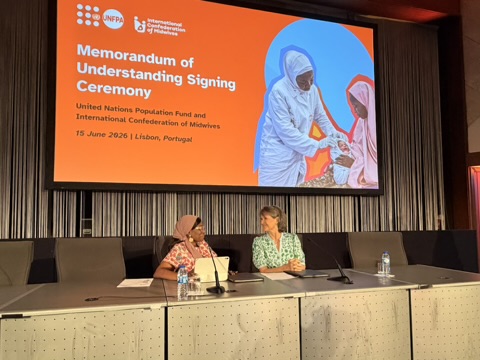
The ICM and United Nations Population Fund (UNFPA) have signed a Memorandum of Understanding to strengthen their shared work for women, newborns, families and midwives around the world.
The agreement brings together ICM’s global network of more than two million midwives, represented through over 130 national midwives’ associations in 120 countries, and UNFPA’s strong country presence and reach. Together, the two organisations will work to advance midwifery as an essential part of strong, equitable and resilient health systems.
Speaking at the signing, Anna af Ugglas, Chief Executive of ICM, said:
“Today’s agreement marks an important step forward in our shared commitment to women, newborns and the midwives who care for them. By combining ICM’s global midwifery leadership with UNFPA’s reach and influence, we can accelerate progress, strengthen health systems and help ensure that more women and babies receive the quality care they deserve.”
The partnership will focus on supporting countries to recruit, train and retain skilled midwives, strengthen national midwives’ associations, improve regulatory frameworks, and support the implementation of midwifery models of care. It will also build on joint efforts through the Midwifery Accelerator Coalition and the midwifery investment case launched by UNFPA at IMNHC.
Anna added:
“ICM carries the collective voice of midwives worldwide; UNFPA has the country presence and reach. Together, we can achieve more than either organisation can alone.”
The agreement also reflects a shared commitment to ensuring midwives are included in the policy and financing spaces where decisions about health systems are made. Midwives are present in communities, health facilities, humanitarian settings and emergency contexts. Their expertise is essential to improving care and reducing preventable deaths.
“This will provide us with a framework to grow midwifery and grow national health systems,” said Diene Keita, Executive Director of UNFPA. “ICM brings a powerful global network which is so incredibly important. We as UNFPA bring the scale and the trusted government relationships,” she added.
ICM and UNFPA are already seeing the value of this approach in countries such as Egypt, with similar work expected to begin in Syria. Through this renewed partnership, both organisations aim to support governments to develop national midwifery strategies, strengthen education and regulation, and recognise midwifery as essential in humanitarian and emergency settings.
This MoU marks a long-term commitment to sustainable change, guided by the midwives and associations who know their contexts best.