How the Global Competencies for Midwife Leaders support leadership at every stage
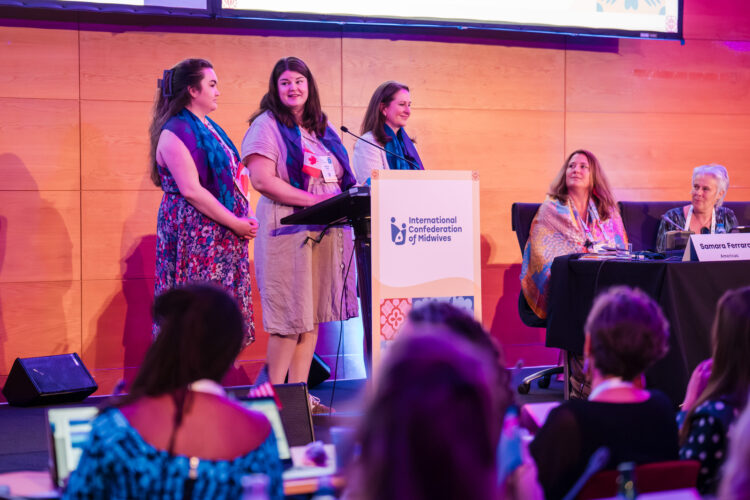
Leadership in midwifery is not limited to senior positions, management roles or executive decision-making. It begins during midwifery education, as student midwives develop the knowledge, skills and behaviours that support effective practice.
Throughout their careers, midwives demonstrate leadership through clinical decision-making, advocacy, communication, collaboration and a commitment to safe, respectful and evidence-informed care for women, gender diverse people, newborns and families.
The ICM Global Competencies for Midwife Leaders recognise that leadership develops over time. They provide a framework for leadership growth across four progressive proficiency levels:
- Foundational
- Proficient
- Advanced
- Strategic
These levels reflect increasing capability, responsibility, autonomy, influence and impact. A newly qualified midwife may demonstrate leadership by providing safe care, advocating for women and families, and contributing positively to a multidisciplinary team. An experienced midwife may mentor colleagues, support students or lead a quality improvement initiative. More senior leaders may influence organisational culture, workforce development, education or national policy.
Leadership looks different at each stage of a career. However, it remains important throughout professional life.
Why were the competencies developed?
Strong midwifery leadership is essential to improving sexual, reproductive, maternal, newborn and adolescent health. Midwife leaders contribute to the quality and safety of care, strengthen the workforce, promote evidence-informed practice, advocate for women and newborns, and support healthier communities.
Despite its importance, leadership development has often been inconsistent. Many midwives develop leadership skills informally through experience, without structured opportunities to build their capability or demonstrate what they can do.
The ICM competencies provide a common framework for leadership across clinical practice, education, management, research and policy. By describing the knowledge, skills, behaviours and professional attributes associated with different levels of leadership, they can support more intentional and continuous development.
They can also help midwives, employers, educators, professional associations and governments develop a shared understanding of what leadership looks like and how it can be supported.
Leadership develops throughout a career
The four proficiency levels reflect a gradual development of leadership capability. Progression is not based only on years of experience, job title or management responsibility. It is based on increasing knowledge, skills, responsibility, influence and impact.
At the Foundational level, leadership includes professional accountability, ethical practice, effective communication and advocacy. Newly qualified and early-career midwives demonstrate leadership through safe, autonomous practice, collaboration and positive contributions to their workplace.
At the Proficient level, leadership extends beyond individual practice. Midwives may support colleagues, mentor students, contribute to service improvement and influence care within their teams. They begin to identify opportunities to improve systems as well as individual experiences of care.
At the Advanced level, midwives lead across services and organisations. They may lead quality improvement initiatives, develop others, influence organisational priorities, manage resources and contribute to workforce development.
At the Strategic level, midwives influence policy, shape national and international priorities, strengthen health systems and advocate for investment in the midwifery workforce. Their leadership contributes to the development of both the current and future workforce.
Supporting individual development
The competencies provide a practical resource for midwives at every stage of their careers. They can support reflection, help identify development needs and inform future learning.
Midwives can use the framework to document evidence of leadership, including:
- mentoring colleagues or students;
- leading quality improvement projects;
- participating in research;
- introducing improvements to practice;
- supporting multidisciplinary collaboration; and
- advocating for women, newborns and their communities.
This evidence may support appraisal, revalidation or relicensing where applicable, promotion and applications for new roles.
The competencies can also help midwives recognise leadership activities that may otherwise go unnoticed. They encourage reflection on questions such as:
- How am I demonstrating leadership in my current role?
- Am I working within the full scope of my role and professional responsibilities?
- What opportunities exist to broaden my influence?
- What evidence can I gather to demonstrate my leadership capability?
Supporting organisations and employers
Leadership development also depends on the environments in which midwives work. Employers and healthcare organisations can use the competencies to support recruitment, induction, appraisal, mentorship, coaching and succession planning.
They can help organisations:
- align leadership programmes with different stages of career development;
- identify workforce strengths and development needs;
- clarify leadership expectations within roles;
- support more consistent career pathways; and
- develop future leaders across the workforce.
The competencies can also inform job descriptions, person specifications, interview questions and performance reviews. Aligning expectations with the appropriate proficiency level can help make responsibilities clearer and support fairer and more consistent recruitment and development.
When used in this way, the competencies should support development and reflection. They should not become a rigid assessment checklist or be used without considering the opportunities, resources and support available to individual midwives.
Strengthening the profession and health systems
The competencies can also support countries seeking to strengthen their midwifery workforce.
Governments, Ministries of Health, regulators, professional associations and education providers may use the framework when developing:
- national leadership programmes;
- career pathways;
- continuing professional development;
- workforce strategies;
- succession plans; and
- education and regulatory frameworks.
A shared leadership framework can support greater consistency across education, regulation and employment. It can also help ensure that midwives are represented in service planning, policy development and decision-making.
Recognising midwifery leadership within workforce and health-system strategies enables midwives to contribute fully to improving sexual, reproductive, maternal, newborn and adolescent health.
A shared responsibility
The ICM Global Competencies for Midwife Leaders offer a way to recognise and support leadership throughout the profession. However, leadership development cannot be the responsibility of individual midwives alone.
Midwives need access to appropriate education, mentoring, career opportunities, supportive workplaces and meaningful participation in decisions that affect care and the health system. Employers, educators, professional associations and policymakers all have a role to play in creating these conditions.
Strategic midwife leaders can help embed the competencies within organisations, education programmes, workforce strategies and career pathways. By doing so, they can support leadership development at every level of the profession.
Every midwife is already a leader. The ICM Global Competencies for Midwife Leaders provide a shared framework for recognising existing capability, identifying development needs and supporting midwives as they take on increasing levels of responsibility and influence.
Are you already using the competencies?
We would like to hear how the ICM Global Competencies for Midwife Leaders are being used in your organisation or country.
Have they informed leadership development, appraisal, job descriptions, workforce planning or national strategies? Have they supported your own professional growth?
Sharing your experience will help build the global evidence base and support others to strengthen midwifery leadership around the world.