Twin to Win: How Guatemalan Midwives Are Turning Collaboration into Change
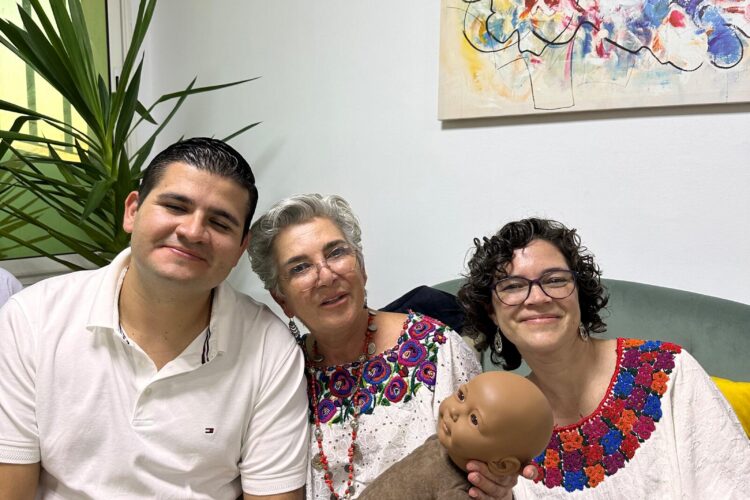
When the Association of Professional Midwives of Guatemala (APPG) joined the International Confederation of Midwives (ICM), they were a newly formed association navigating a complex national landscape. Professional midwifery in Guatemala was still emerging as a recognised profession, and midwives faced barriers to education recognition, registration, and employment.
Just a few years later, that landscape is beginning to change.
The progress achieved by Guatemalan midwives is a powerful example of what can happen when professional associations come together to learn from one another. Through ICM’s Twin to Win programme, APPG partnered with midwives in Costa Rica, forming a collaboration that helped strengthen advocacy, build organisational capacity, and create momentum for change.
This article draws on conversations with Gabriela Meléndez, President of the Association of Professional Midwives of Guatemala (APPG), and Silvia Aldana, one of the association’s founding members, who shared their experiences of the programme and the changes it helped spark in Guatemala.
A Partnership Built on Shared Learning
ICM launched the Twin to Win pilot project in 2022 as part of the Strengthening Midwifery Services Project. The initiative matched midwives’ associations from similar contexts and supported them to develop joint and individual projects aimed at strengthening midwifery in their countries.
For APPG, twinning offered something essential: guidance from peers who had already navigated similar challenges.
When the association joined the programme, it was still in its early stages. Its members were working to establish themselves as a professional voice for midwives in Guatemala and to advocate for recognition within the national health system.
APPG was matched with the Costa Rican Midwives Association. The two organisations shared similar health system contexts and were geographically close, which helped facilitate collaboration and understanding. Being in the same region meant they faced many comparable challenges in advancing midwifery, making the exchange particularly relevant.
While Costa Rican midwives work mainly within hospitals, Guatemalan midwives often serve communities where access to healthcare facilities is limited. These differences created a rich exchange of perspectives and allowed both associations to learn from each other’s experiences.
Guatemalan midwives shared their experience of providing community-based care and the philosophy of midwifery that emphasises respectful, woman-centred support. At the same time, Costa Rican midwives offered insights into legal frameworks, institutional recognition, and working within national health systems.
The exchange was also valuable for the Costa Rican association. Seeing the determination and momentum of a newly formed organisation that was eager to move quickly inspired reflection within their own association. Twinning allowed both groups not only to share successes, but also to openly discuss the challenges midwives were experiencing in Costa Rica, helping Guatemalan midwives anticipate potential barriers and think strategically about how to protect the full scope of midwifery practice.
The collaboration helped APPG refine its advocacy priorities. One key lesson was the importance of protecting the full scope of midwifery practice, including antenatal, birth, postnatal and sexual and reproductive health services.
Turning Learning into Action
As the twinning partnership progressed, APPG began applying these insights at home.
One major milestone was a national advocacy event held in November 2024. The association organised a public gathering that brought together government representatives, members of Congress, universities, civil society organisations, and the media. Alongside the event, APPG launched a photo exhibition titled “Invisible Guardians: The Work of Professional Midwives in Guatemala.”
The exhibition highlighted the realities of midwives’ work across the country. Photographs showed midwives travelling long distances to support women, providing care in communities where healthcare services are scarce, and offering education on contraception, breastfeeding, and maternal health.
The goal was simple but powerful: make the work of midwives visible.
The event gained media coverage and caught the attention of national decision-makers. Shortly afterwards, the Ministry of Health requested a meeting to discuss the concerns raised by the association.
This moment marked a turning point. For the first time, APPG was able to directly present the challenges midwives were facing and outline what was needed for professional midwifery to grow in Guatemala.
Achieving Recognition
Dialogue with the Ministry of Health led to a series of negotiations focused on one urgent issue: the registration of professional midwives.
Although midwives had completed university training, many were unable to practice because their qualifications had not been officially recognised. In some cases, previously registered midwives even discovered that their names had disappeared from the national register.
To resolve the situation, midwives agreed to undertake a comprehensive theoretical and practical examination to demonstrate their competencies. The process was demanding and emotionally challenging.
Midwives organised themselves to prepare together, sharing study materials, summarising key resources, and practising clinical scenarios as a group.
The effort paid off. Every midwife who took the examination passed.
Following this process, midwives from multiple universities were officially registered with the Ministry of Health. Today, hundreds of professional midwives are recognised within the national system.
The agreement with the Ministry also opened the door to new opportunities, including scholarships for midwifery education and renewed dialogue about integrating midwives into the health system.
APPG is now working with policymakers to develop a ministerial agreement and lay the foundations for a future Professional Midwifery Law.
Twinning within Guatemala
The spirit of collaboration inspired by the Twin to Win programme did not stop at international partnerships.
APPG also launched a small internal twinning initiative between two Guatemalan midwives, demonstrating how the model can work at every level.
One midwife worked in a remote Indigenous community and had deep knowledge of traditional practices and community-based care. The other had strong skills in digital communication and record-keeping.
Through their partnership, they exchanged knowledge and skills. One learned how to manage digital records and create social media platforms, while the other travelled to rural communities to gain hands-on experience supporting women during pregnancy, birth and the postnatal period, learning how to meet community needs by integrating cultural practices with evidence-based care.
What began as a short project grew into a lasting collaboration and friendship.
Their story shows that twinning is not only about organisations learning from one another. It is also about midwives supporting each other as colleagues and professionals.
Building a Stronger Future
Today, the Association of Professional Midwives of Guatemala continues to advocate for the profession and for the women and families they serve.
From media advocacy and national dialogue to professional recognition and new training opportunities, the achievements of the past few years demonstrate the power of collaboration.
For APPG, twinning created more than a project. It created relationships, confidence, and a shared sense of purpose.
For midwives’ associations around the world interested in starting their own partnerships, ICM has developed a Twinning Guide to support midwives in creating similar collaborations.
Because sometimes, the most powerful change begins when we are ready and willing to learn from one another.
The world needs One Million More Midwives
Sign the petition and help us collect one million signatures to demand one million more midwives — and the investments needed to make it happen.