Care as if trauma is present: Michaela Kalusová on supporting survivors in maternity care
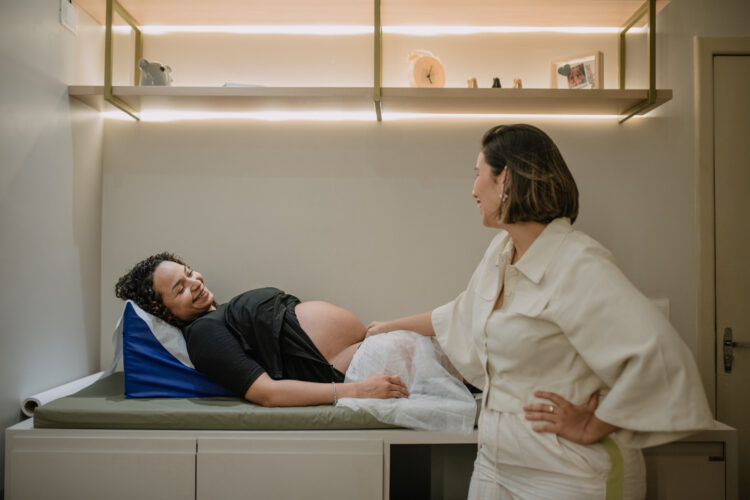
Globally, almost 1 in 3 women have experienced physical and/or sexual violence by an intimate partner, or sexual violence by a non-partner, and many will never tell their midwife. Michaela Kalusová, founder of the SAFER Birth Project, explains why every midwife needs to care as if trauma is present.
As a doula, Michaela provided non-clinical emotional, practical and informational support to women during birth. She supported many women whose bodies reacted during labour in ways that did not seem to match what was happening clinically. “It was confusing to me at that point,” she says. Over time she understood that many of these women were survivors of sexual trauma, and that standard birth preparation often failed to account for its effects. That realisation became the SAFER Birth Project.
The SAFER Birth Project works to make maternity care safer for women who are survivors of sexual trauma. It tackles the problem from two sides through two connected organisations. The SAFER Birth Project offers specialist, non-clinical support directly to survivors during pregnancy, birth and the postnatal period. SAFER Birth Training provides professional education to the maternity staff who care for them.
How common is it?
Globally, almost 1 in 3 women, around 840 million, have experienced physical and/or sexual violence by an intimate partner, or sexual violence by a non-partner, in their lifetime. In England and Wales, 25.6% of women, approximately 1 in 4, have experienced sexual assault at least once since the age of 16.
As Michaela puts it: “The question is not whether I am caring for a woman who is a survivor. The question is how many?”
Around 85% of people who experienced rape or assault since the age of 16 did not report their most recent incident to the police, though most had told someone, most commonly someone they knew personally. When it comes to maternity care, a Dutch study found that 48.1% of women had not disclosed their history to a healthcare professional. Reasons included personal choice, concerns about confidentiality, lack of privacy and an environment that did not invite disclosure.
The researchers concluded that disclosure should not be a goal in itself; what matters is an environment where women feel safe to disclose if they choose to.
A gap in knowledge
Many professionals are trained in birth trauma, but sexual trauma works differently. Michaela recalls a client who could not lie down for an examination. When she asked the midwife about another position, she was met with resistance.
Everyday language matters too. “Good girl”, “just relax, it will be over soon“ and “it’s not going to hurt” can be very difficult to hear during an examination. An NHS midwife on a recent course told Michaela, “We say these things all the time.” And if a woman dissociates during an examination, Michaela asks, do we take her silence as consent? A woman who is dissociating may not be able to hear you.
For a survivor, an internal scan or having blood taken can be more than a trigger. It can feel like a re-enactment of the abuse. That is why this goes deeper than general trauma-informed practice.
Care as if trauma is present
Care needs to be universal: promoting safety, autonomy, consent, choice and dignity, whether or not a woman discloses. Michaela’s principle is to care for women “as if trauma is present”. The aim is not to encourage women to disclose. It is to ensure they receive sensitive, respectful and trauma-informed care without having to. The same applies to trans men and non-binary people who are survivors, who may face extra barriers to being seen and heard in maternity care.
That is why the SAFER Birth training programme is built for midwives, doctors, sonographers and anyone who comes into contact with women during pregnancy. It begins with a free one-hour webinar, followed by a nine-hour foundational course and a nine-hour advanced course, taught live online in groups of no more than 12. Participants learn to spot triggers and dissociation signs, what to say if a woman discloses, and how to build a birth plan that covers triggers as well as wishes.
In practice, the difference for those who have taken the course is already visible. One midwife called it “groundbreaking”, saying she finally understood what she had been seeing in her clinic every day.
Why it belongs in midwifery education
After one webinar, attendees asked why this is not taught at university. Michaela agrees: it belongs right at the beginning of midwifery. Instead, she meets resistance from professionals and universities alike, because people do not want to acknowledge how prevalent the issue is. Bureaucracy and funding are challenges too, and some NHS hospitals send one midwife to take the course, expecting her to bring the knowledge back to the team. “They should send 10, 20 midwives and that would make a real change.”
Her hope is for training in this field to stop being niche, and for every woman to have somewhere to go with it, including what she calls “a birth advocacy record”: a document, that sets out her preferences for birth and examinations and travels with her, like her clinical notes so she is not asked the same things again and again.
“Safe care is possible. Trauma-informed care is possible, not only clinically but also emotionally.”
Support for women and birthing people
The SAFER Birth Project also offers free, non-clinical support to pregnant survivors in the United Kingdom and in the Czech Republic, including to gender diverse people: one-to-one birth preparation, survivor-informed birth planning, birth clarity sessions, postpartum debrief and advocacy with the maternity team.
Get involved
- Midwives, student midwives, educators and birth workers: sign up for the free webinar, or watch the recording, at saferbirthproject.co.uk, and explore the downloadable resources. Check out the upcoming training dates and take the Supporting Survivors in Maternity Care programme.
- If you are pregnant and a survivor, or know someone who is: Support is free, and you do not need to disclose anything. Find more information on the SAFER Birth Project website.