A Historic First: Parliamentarians and Midwives Unite to Advance One Million More Midwives
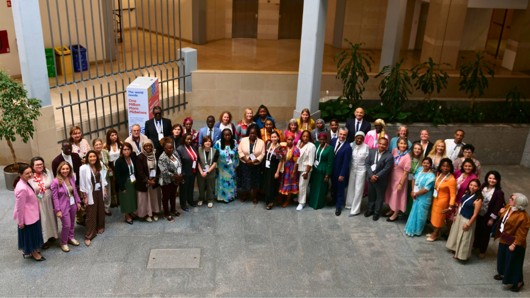
For the first time in its history, the International Confederation of Midwives (ICM) Congress convened a dedicated Parliamentary Forum, bringing together Members of Parliament, Ministers of Health, midwifery leaders, UN agencies, and global partners to strengthen political leadership for midwifery.
Held ahead of the 34th ICM Congress in Lisbon, Portugal, the two-day forum marked a significant milestone for the global midwifery profession. It recognized a simple but powerful truth: achieving “One Million More Midwives” is not only a health workforce challenge—it is a political one.
Throughout the forum, parliamentarians from Africa, Europe, Asia, and Latin America explored how stronger political commitment can accelerate investment in midwifery education, regulation, leadership, employment, and midwifery models of care to improve maternal and newborn health and strengthen health systems.
Parliamentarians and midwifery association leaders had the opportunity for collective action as they joined the march for one million more midwives. Their discussions continued during a welcome reception on the evening of Forum where the presidents of the midwifery associations of Kenya and Malawi gave framing remarks highlight the urgent need for lawmakers to invest in midwives and their leadership.
Opening Ceremony: A Call for Political Leadership
The Forum was hosted by ICM together with the European Parliamentarians Forum for Sexual and Reproductive Health and Rights (EPF) and UNFPA. Representing the host country, Portuguese Hon. Cristóvão Norte, Member of Parliament, opened with with welcoming remarks from the hosting parliamentarians. Anna af Ugglas, Chief Executive of ICM, welcomed parliamentarians to this historic first and emphasized the importance of building stronger partnerships between political leaders and midwives:
“While midwives deliver care, political leaders create the environment that enables that care to reach every woman and every newborn who needs it. Political leadership determines whether there are enough midwives educated and deployed where they are needed; whether regulatory frameworks allow midwives to practise to the full extent of their competencies; whether midwives are supported, retained, fairly compensated, and empowered to lead; whether maternal and newborn health remains a national priority amidst competing demands. The evidence is clear. Investing in midwives is one of the smartest investments a country can make. Now the choice is yours”
Delivering the keynote address, Diene Keita, Executive Director of UNFPA, highlighted the urgent global shortage of midwives and called for sustained political leadership to address workforce shortages, improve maternal and newborn survival, and ensure every woman has access to quality midwifery care.
Session I: Understanding the Global Midwifery Gap
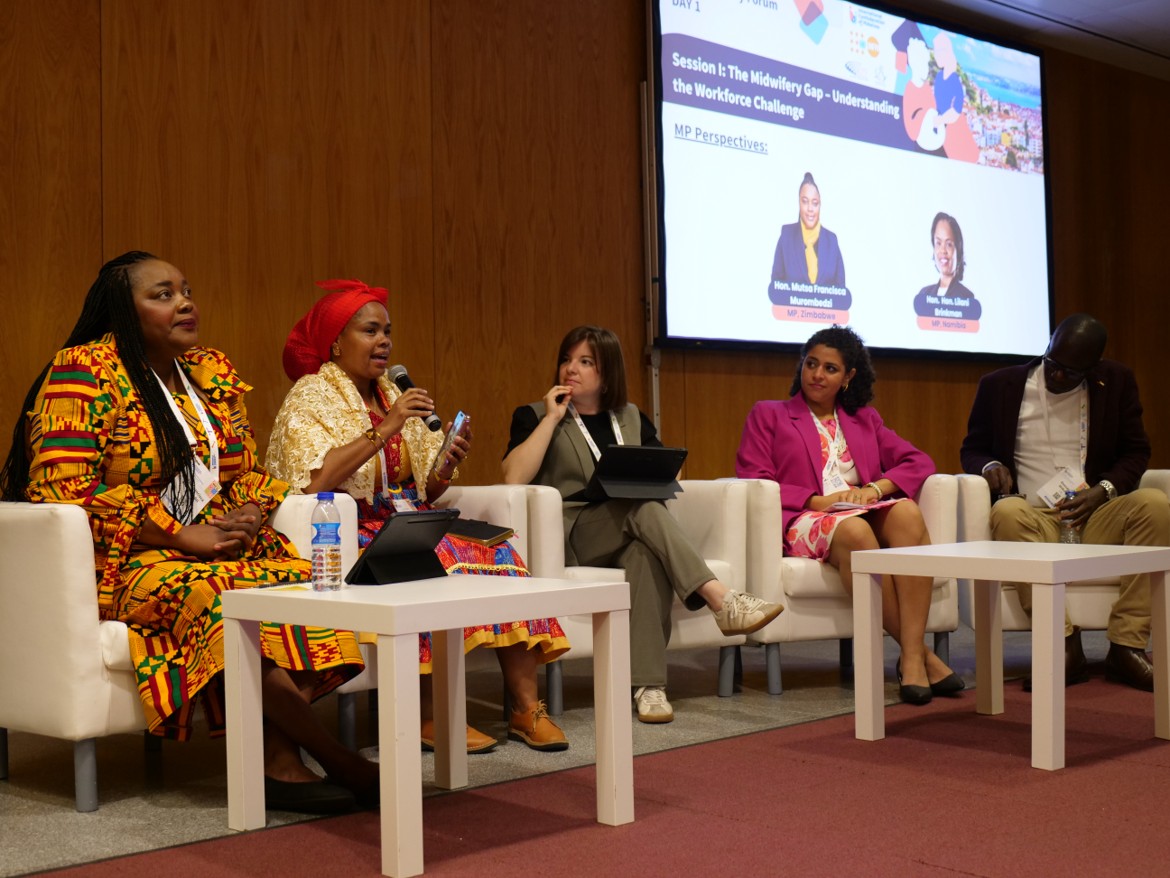
Chaired by Hon. Sara Bailac (Spain), the first session explored the scale of the global midwifery workforce crisis and the evidence around investing in midwives.
Duncan Shikuku (UNFPA) presented the latest evidence on global workforce shortages, inequitable distribution of midwives, and the newly launched investment framework for the midwifery models of care. Merette Khalil (ICM PUSH Campaign) demonstrated how midwives are the key to unlocking impact to strengthen health systems, advance gender equality, drive economic growth, and build climate resilience.
Parliamentarians Hon. Mutsa Francisca Murombedzi (Zimbabwe) and Hon. Lilani Brinkman (Namibia) reflected on the role legislators play in closing the workforce gap through stronger financing, policy reform, and political commitment.
Session II: Establishing Midwifery Models of Care
The second session examined how countries can create enabling environments where midwives are able to practise to their full scope.
Ulrika Rehnström Loi (WHO) highlighted the evidence demonstrating that midwifery models of care improve outcomes for women and newborns, while Frida Temple (UNFPA) presented the Midwifery Accelerator as a roadmap for countries seeking to strengthen their midwifery workforce through coordinated national advocacy and action.
Parliamentarians Hon. Lilian Abracinkskas (Uruguay) and Hon. Catherine Mumma (Kenya) discussed how legislation, financing, and advocacy can support integrated models of care that improve sexual, reproductive, maternal, newborn, and adolescent health outcomes.
Session III: Enabling Midwives as Leaders and Advocates
Chaired by Hon. Christina Mnzava (Tanzania), this session focused on one of the profession’s greatest opportunities: investing in midwifery leadership.
Jacqueline Dunkley-Bent (ICM) explored the importance of strengthening leadership competencies, professional regulation, scope of practice, and working conditions, in line with the ICM professional framework for midwifery. She also emphasized how partnerships between parliamentarians and national midwifery associations can accelerate change.
Hon. Susan Dossi (Malawi) reflected on the role parliamentarians can play in ensuring midwives are represented in national leadership and decision-making structures, including the establishment of Chief Midwife positions.
Session IV: Making the Political and Economic Case for Midwifery
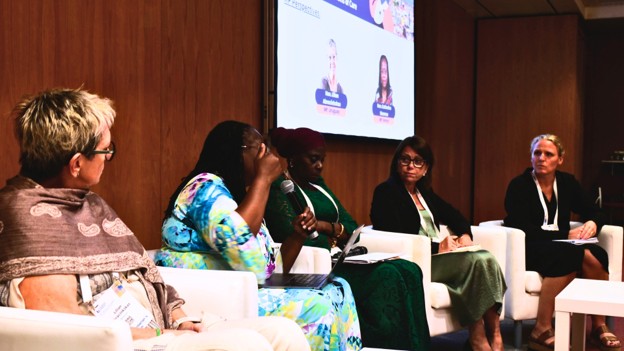
The afternoon session shifted the discussion from health outcomes to economics and the political will to negotiate budgetary lines.
Geeta Lal (UNFPA) highlighted why investing in quality midwifery education, regulation, and workforce development delivers long-term returns for countries by improving health outcomes while strengthening economies.
Chaired by Hon. Tione Hendry (Malawi), parliamentarians Hon. Hanna Sarkkinen (Finland) and Hon. Ann Matibag (Philippines) discussed how governments can use legislation, budgeting, and parliamentary oversight to make midwifery a national investment priority.
“We, members of parliament, we are in charge of budgets, and it’s our responsibility to ensure that midwives are adequately budgeted for– we need to deploy them where they are needed the most and renumerate them according to the work they are doing, we need to give them greater opportunities, leadership, respect, and recognition for the career they chose” ~ Hon. Mutsa Francisca Murombedzi (Zimbabwe)
Session V: Ministerial Dialogue – Scaling Political Commitment
One of the Forum’s highlights was the Ministerial Dialogue, chaired by Hon. Hanna Sarkkinen (Finland).
Dr. Ziauddin Hyder, Special Assistant on Health Affairs to the Prime Minister of Bangladesh, and chief midwife Patricia Bah, representing Hon. Dr. Austin Demby, Minister of Health of Sierra Leone, shared national experiences demonstrating how sustained political leadership, investment in health workers, and collaboration with midwives can accelerate progress toward reducing maternal and newborn mortality.
Their discussion reinforced a central message of the Forum: transforming maternal health requires political action. It requires governments to prioritize midwifery as an essential component of resilient health systems and to invest in midwives accordingly.
Session VI: From Evidence to Action
This session was opened by Hon. Isabel Mendes Lopes (Portugal), Monica Ferro and Aymen Abdelmohsen (UNFPA) introduced the screening of The Women in the Wardrobe, which highlighted the critical role of midwives in humanitarian and fragile settings, where they are often the first—and sometimes only—providers of essential care for women and newborns.
In this closing session, participants discussed strengthening legislation, increasing investment in the midwifery workforce, supporting national midwifery associations, and ensuring maternal and newborn health remains high on political agendas. The parliamentary dialogue brought together all participating Members of Parliament to reflect on lessons from the Forum, share progress since the Nairobi Parliamentary Forum, and identify practical commitments they would champion within their own countries.
The Forum concluded with closing remarks from Julia Bunting (UNFPA’s Director of Programmes) and Anna af Ugglas (ICM’s Chief Executive) who reaffirmed the shared commitment to deepen collaboration between governments, parliamentarians, midwives, and international partners to deliver one million more midwives and improve the lives of women and newborns worldwide:
When parliamentarians invest in midwifery leadership, education, and regulation, they are not simply strengthening a profession—they are strengthening the health, rights, and future of women, newborns, families, and nations.