The Original Innovators: Plenary 4 explores innovation, equity and life-saving solutions
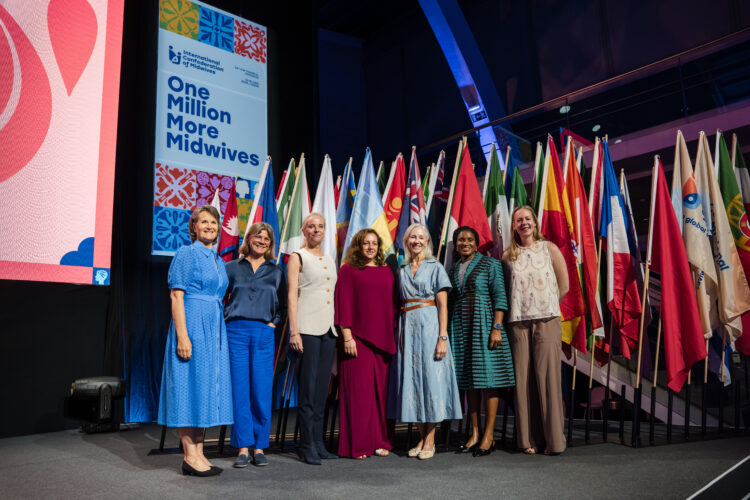
By the final morning of Congress, the room carried the signs of a full week: tired voices, full notebooks, new friendships and conversations still spilling over from the days before. Anna af Ugglas opened the session by naming what many in the room were feeling: “Many of our brains are buzzing with new knowledge, new experiences, friendships and conversations.”
That same energy carried into Plenary 4, Midwives: The Original Innovators across time and cultures. The session invited participants to look at innovation through a wider lens. Innovation was not presented only as new technology, devices or artificial intelligence. It was presented as something midwives have always done: respond to what women and newborns need, adapt to difficult realities, solve problems and find better ways to provide care.
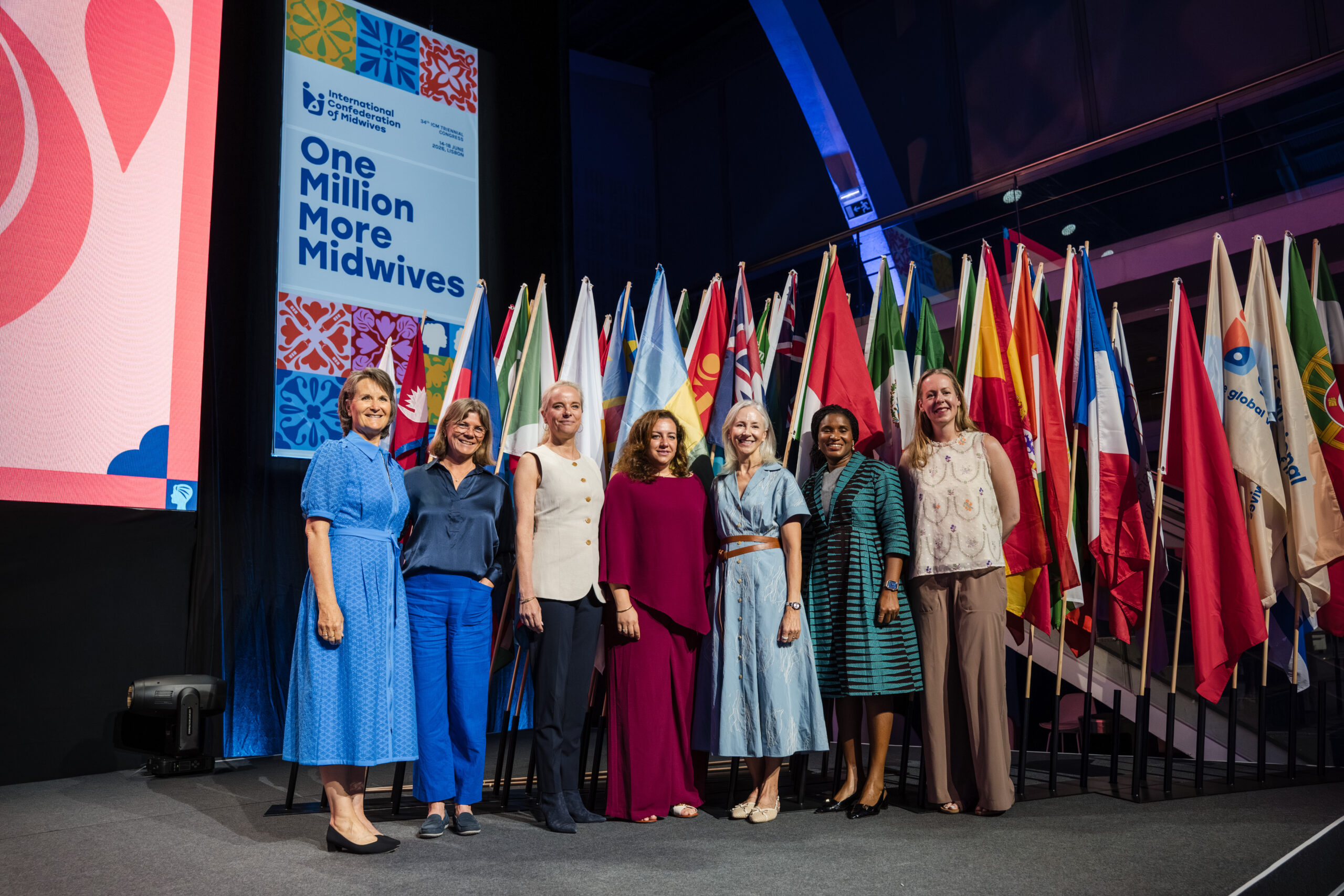
Innovation starts with midwives
 Keynote speaker Hege Ersdal, Professor in Simulation and Global Health at Stavanger University, opened with a clear reminder of why innovation in midwifery matters. Around the world, the day of birth remains one of the most dangerous days of life. Thousands of newborns die on their first day, and hundreds of women die each day from complications related to childbirth. Most of these deaths are preventable with good, basic and time-critical care.
Her keynote focused on the Safer Births Bundle of Care project in Tanzania, developed through years of collaboration with midwives. The project began with a lesson that shaped the whole programme. A one-day training course improved simulated skills, but it did not reduce newborn deaths. So the team asked midwives what needed to change. Their answer was direct: they needed to train more often, in the real setting, with support from leaders and senior midwives.
“So we did what the midwives said,” Hege explained.
That shift changed the programme. Training stations were placed inside labour wards. Midwives practised short, frequent simulations. Local midwife facilitators led team scenarios, debriefs and quality improvement. New tools were co-created with midwives, including devices for fetal and newborn heart rate monitoring and simulation tools that gave automatic feedback.
The results were striking. The programme documented a 40% reduction in newborn deaths and a 75% reduction in maternal deaths after implementation. Hege reminded the room that “innovations must be useful and effective to be of any value.” For Safer Births, that value came because midwives were involved from planning to implementation. They shaped the tools, led the learning and helped change the culture of care.
A wider view of innovation
Moderated by Amy Weaver, CEO of Direct Relief, the panel pushed the idea of innovation even further. Amy, who came to Direct Relief after working in Silicon Valley, said she had learned that the tech world’s view of innovation is far too narrow.

“Some of the most meaningful and life-saving innovation is coming from midwives,” she said. “Midwives are our original innovators.”
The panel proved that point from several angles. Anna Frellsen, CEO of Maternity Foundation, spoke about the Safe Delivery App, a free, offline tool now used by more than half a million midwives worldwide. She explained that the app’s success came from listening to midwives and adapting the tool to different languages, contexts and national guidelines. Early feedback from midwives also shaped a major design choice: using animations rather than filmed videos, which made the tool easier to adapt, update and use respectfully across settings.
Her message was simple: “It should not be the midwives who need to adapt to the technology. The technology needs to adapt to the midwives.”
That idea ran throughout the plenary. Innovation should make midwives’ work easier, bring guidance closer to daily practice and support care in remote and fragile settings. It should respond to the reality of the labour ward, the community and the woman receiving care.
 Showing up where women are
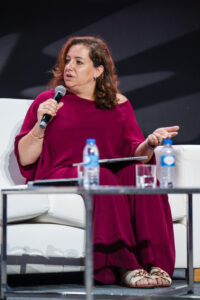
Maika Daoud Elias, a midwife, lactation consultant and content creator with more than one million followers across the Arab world, brought a different kind of innovation to the stage: trust.
She spoke about using social media to answer the questions women and girls are often too ashamed to ask. Her content is in Arabic, in simple language, and designed to feel like “a big sister talking to her small sisters.”
In a world of stigma and misinformation, Maika said trust is built by being present. “I just show up. I show up everywhere they are. I use their language. I name things that no one is naming.”
Her intervention brought warmth, humour and a strong sense of purpose to the room. She spoke about body knowledge, menstruation, birth, shame and the responsibility midwives have to meet women and girls where they already are. Her message was clear: midwives can use their voice far beyond clinical settings. They can challenge harmful ideas, create safer spaces for questions and help women and girls understand that their bodies deserve respect.
Innovation must close access gaps
Jennifer A-Boateng, Senior Programme Officer at the Gates Foundation and a midwife from Ghana, grounded the discussion in equity. She shared that her first experience of innovation was holding a lamp for her mother, a midwife working in a rural clinic without electricity or running water.
For Jennifer, innovation must answer one question: does it help midwives reach women with better care? She spoke about point-of-care diagnostics, AI-enabled ultrasound, workflow tools and low-cost devices that can support midwives in low-resource settings. She also reminded the room that the need for innovation is deeply unequal. Too many midwives are expected to provide care without the tools, staffing or support they need.
Amber Wyeth from Ariadne Labs closed the panel contributions with TeamBirth, a simple communication model that centres the woman, names every member of the care team and creates space for shared decision-making. “The team centres around the woman,” she said. It was a powerful reminder that innovation can also be a structure, a conversation or a better way to listen. 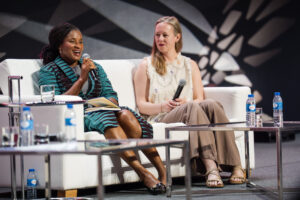
By the end of the plenary, the message was clear: midwives have always been innovators. They innovate in hospitals, homes, crisis settings, online spaces and health systems. They do it because women, newborns and gender diverse people need care that works in real life.
As Congress moved towards its closing ceremony, Plenary 4 left participants with a final call: recognise midwives as problem-solvers, invest in the tools they help design, and make sure every innovation strengthens their ability to provide respectful, high-quality care.