What Happens When Midwives Lead Abortion Care: Lessons from Sweden
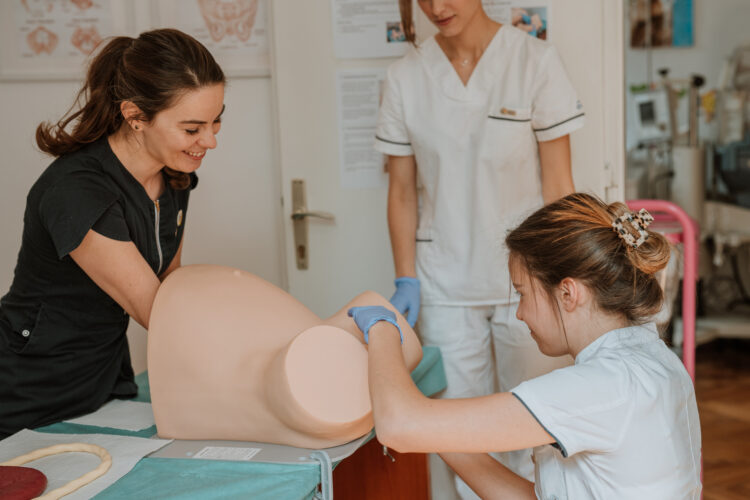
In Sweden, abortion is widely understood as essential healthcare. What is less well known is that this sits on decades of research and early innovation in abortion care, and how more recent changes have enabled midwives to become central to making care timely, safe, and accessible.
We talked to Professor Kristina Gemzell Danielsson, Head of the Department of Women’s and Children’s Health at Karolinska Institutet, and Obstetrics and senior consultant in gynaecology at Karolinska University Hospital. She is one of the main investigators behind the research that has driven Sweden’s shift towards task sharing in abortion care. She walked us through what abortion care looks like in Sweden today, how midwives are now leading the way, and why this model matters far beyond Sweden.
When Practice Moves Faster Than Policy
Sweden’s abortion law was designed to protect women from unsafe and clandestine abortion by ensuring care is provided within the health system. In practice, abortion services are offered through hospitals and approved women’s health clinics.
Legally, abortion must still be provided in a hospital or clinic by a gynaecologist or a resident in gynaecology. But clinical practice has evolved. As Kristina explained, since key Swedish research demonstrated that midwives can safely provide early medical abortion, midwives now handle healthy women up to around 10 weeks of gestation.
While the law has not yet been updated to explicitly reflect this, the model works well in practice. Physicians remain part of the team, but midwives are the main providers for uncomplicated cases. This is a clear example of practice leading policy, supported by strong evidence.
Midwives at the Centre of Abortion Care
Today, the vast majority of abortions in Sweden are medical abortions, and most take place early in pregnancy. This is where midwives have taken on a leading role.
Research from Sweden has shown that trained midwives can provide early medical abortion as safely and effectively as doctors, with high levels of satisfaction among women. This evidence has been central to building confidence among policymakers, health professionals, and the public.
Midwives now provide most care for healthy women seeking early medical abortion. To put it succinctly, midwives in Sweden’s abortion care system counsel patients, perform eligibility assessments, conduct ultrasounds, dispense and administer abortion medications, monitor the process (whether at home by phone or in-clinic), manage pain relief, provide emotional support, and coordinate follow-up and contraception. As in other areas of women’s health, midwives handle routine care while doctors step in for complications or when surgical intervention is needed.
What Abortion Care Looks Like for Women
Abortion care in Sweden is designed to be straightforward, evidence-based, and centred on women’s choices. An approach shaped by decades of research led in part by Kristina and her colleagues.
For most women, care begins with a phone call to a midwife, who takes a medical history, provides information about abortion options, and offers contraceptive counselling. The midwife then helps book an appointment. At the clinic visit, midwives provide counselling, ultrasound dating, and contraceptive planning, and initiate abortion care in line with national regulations.
Many women, especially early in pregnancy, prefer to complete the abortion at home. This is supported through clear guidance, pain relief, and a 24/7 telephone service, with follow-up led by a midwife. Women who choose or require surgical abortion are offered an appointment within the same health system.
When abortion care is needed after 12 weeks, care takes place in a hospital setting. Midwives are closely involved, and in most cases abortion is medical and managed in a way similar to other pregnancy loss or birth care, depending on gestational age and clinical need. Midwives provide continuous clinical and emotional support, with doctors involved when complications arise or further intervention is needed. This reflects Sweden’s broader model of teamwork in women’s health, where midwives lead care for healthy women and doctors support when care becomes more complex.
Continuity, Quality, and Women’s Experiences
Because abortion care is often completed through one main clinic visit plus home-based care, continuity looks different from antenatal or postnatal care. Women may not always see the same midwife throughout, and many only need one visit.
Even so, studies show that women are largely satisfied with the care they receive. Women value being able to access services easily, receiving clear and respectful information, and having choices about how and where their abortion takes place.
Importantly, there is strong evidence that care provided by midwives is as safe and accepted as care provided by doctors, with high levels of satisfaction among women.
Why Midwives Make a Difference
From a clinical perspective, outcomes are comparable whether abortion care is provided by a midwife or a doctor. But Kristina pointed to another important difference: stigma.
Including midwives as abortion providers has helped normalise abortion as part of routine healthcare. Midwives in Sweden are proud to provide abortion care, and that matters. It helps create a respectful environment for women and reinforces that abortion is not something separate or hidden, but part of comprehensive sexual and reproductive health care.
From a health system perspective, midwife-led care also makes services more efficient. In Sweden, there are more midwives than gynaecologists, so enabling midwives to work to their full scope of practice has a direct impact on access. Doctors can focus on more complex cases, and evidence shows that women are able to access abortion care earlier, as they do not have to wait for a limited number of specialist appointments, without compromising quality.
What Other Countries Can Learn
Sweden’s experience offers clear lessons for other countries.
The model works because it builds on what midwives already do. In Sweden, midwives have long led care for healthy women during pregnancy and birth, with doctors supporting when complications arise. Applying the same model to abortion care has been both logical and effective.
Key ingredients include strong training, clear protocols, teamwork between midwives and doctors, and a health system that trusts midwives to provide care within their full scope of practice. Evidence has been critical in driving change, and ongoing evaluation helps refine services over time.
Sweden also shows that progress is possible even when laws lag behind practice, as long as care remains safe, regulated, and integrated into the health system.
At a time when access to abortion care is under pressure in many parts of the world, Sweden’s experience shows what becomes possible when midwives are enabled, trusted, and supported to lead care. It is a model grounded in evidence, teamwork, and respect for women’s choices, and one that deserves close attention.
References and resources
- Kopp Kallner H, Gemzell-Danielsson K, Johansson M, et al. How task-sharing in abortion care became the norm in Sweden: a case study of historic and current determinants and events. Sex Reprod Health Matters. 2020;28(1):1789328.
- Swahn ML, Bygdeman M. The effect of prostaglandins on thesA-induced abortion. Acta Obstet Gynecol Scand. 1985;64(6):541–545.
- Swahn ML, Bygdeman M. Early pregnancy termination with prostaglandins. Acta Obstet Gynecol Scand. 1986;65(1):73–77.
- Bygdeman M, Gemzell-Danielsson K, Marions L. Medical abortion: history and perspectives. J Am Med Womens Assoc. 2000;55(3):195–196.
- Fiala C, Winikoff B, Helström L, Hellborg M, Gemzell-Danielsson K. Acceptability of home use of misoprostol in medical abortion. Contraception. 2004;70(5):387–392.
- Sundström K, Kopp Kallner H, Gemzell-Danielsson K. Simplified follow-up after early medical abortion: a randomised controlled trial. Lancet. 2015;385(9969):514–520.
- Kopp Kallner H, Gomperts R, Salomonsson E, Johansson M, Marions L, Gemzell-Danielsson K. The efficacy, safety and acceptability of medical termination of pregnancy provided through telemedicine: a systematic review. BJOG. 2008;115(9):1171–1179.
- Aiken ARA, Lohr PA, Lord J, Ghosh N, Starling JE. Effectiveness, safety and acceptability of no-test medical abortion provided via telemedicine: a national cohort study. Lancet. 2022;400(10353):670–678.
- Gemzell-Danielsson K, Kopp Kallner H, Faúndes A. Contraception following abortion and the treatment of incomplete abortion. Int J Gynaecol Obstet. 2014;126(Suppl 1):S52–S55.
- Hognert H, Kopp Kallner H, Cameron S, Gemzell-Danielsson K. Immediate initiation of contraception after medical abortion: a systematic review. Contraception. 2016;93(4):325–334.
- Jar-Allah T, Kopp Kallner H, Gemzell-Danielsson K. Perspectives on abortion services, the pre-abortion visit, and telemedicine abortion: a qualitative study in Sweden. Perspect Sex Reprod Health. 2025 Jan 12.
The world needs One Million More Midwives
Sign the petition and help us collect one million signatures to demand one million more midwives — and the investments needed to make it happen.