Why Simulation-Based Training Matters: Preparing Midwives for Real-World Emergencies
By Dr Angeliki Bolou, Assistant Professor, and Claire Gourounti, Head of Department and Lead of the Lifelong Learning Education Programme, Department of Midwifery, University of West Attica, Athens, Greece
Midwives play a critical role in ensuring safe care for women, gender diverse people, and newborns. Every day, they support physiological pregnancy and birth, while also being ready to recognise and respond to complications. Some emergencies, such as postpartum haemorrhage or shoulder dystocia, require rapid, skilled action. Simulation-based training helps midwives prepare for these moments.
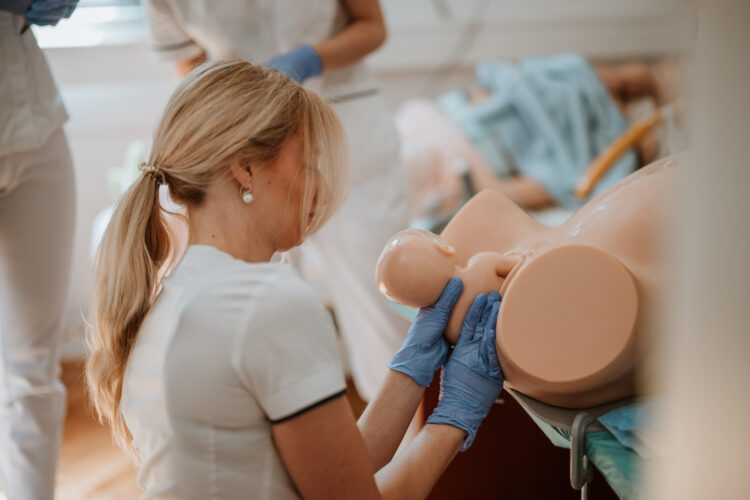
On 16 January 2026, over 150 midwives, obstetricians, and midwifery students gathered at the University of West Attica in Athens to strengthen these essential skills. Through hands-on simulation and shared learning, participants practised responding to maternity emergencies in a safe, structured environment. The event brought together professionals at different stages of their careers, all committed to maintaining and improving their competencies.
Learning through practice in a safe environment
Simulation allows midwives to practise clinical scenarios that may occur infrequently but require immediate and effective care. It provides an opportunity to apply clinical knowledge, strengthen decision-making, and work collaboratively with other health professionals. Importantly, simulation creates a space where midwives can learn, reflect, and refine their skills without risk to women or newborns.
During the training, participants worked through scenarios such as postpartum haemorrhage, breech birth, cord prolapse, and shoulder dystocia. These exercises strengthened clinical readiness and reinforced the importance of teamwork and clear communication. Participants also reflected on their own practice and discussed how to apply updated clinical guidance in their daily work.
Simulation also strengthens interprofessional collaboration. Midwives often work alongside obstetricians, nurses, and other health professionals. Practising together helps teams improve coordination, build trust, and ensure timely and appropriate care when complications arise.
Strengthening confidence and preparedness
Confidence is built through experience. Simulation allows midwives to develop and maintain skills in a structured and supportive way. It helps ensure that when emergencies occur, midwives can respond quickly, safely, and effectively.
This approach aligns with ICM’s commitment to strengthening midwifery education and continuous professional development. Through initiatives such as the SIMBegin programme, ICM and Laerdal support educators to deliver high-quality simulation-based learning. These efforts contribute to a well-prepared midwifery workforce and to health systems that can provide safe care in all settings, including during emergencies.
Participants in the Athens study day described simulation as highly valuable for strengthening their knowledge, improving teamwork, and reinforcing their readiness to manage emergencies. The strong interest in this training highlights the importance midwives place on maintaining their competencies throughout their careers.
Learn more about SIMBegin.
Investing in continuous professional development
Midwifery education does not end at qualification. Continuous professional development is essential to ensure midwives remain up to date with clinical guidance and prepared to provide safe care. Simulation is an important tool in achieving this goal.
Building on the success of this training, the University of West Attica is developing a Continuing Professional Development programme focused on simulation-based management of maternity emergencies. This initiative reflects a shared commitment to strengthening midwifery education and improving care for women and newborns.
Supporting midwives to provide safe, high-quality care
Simulation-based training strengthens midwives’ skills, confidence, and preparedness. It supports safe practice, improves teamwork, and helps ensure that midwives can respond effectively when complications arise.
Investing in midwifery education, including simulation-based learning, strengthens the profession and improves outcomes for women and newborns. A well-educated and supported midwifery workforce is essential to ensuring access to safe, respectful, and high-quality care everywhere.
The world needs One Million More Midwives
Sign the petition and help us collect one million signatures to demand one million more midwives — and the investments needed to make it happen.