ICM and IRC announce five-year strategic partnership to strengthen midwifery care in humanitarian settings
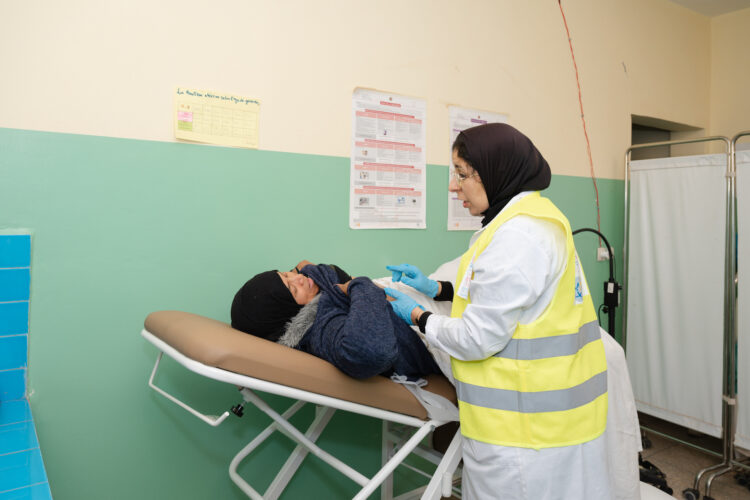
We are excited to announce a new five-year strategic partnership with the International Rescue Committee (IRC) to advance sexual, reproductive, maternal, newborn, and adolescent health (SRMNAH) care in humanitarian and fragile settings worldwide.
Through this partnership, ICM and IRC will work together to strengthen the recognition, inclusion, and support of midwives working across their full scope of practice in crisis contexts. The collaboration brings together IRC’s long-standing experience delivering maternal and newborn health services in some of the world’s most challenging humanitarian settings with ICM’s role as the global voice of midwives, representing more than 100 midwives’ associations globally.
Why this partnership matters
Humanitarian crises continue to place women, newborns, and health systems under immense strain. While global maternal and newborn mortality has declined over recent decades, progress has largely stalled in countries affected by conflict, displacement, and climate-related emergencies. These countries represent only 13% of the global population, yet account for 58% of maternal deaths, 39% of newborn deaths, and 41% of stillbirths worldwide.
Access to skilled care before, during, and after birth is often disrupted in these settings. Midwives are able to provide around 90% of essential SRMNAH services, yet they are too often not fully recognised, included, or supported within humanitarian response systems. This limits their ability to deliver quality care where it is most urgently needed.
At the same time, funding for maternal and newborn health in emergencies is declining, even as humanitarian needs continue to rise. Evidence shows that investing in midwives is one of the most effective ways to reduce preventable deaths. An additional one million midwives could save an estimated 4.3 million lives by 2035, preventing the majority of maternal deaths, newborn deaths, and stillbirths globally.
What the partnership will focus on
The ICM–IRC partnership aims to strengthen SRMNAH preparedness, response, and service delivery in humanitarian settings, while also supporting longer-term health system strengthening and national policy development. The collaboration seeks to ensure continuity between emergency response and routine care, so that communities benefit both during crises and beyond.
Key areas of joint work include:
- Emergency response: Linking IRC’s rapid emergency response capacity with ICM’s global network of midwives to ensure SRMNAH care is prioritised from the earliest stages of crises.
- Expanding access to care: Improving access for women and newborns in remote and conflict-affected areas by supporting community-based midwifery models and stronger referral pathways.
- Education and capacity building: Integrating humanitarian response, climate considerations, and protection into midwifery pre-service education and continuing professional development.
- Quality and respectful care: Promoting evidence-based, high-quality SRMNAH care in humanitarian settings and strengthening skills through midwifery education and professional development.
- Climate change and health preparedness: Addressing the growing impact of climate-related emergencies on maternity care through research, advocacy, and approaches that support continuity of services.
Placing midwives at the centre of crisis response
This partnership reflects a shared commitment to placing midwives at the centre of humanitarian health responses. Midwives are essential providers of SRMNAH care in emergencies, yet their role has long been under-resourced and undervalued. By working together, ICM and IRC aim to ensure that midwives are recognised, supported, and enabled to provide quality, respectful care from the onset of a crisis through recovery and longer-term system strengthening.
The world needs One Million More Midwives
Sign the petition and help us collect one million signatures to demand one million more midwives — and the investments needed to make it happen.