From Global Guidance to Practice: How Midwives in Namibia Are Adapting the New Postpartum Haemorrhage Guideline
By Temptation Chigova and Jana Ellmies.
Postpartum hemorrhage (PPH) remains one of the leading causes of maternal death worldwide, despite being largely preventable with timely, high quality care. In October 2025, the World Health Organization (WHO), the International Federation of Gynecology and Obstetrics (FIGO) and the International Confederation of Midwives (ICM) published the world’s first consolidated guideline for the prevention, diagnosis and treatment of PPH, bringing together 51 evidence-based recommendations across antenatal, intrapartum and postnatal care.
What makes Namibia’s experience stand out is not only the relevance of this guidance, but the speed with which it was taken up. Within weeks of the guideline’s publication, the country had begun adapting it into the national policy. By January 2026, the recommendations were already fully integrated into draft national maternity care guidelines, a pace that is uncommon in national policy processes but essential when lives are at stake.
The Burden of Postpartum Haemorrhage in Namibia
Postpartum hemorrhage is one of the leading direct causes of maternal death in Namibia. According to the National Maternal, Stillbirth and Neonatal Death Review Committee Triennial Report, between 2021 and 2024, 16% of maternal deaths were attributed to PPH. Many of these deaths occur within hours of birth and in health facilities where midwives provide most maternity care, including at district, intermediate and national levels.
Strengthening prevention, early recognition and timely management of PPH is therefore essential to saving women’s lives, and midwives are central to this effort.
A Rapid and Integrated National Response
With maternal deaths from PPH continuing to occur, Namibia made a deliberate decision not to delay action or wait for a separate policy cycle. Instead, the consolidated WHO–FIGO–ICM PPH guideline was rapidly reviewed and adapted for national use.
Rather than developing a standalone PPH document, Namibia chose to embed the recommendations directly into its draft national intrapartum care, emergency obstetric and newborn care, and postnatal care guidelines. This ensured continuity across the maternity care pathway and supported immediate usability for health professionals.
Midwives were central to this rapid response. As the health professionals most often present at birth and first to recognize and respond to excessive bleeding, midwives were well placed to lead the translation of global evidence into practical, context-appropriate guidance. Their leadership helped ensure that the adapted recommendations reflect the realities of maternity care in Namibia and can be applied effectively across different levels of the health system.
A Midwife-Led Adaptation Process
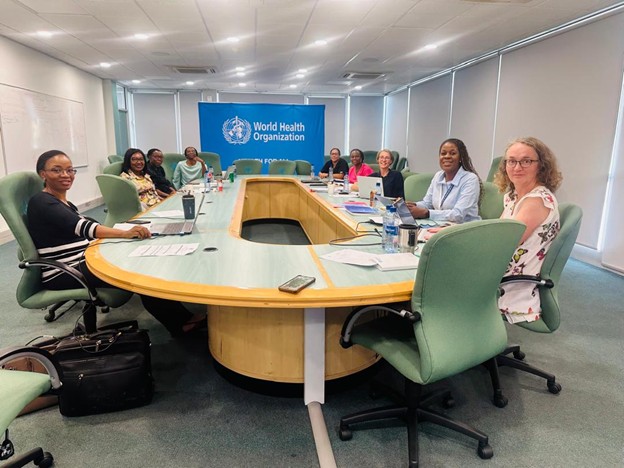
A multidisciplinary Guideline Review Core Team was established to lead the adaptation. The team is midwifeled in terms of drafting and contextualization, with technical input from specialist obstetricians and pediatricians. This ensured a strong balance between clinical expertise, national leadership and an in-depth understanding of the Namibian maternity care context.
The group includes specialist obstetricians and gynecologists from intermediate and national referral hospitals, a specialist pediatrician, advanced neonatal and maternity midwives and quality assurance, and representatives from the Ministry of Health and Social Services, WHO and UNFPA. Members of the National Maternal, Neonatal and Stillbirth Death Review Committee were also engaged, ensuring that lessons from maternal and perinatal death reviews directly informed decisions on adoption and contextualization.
We are proud to note that all midwives involved in the guideline review are members of the Independent Midwives Association of Namibia.
Reviewing What Works in Practice
Using a shared online working document and regular communication through a dedicated working group, the team systematically reviewed each of the 51 recommendations. During a two-day in-person meeting, discussions focused on feasibility at different levels of care and existing training in academia, alignment with midwives’ scope of practice, and the system and training requirements needed for implementation.
The review also considered how PPH prevention and management connects across intrapartum care, emergency obstetric and newborn care, and postnatal services, reinforcing the importance of integrated maternity systems rather than isolated interventions.
What This Means for Midwives
For midwives in Namibia, the adapted guidance provides clearer and more consistent direction on their role in preventing and managing PPH. It strengthens emphasis on prevention, supports earlier recognition of excessive bleeding, and offers clearer guidance on first- and second-line responses, teamwork and timely referral when escalation of care is needed.
By embedding these recommendations into national guidance, the aim is to support midwives to work with greater confidence and consistency, while maintaining alignment with respectful, woman-centered maternity care.
Next Steps
The PPH recommendations have now been fully incorporated into the draft national intrapartum care, emergency obstetric and newborn care, and postnatal care guidelines and are currently undergoing technical review. Namibia was well positioned to quick adoption as the country was in the process of finalizing the draft IPC/EmONC/PNC guideline. Once finalized, the focus will shift to dissemination, capacity building and implementation support for midwives and maternity teams across the country.
Why This Matters Beyond Namibia
Postpartum hemorrhage continues to claim women’s lives in many settings, even where effective solutions are known. Namibia’s approach shows how global guidance can be rapidly and thoughtfully adapted into national policy, with midwives playing a leading role in turning evidence into practice. As countries work to reduce preventable maternal deaths, this experience offers valuable lessons on the importance of midwife-led, context-specific implementation of global standards.
From left to right: Esperanca Van Der Merwe, Gertrude Nakathingo, Ruth Aryao, Ronia Geraldo, Gaynor Balie, Justine Nali Mufenda, Jana Ellmies, Temptation Chigova, and Beatrix Callard
The world needs One Million More Midwives
Sign the petition and help us collect one million signatures to demand one million more midwives — and the investments needed to make it happen.