Advancing Midwifery Leadership and Reproductive Rights at the World Health Summit
This October, ICM brought midwifery leadership to centre stage at the World Health Summit in Berlin, advocating for midwives’ role in preventing maternal and newborn deaths, protecting reproductive rights and sustaining care through climate crises. ICM also signed two agreements that mark a new stage in longstanding partnerships with FIGO and the Center for Reproductive Rights.
Across these engagements, the message was clear: improving health outcomes requires investment in midwives and the resources, authority and working conditions they need to provide quality, respectful care.
Putting midwives at the centre of global commitments
ICM Chief Midwife Jacqueline Dunkley-Bent brought midwives to centre stage at two of the World Health Summit’s biggest events: the signature event and closing keynote.
At the signature event, the Gates Foundation and Wellcome Leap announced US$100 million for Uzima, a programme aiming to demonstrate that stillbirth rates can be halved within a decade in selected countries.
“We have the opportunity to prevent these deaths and the responsibility to act. And to act now,” said Jacqueline.

The closing keynote focused on ending preventable maternal and newborn deaths. Jacqueline brought midwives’ perspectives into this discussion, highlighting inequities in access to care and the women, families and lives behind the statistics. Her participation reinforced that midwives must help shape global health priorities and the investments needed to deliver them.
Translating commitments into better care requires investment in the workforce. Modelling estimates that universal coverage of midwife-delivered interventions could avert 67% of maternal deaths, 64% of newborn deaths and 65% of stillbirths by 2035. Achieving this potential requires investment across all elements of ICM’s Professional Framework for Midwifery.
Supporting midwives to sustain care through crises
ICM Chief Executive Anna af Ugglas joined a panel co-hosted by WaterAid, Amref Health Africa, DSW and GIZ, where WaterAid presented findings from its Born Without Water study.
The discussion highlighted a fundamental requirement for quality maternity care: midwives need clean water, sanitation, reliable electricity, essential supplies and adequately staffed facilities. Investment in the workforce must go hand in hand with investment in the infrastructure that enables safe care.
“Health systems need to make those conditions part of how they plan, fund, and organise care and recognition of midwives’ expertise must be reflected in decisions and resources,” Anna advocated.
Anna also delivered a keynote at an event on climate-resilient health systems in India, co-hosted by GIZ, Bayer and the Ambassador of India to Germany. As extreme heat, flooding and displacement disrupt services, preparedness must include midwives, community-based care and continuity of essential sexual and reproductive health services.
“Women will continue to give birth through every heatwave and any other climate disaster. Our health systems must be ready to care for them,” said Anna.
Turning longstanding partnerships into shared commitments
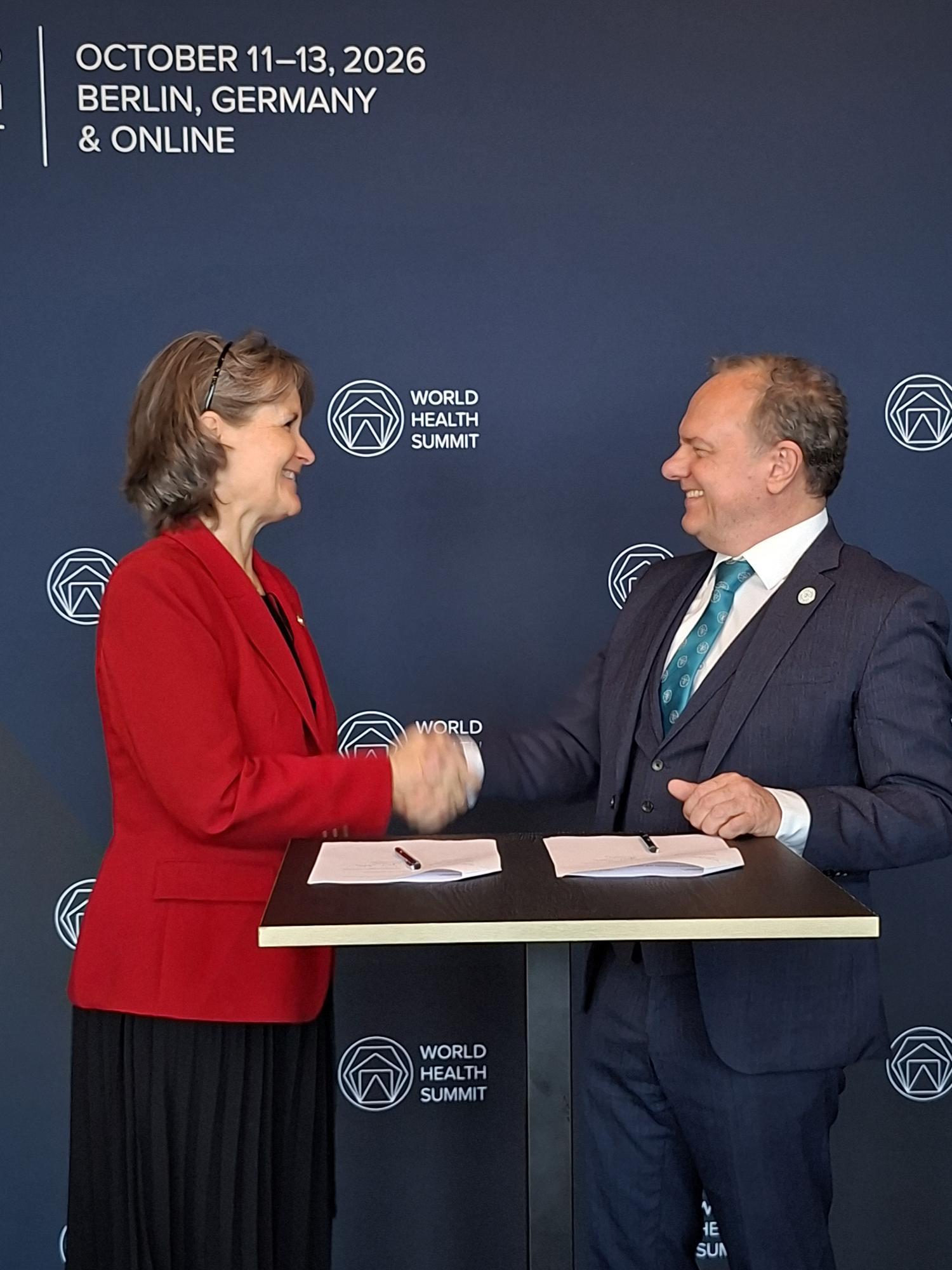 A key accomplishment of the week was ICM’s signing of two memoranda of understanding with the International Federation of Gynecology and Obstetrics (FIGO) and the Center for Reproductive Rights (CRR). The agreements build on months, and, in some cases, years, of collaboration, marking a new stage in these longstanding partnerships to advance women’s health and reproductive rights.
The agreement with FIGO strengthens collaboration between midwives and obstetrician-gynaecologists to improve access to quality sexual, reproductive, maternal and newborn care. It reinforces the importance of working together while respecting each profession’s distinct expertise, responsibilities and autonomy.
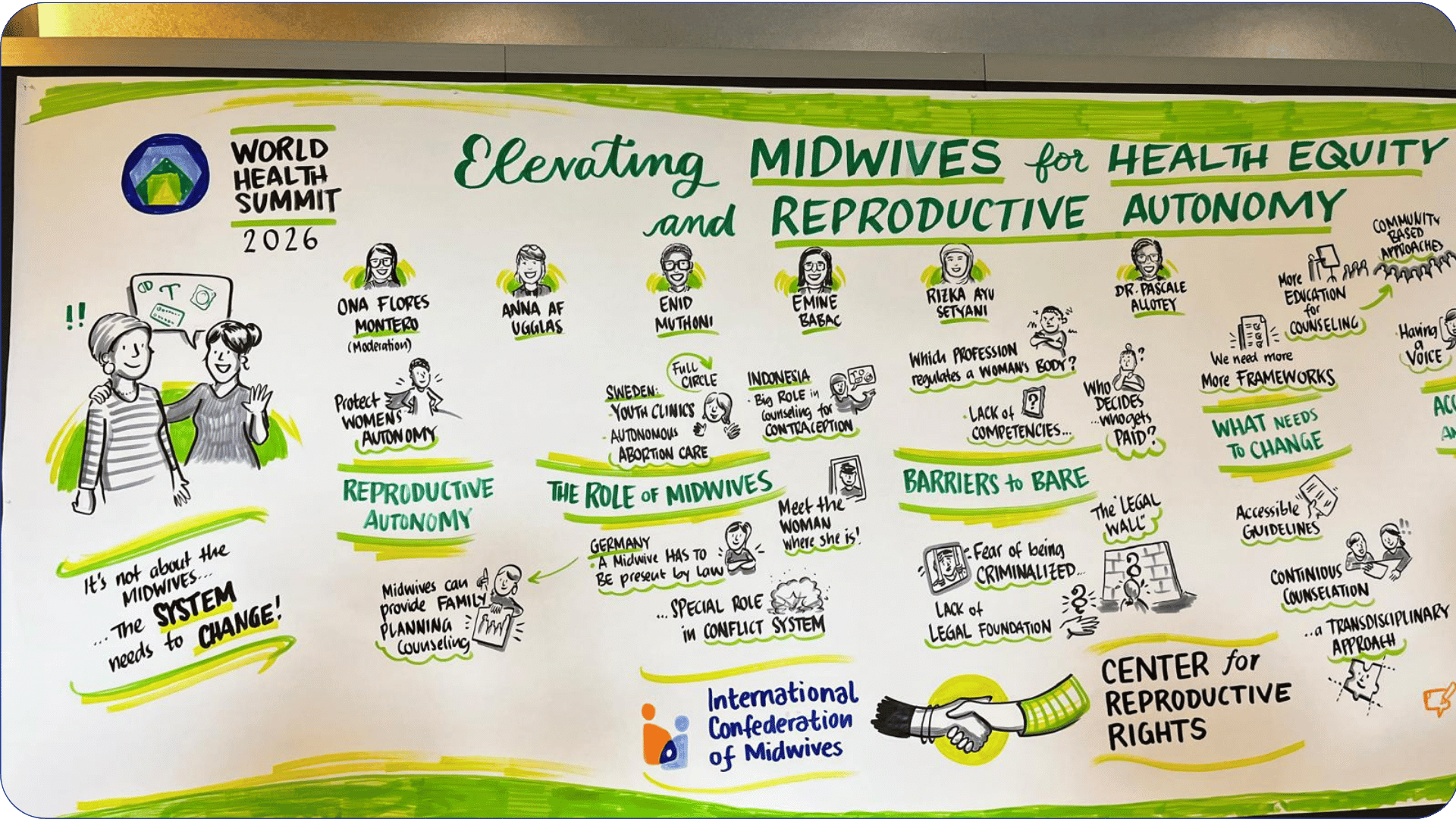
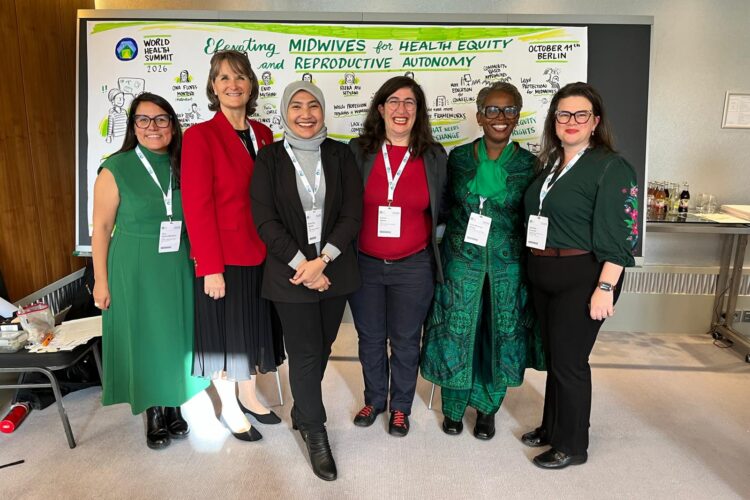
The agreement with CRR was signed during an event on health equity and reproductive autonomy that brought together midwives, legal advocates and global health leaders. Combining midwifery expertise and legal advocacy, the partnership will support efforts to address legal and policy barriers that restrict midwives’ ability to practise to their full scope and people’s access to respectful, inclusive sexual and reproductive health care.