“How Is This the Solution?” Laura Corcoran on Rebuilding Miscarriage Care
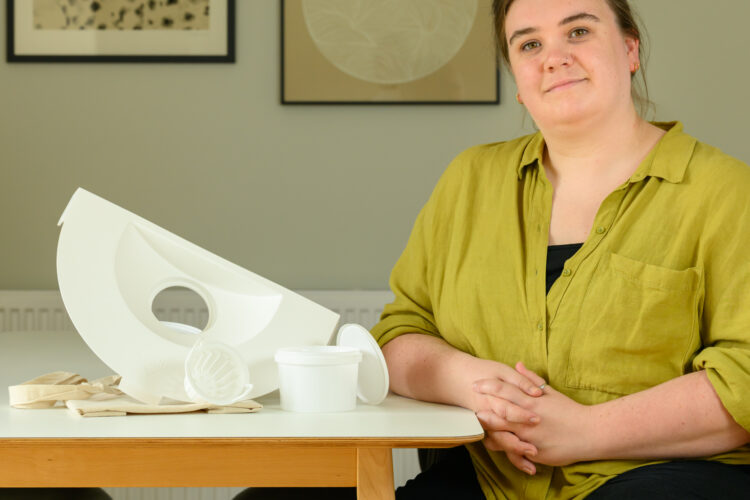
“Women have been giving birth for thousands of years, and for just as long they have been having miscarriages, suffering unimaginable loss and trauma” – Laura Corcoran
Every year in October, Baby Loss Awareness Week creates a space for women and families to grieve the babies they have lost and to raise awareness of an issue that still affects millions of pregnancies. In fact, between 10 and 20 per cent of known pregnancies end in miscarriage.
An estimated 23 million miscarriages occur worldwide every year, equivalent to approximately 44 every minute. So how is it that healthcare around miscarriage and baby loss is still so weak in almost every health system across the world?
We sat down with Laura Corcoran, who after her third miscarriage decided that the system meant to care for her was failing to do so with compassion and respect. She decided to do something about it by developing a practical tool for miscarriage care and campaigning for greater dignity and support for women.
When care falls short
Laura is an engineer and now the founder and CEO of Dignity Care. When she learnt that her third pregnancy had ended in miscarriage, she asked to receive care in hospital. She was told there was no space for her and to come back in two weeks.
“Those two weeks, just waiting and waiting and waiting. I was very aware that my body was carrying this very much wanted life that just wasn’t there anymore. I felt like a mortuary.”
During the wait, she began to miscarry at home. Because this was her third miscarriage, she was eligible for testing to investigate possible causes Having been given no instructions or tools, she and her husband searched the house and found a kitchen sieve and a see-through Chinese takeout container.
“I was sort of crying, holding this kitchen sieve in place, contracting, going through all this pain, blood loss, and even though I’ve been through it twice before, I was very unprepared because I felt like I didn’t have that safety net.”
She ended up haemorrhaging and losing over half her blood, which took her to hospital for emergency surgery. Recovery was slow, and she spent two months largely confined to the sofa.
With no distractions, she did what many others do and turned to online forums to read other people’s experiences. There she realised that it wasn’t just her care that had been undignified.
Scissors, tape and some engineering
Her rage and shock turned into design and construction. With some boxes, scissors and tape, she began piecing together a possible solution. “Something is better than nothing.” She wanted to make something that would have made her feel that she and her baby mattered. Using a 3D printer in a nearby village, she turned a few rough sketches into the first prototype of the Miscarriage Collection Cradle.
The Miscarriage Collection Cradle is a secure, hygienic product that fits under the toilet seat and collects pregnancy remains safely, preserving dignity and enabling proper medical examination if needed. It comes with a care package that includes storage options, burial solutions and essential support materials.
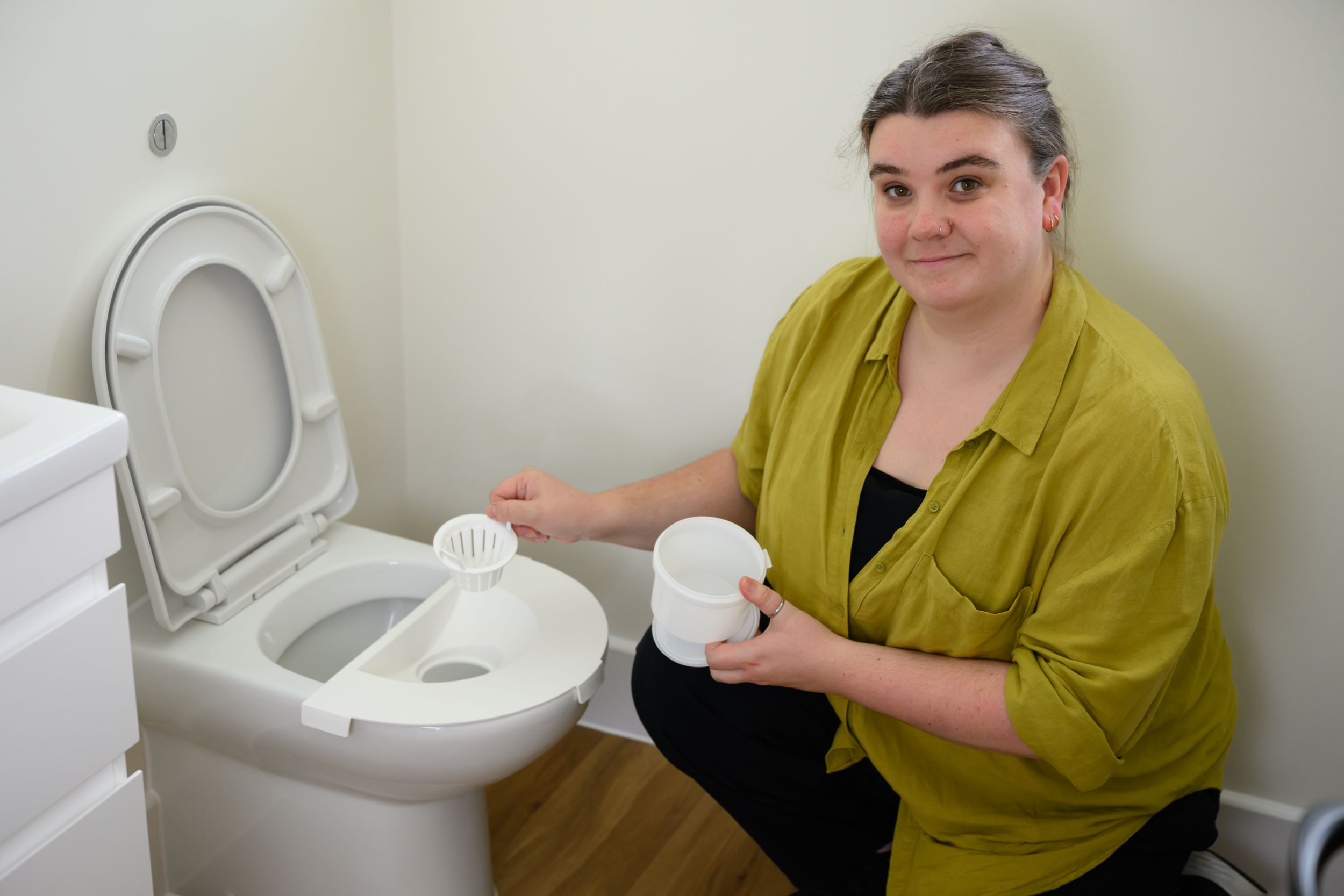
Laura refined it over her fourth and fifth miscarriages and began working with Rosie, a midwife who contributed the clinical expertise. She returned to the hospital where she had received care to share her experience, and the hospital’s early pregnancy team carried out a clinical review across two hospitals.
The development process highlighted practical problems that Laura knew first-hand. When she had used a kitchen sieve, pregnancy tissue had mixed with other bodily waste, leaving her to search through it, needless to say, a deeply distressing experience. The Cradle now has a gap at the back, designed to allow women to adjust their position and reduce the risk of contamination.
From a weekend of emails to 40 hospitals
In January 2025 Laura emailed a group of bereavement midwives, and by that afternoon she had a meeting arranged. Within six weeks, the first NHS order for the Cradle had been placed. Sixteen months later it can be found in 40 NHS hospitals in the UK and in hospitals across Europe and America.
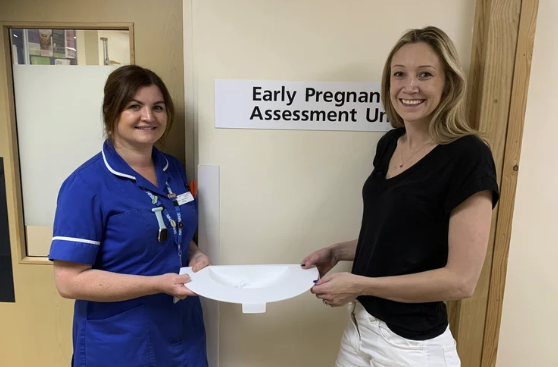
“It’s such an obvious problem and it’s such a simple solution,” she says.
Laura is aware that for now the system creates a postcode lottery, as one hospital offers the Cradle and the next town does not. One man drove three hours to collect one for his wife, because it was all he could do for the person he loved.
Laura wants care to move out of hospitals, too. NHS England data shows that a third of people who are miscarrying attend a hospital emergency department and one in five are discharged to miscarry at home because there is no clinical need for them to be there.
In 2027, Dignity Care is launching a free pharmacy service in the UK, so women will be able to pick up a Cradle down the road and recover in their own bed and bathroom. But availability is only half of the story, women also need to know the option exists so they can ask for it and advocate for themselves.
The cost of inaction is far too high
A health economic study, funded by a grant Laura won in 2026, found that women with a practical solution for home management chose it over surgery and hospital stays. The report estimated that at 50% adoption the Cradle would save the NHS £11.2 million a year, free up 12,000 gynaecology surgery slots and reduce hospital emergency department admissions by 10,000.
“Not only is this the right thing to do for women, but it is also saving health systems money. What is the problem?”
Turning that case into national action has been slower. Working with her local member of parliament, Laura called for the government to provide miscarriage care kits through the NHS. Her work was also highlighted during Parliament’s Baby Loss debate in October 2025.
The need had already been recognised. England’s independent Pregnancy Loss Review, published in July 2023, made 73 recommendations. Three called for suitable equipment to collect and store pregnancy remains, alongside care kits available in hospitals and community settings. But Laura says the funding needed to put those recommendations into practice has not followed.
Midwives need to be trained and be curious
For Laura, improving miscarriage care also means ensuring that health professionals have the skills to support women with dignity.
At a follow-up appointment, a consultant told her, matter of fact, that she had trouble keeping a baby rather than getting pregnant. Laura does not believe the consultant meant to hurt her, but “it landed as if it was a me thing,” and she left in tears.
“I still think about that a few years later and that will stay with me.”
Her experience shows why education must go beyond the clinical management of miscarriage. Health professionals also need to know how to acknowledge grief, communicate sensitively and prepare women for what they may experience. Laura asks midwives to remember that they are human first.
“There’s a grieving person in front of you, treat them with compassion and be curious about how they feel.”
Her advice to midwives and other health professionals is practical: follow the woman’s lead with language, if she says “baby”, use “baby” too, and explain clearly what may happen, what support is available and when to seek help. Her own haemorrhage was caused by retained pregnancy tissue, a complication she had not known could happen. “Education is power. There’s nothing wrong with telling people facts about what could happen.”
These skills should be part of every professional’s preparation to care for someone experiencing pregnancy loss. Midwives can also advocate for women within their services, speaking up when care falls short and calling for the training, equipment and support needed to improve it.
“It just takes a few passionate people to be loud and things can change, and that could be you.”
Looking after yourself
Baby Loss Awareness Week is still hard for Laura. She has had six miscarriages since her daughter, who has just turned four, and she has to be deliberate about how she engages personally and professionally. But she knows the week matters: it raises awareness and creates space for conversations about loss that can be hard to begin.
“If people don’t talk about it, it is swept under the rug.”
Through advocacy and awareness, she wants to make compassionate, dignified care and practical tools like the Cradle available to everyone who needs them.
For women who recognise themselves in her story, Laura’s message is to look after yourself. Like many women, she questioned whether she had done something to cause her miscarriages. She wants to share the reassurance a helpline adviser gave her:
“Look, people in the past who were pregnant and didn’t want to be pregnant, they had a really hard time with forcefully doing anything about it. So the chances of you accidentally doing something about it are next to none.”
Those words helped ease her self-blame, and she hopes sharing them will offer comfort to others carrying similar feelings.