How a Postpartum Haemorrage Case Shaped Gentille as a Person and a Midwife
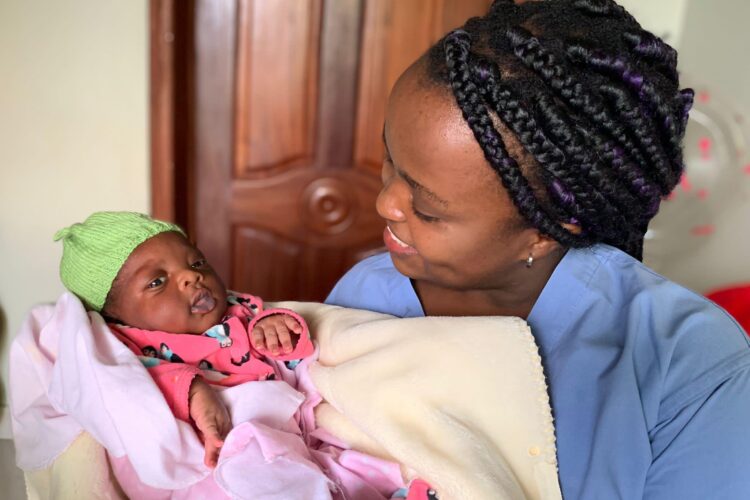
Gentille’s journey to becoming a midwife had an unconventional beginning. When she entered university, she was assigned to the midwifery programme as a match for her background in biochemistry. At the time, she had little understanding of the profession and was not really convinced this is what she wanted to study, but she was curious.
Her academic training and clinical exposure allowed her to see the deeply human and scientific impact of midwifery in safeguarding the health of women and newborns. What started as an unplanned path became a deeply intentional career, and today Gentille is committed to her work and the families and communities she cares for. What is more, she is emerging as a leader and mentor, advocating for a stronger profession in Rwanda.
“Today,” Gentille reflects, “midwifery represents both a responsibility and a vocation.”
The Birth Story that Defined Her Future Within the Profession
When speaking of her experience and how she sees her future in midwifery, Gentille often refers back to one day in particular. A case that defined her career and shaped who she wanted to be as a midwife.
During a routine day shift, she assisted a woman during the delivery of her first baby. The birth was uncomplicated. The baby cried immediately and the initial postpartum monitoring showed both mother and newborn were stable.
About forty minutes later, Gentille noticed that the mother had developed abnormal postpartum bleeding. Recalling her training on managing postpartum haemorrhage (PPH), she quickly assessed the situation and acted quickly to stop the bleeding.
The situation had been resolved, but the experience affected Gentille both personally and professionally. It reinforced the importance of thorough postpartum monitoring and timely decision-making.
Managing the crisis on her own, Gentille understood how midwifery care, delivered at the right moment, can mean the difference between life and death. This brought her to consider her future as a midwife, beyond the individual cases and realised that competence in emergencies does not happen by chance, but it is built through strong education, mentorship, and supportive health systems.
“It affirmed my sense of responsibility and purpose as a midwife, and I made the decicision to continue my studies to grow in the profession,” she says.
Continuing Her Education through Challenges
At this point, Gentille’s ambitions lay in becoming a mentor and a midwifery leader for her peers and the next generation of midwives. To do so, she first had to strengthen her academic training and build a strong foundation in clinical skills and patient-centred care.
This led her to pursue a Master’s degree while remaining in full-time clinical practice, without formal study leave, which was not an easy accomplishment. However, through discipline and careful time management, Gentille balanced the demanding clinical duties with her education requirements, often under significant physical and emotional pressure.
Looking back to that period, she can now see how much she could overcome and what it taught her about her sense of professional accountability, critical thinking, and clinical judgement.
Midwives as Mentors and Advocates for the Community
While she remains committed to high-quality and evidence-based care, today Gentille is increasingly focused on building stronger health systems and supporting other midwives.
In particular, she is dedicated to improving intrapartum and postpartum care, including early identification and management of emergencies such as postpartum haemorrage. She also promotes respectful maternity care and early initiation of breastfeeding, especially among post-caesarean section mothers.
Going back to her first experience with PPH, Gentille knows that preventable complications often arise from gaps in knowledge, skills, and confidence. Having benefitted from mentorship herself, she is now motivated to teach, mentor, and close the gap between theory and practice.
This also emerges through her work in Rwanda, where midwives provide comprehensive sexual and reproductive health services, family planning, antenatal and postnatal education, and prevention of sexually transmitted infections. Within her country’s context, Gentille wants to strengthen the profession to promote respectful care, challenge harmful practices, and encourage women and communities to seek care on time.
“Midwives are central to building resilient, community-centred health systems,”
she says, reflecting the conviction that has shaped her career and leadership ambitions.
A Message to Students Approaching Midwifery Today
For students just beginning their midwifery journey, Gentille’s message is clear:
“Midwifery is both a science and a calling. Always place women and newborns at the centre of your care. Respect and compassion matter as much as clinical skills. Be curious. Ask questions. Because you can develop strong clinical judgment and learn to recognise danger signs early and act promptly. It is also key to work collaboratively and communicate clearly with your team and other medical professionals. And importantly, take care of yourself. Midwifery can be emotionally and physically demanding. A healthy midwife provides better care.”
The world needs One Million More Midwives
Sign the petition and help us collect one million signatures to demand one million more midwives — and the investments needed to make it happen.